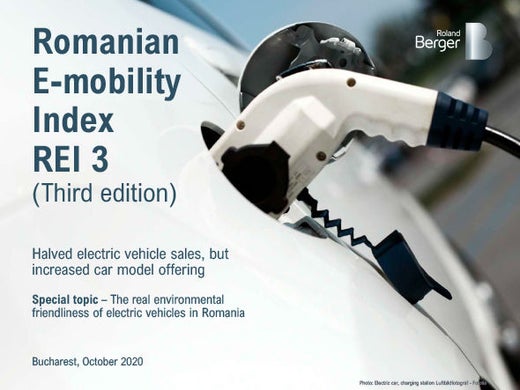
Special topic – The real environmental friendliness
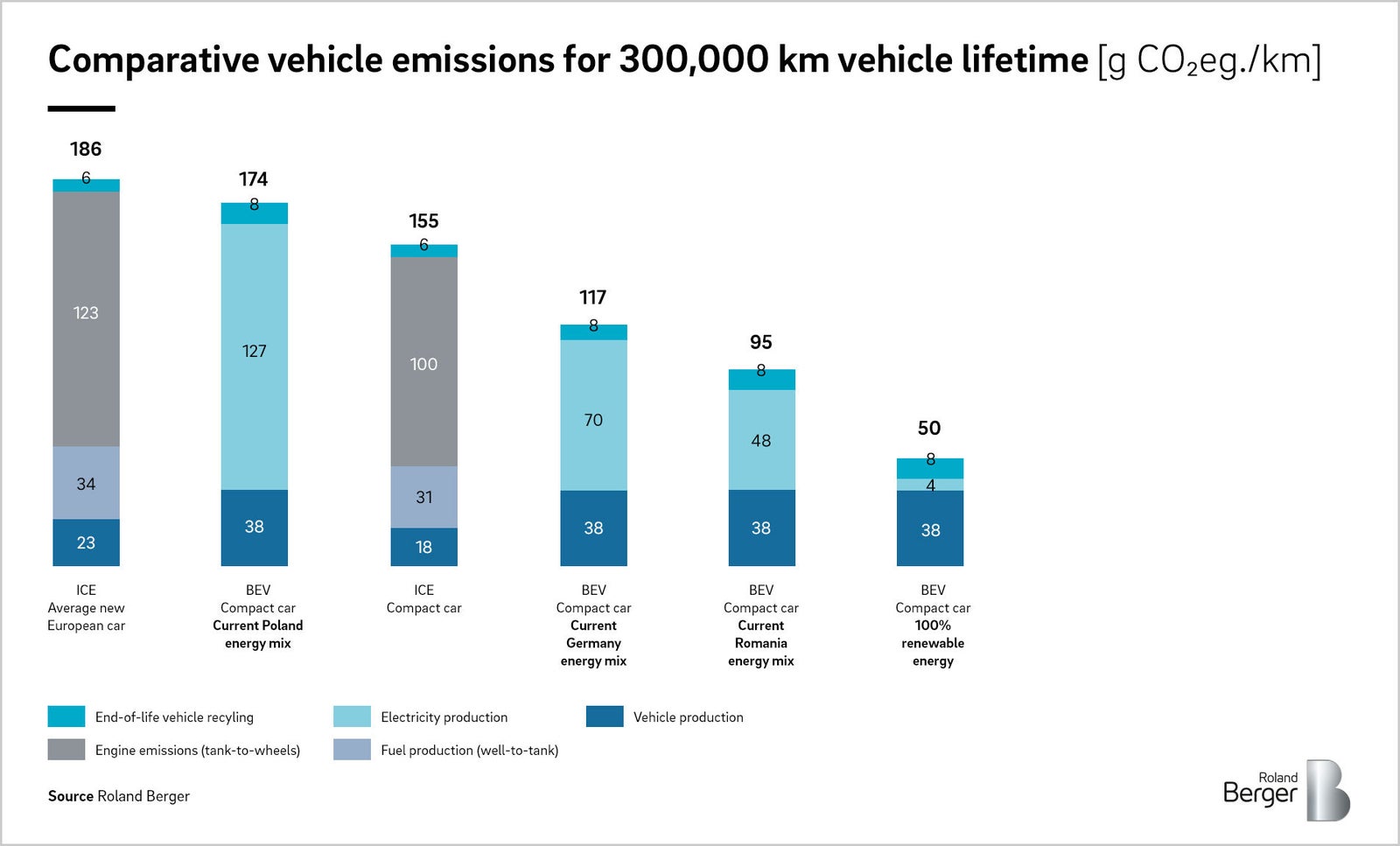
The amount of greenhouse gas emissions generated by a vehicle over its entire lifecycle includes not only the emissions from its operation, but also the emissions generated during vehicle production and recycling.
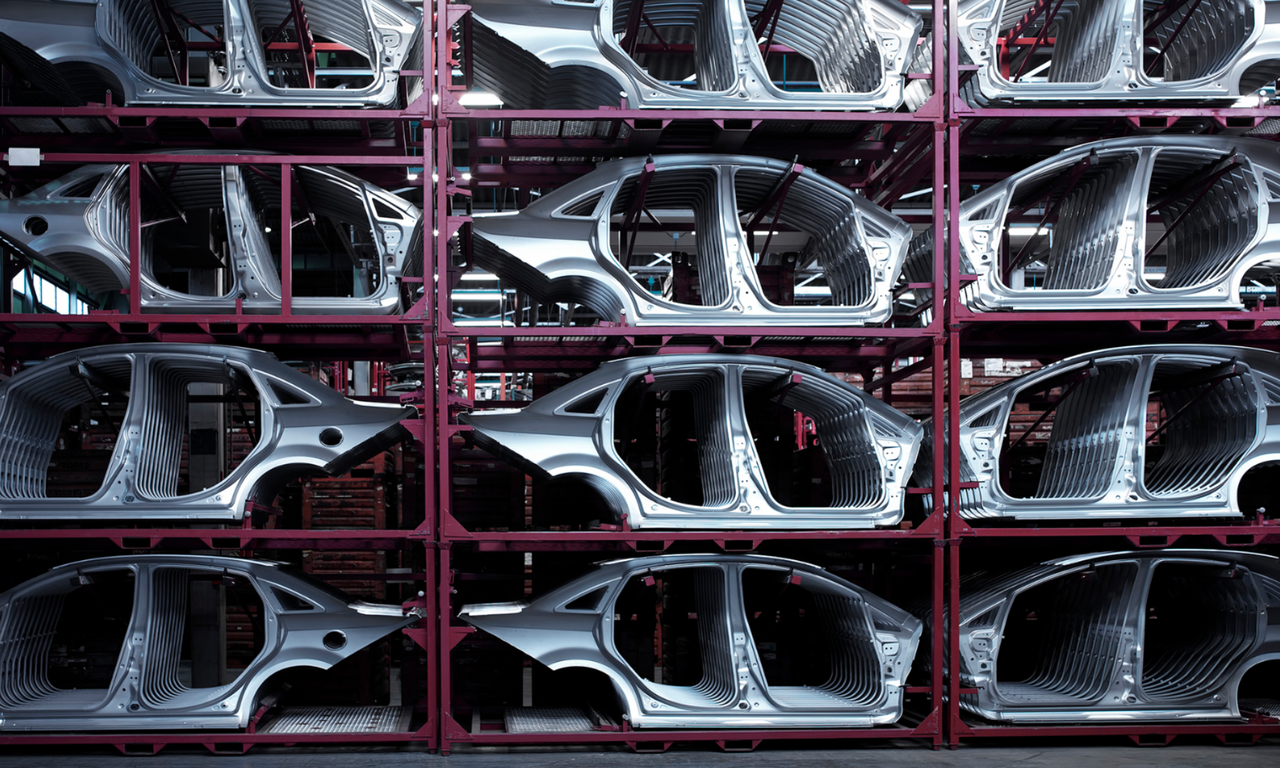
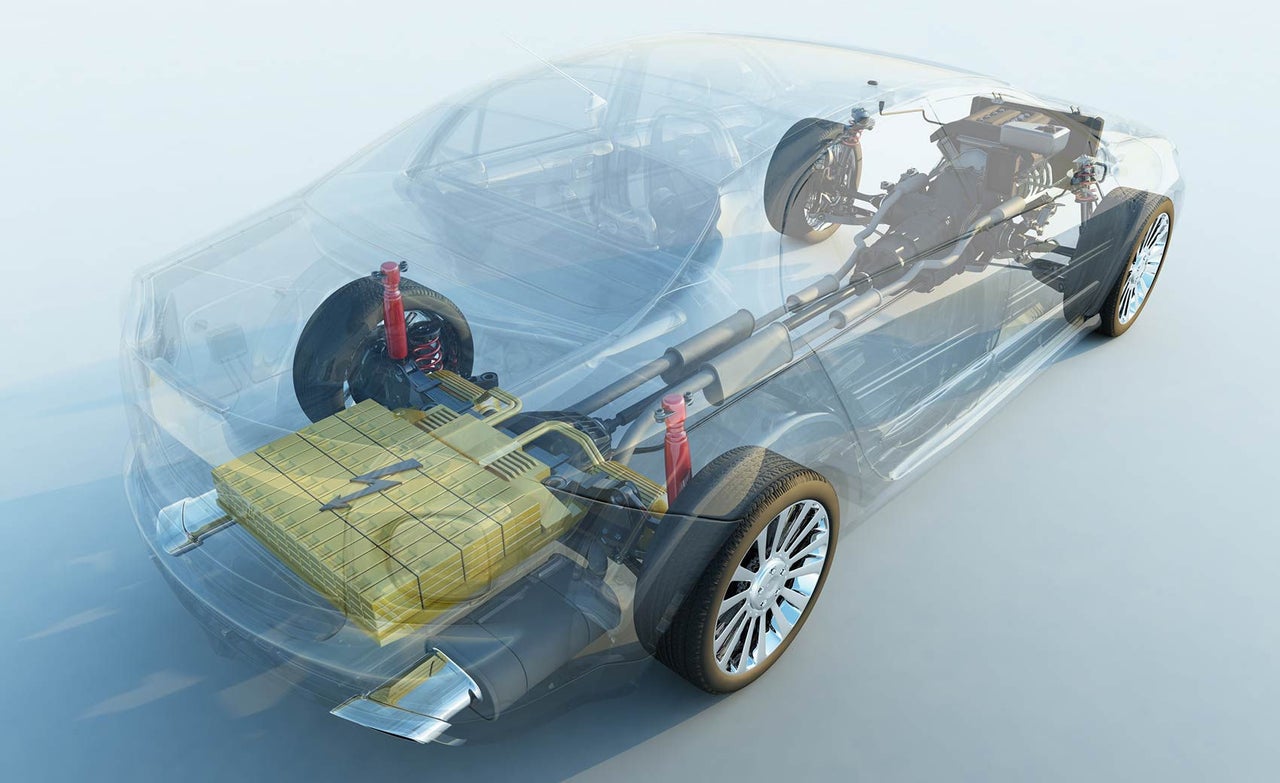
Electric vehicle production is particularly carbon-intensive, generating almost double the greenhouse gases emitted to produce an equivalent conventional vehicle, mainly as a result of the energy-intensive production process for the large battery packs.
However, unlike their internal combustion counterparts, electric vehicles have zero tailpipe emissions during usage. They indirectly pollute the environment through greenhouse gases emitted by the power plants/ installations producing electricity – Energy generation is actually the main polluting element of EVs. Hence, the environmental success of these vehicles over their entire lifecycle largely depends on being powered by low emission electricity generation.
Romania's generation mix has a significant share of electricity from hydroelectric and other renewable sources – 40 to 45% of the electricity generated in the 2016-2019 period was from these sources. As a result, a compact EV is 40% more environmentally friendly than a compact internal combustion car over a vehicle life of 300,000 km. This allows an EV recharging in Romania to compensate for its high production emissions and break even in terms of carbon footprint with its internal combustion counterpart after only ~70,000 km of vehicle usage. On the other hand, in countries more heavily reliant on coal-based electricity generation such as Germany, the breakeven point is at ~100,000 km, whereas heavy coal users such as Poland risk never breaking even.