With today’s economic climate generating a seemingly endless series of micro and macro challenges, from high interest rates to labor shortages, business is becoming more complex. As a result, companies are having to adapt and modernize. Overhauling the ERP backbone is a key focus area.
SAP is phasing out its older ERPs, and most companies have now embarked on their transformation to
S/4HANA
– SAP’s advanced new ERP product. It offers a unique opportunity to streamline operations, enhance data visibility and improve decision making. However, migrating to S/4HANA is not straightforward.
Transformations often take a long time (up to 10 years), incur significant costs and frequently fail due to the considerable challenges. Decentralized companies face the greatest hurdles. They must set up company-wide programs by integrating diverse, distributed systems and processes, while at the same time convincing disparate business areas to give up local freedoms. For example, aligning diverse strategies across autonomous business units is difficult due to different priorities and timelines. Ensuring also all leaders are committed simultaneously to
driving transformation
is challenging if they feel their authority is threatened. This makes it essential to understand successful transformation strategies.
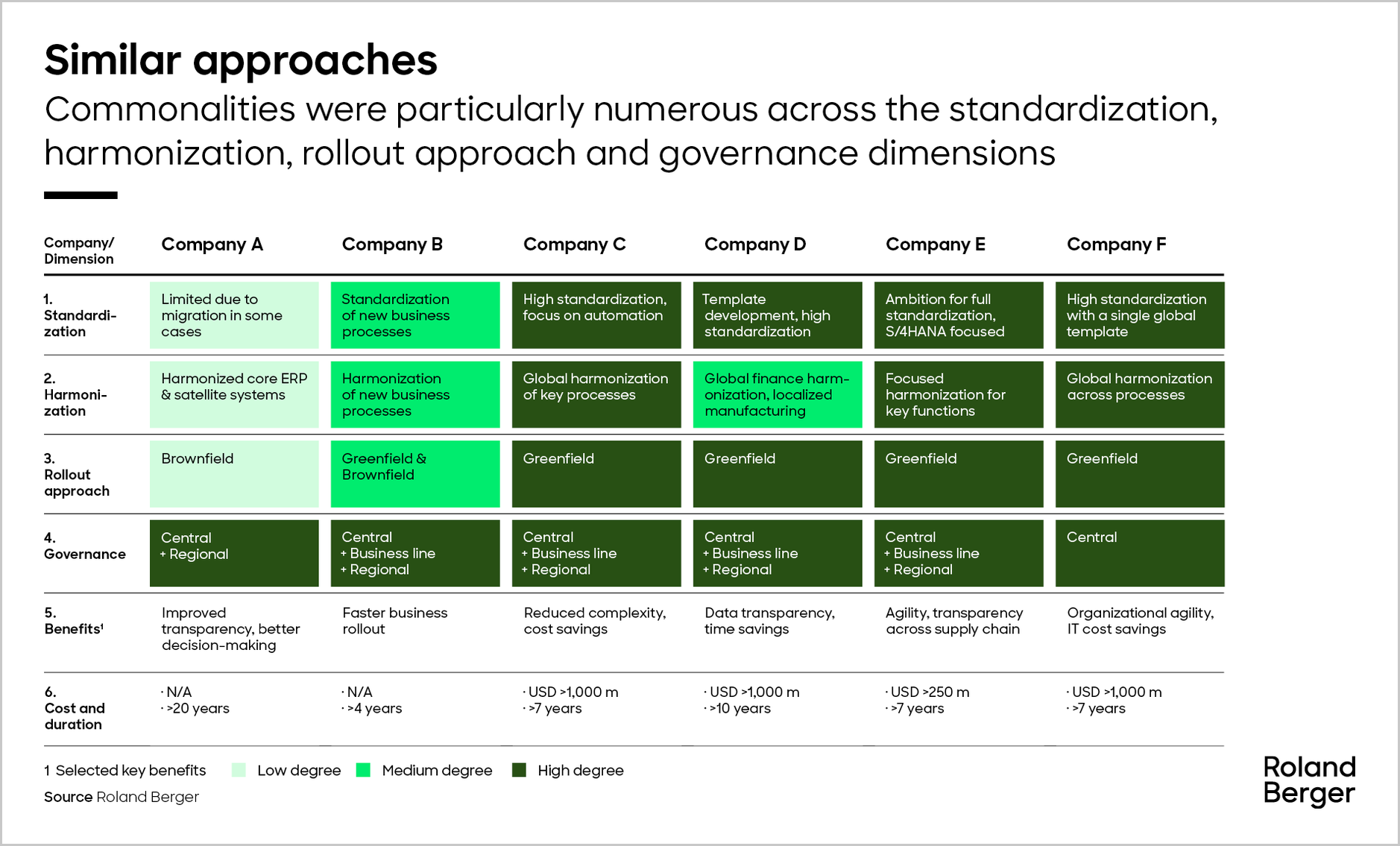
To determine how decentralized companies can overcome the challenges and to identify key success factors for effective transformations, we interviewed experts from six decentralized firms that have undergone or are in the process of an S/4HANA transformation. Our study “S/4HANA: How decentralized companies can achieve a smooth transformation” summarizes the results, assessing how each company effected their transformation and deriving key takeaways for companies currently undertaking the process.