1. Anchor Purpose
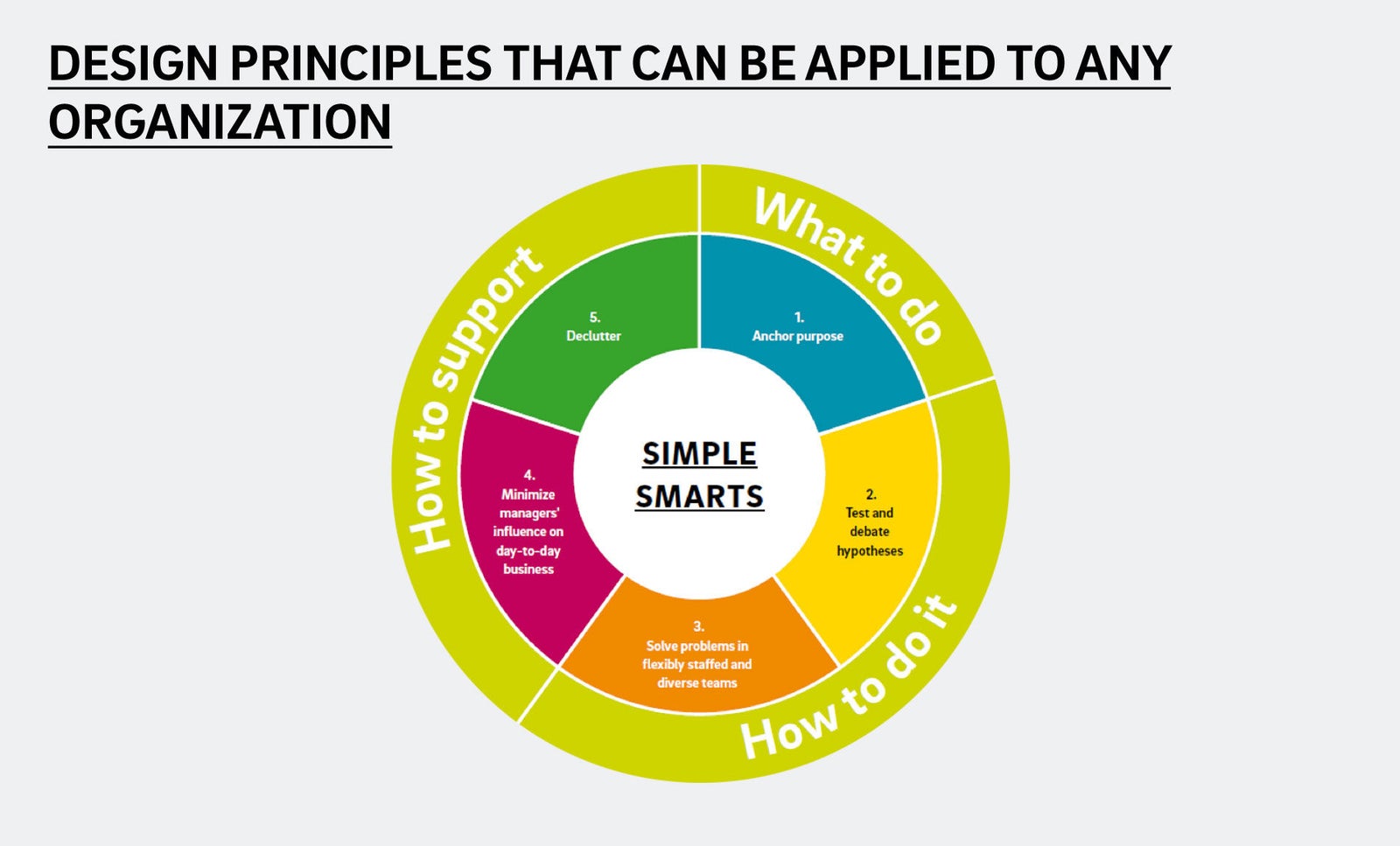
Every organization must serve a purpose that is transparent and understandable to both internal members and external stakeholders. If it doesn't have an all-encompassing goal, it's likely that the individual parts will create one for themselves, which in turn fosters a silo mentality. Without a common purpose, the organisation as a whole will eventually fail. The purpose must be as clear and simple as possible, and one of the most important managerial challenges is to communicate it with both clarity and coherence.
2. Test and Debate Hypotheses
The best company decisions are rooted in broad-based discussion and consideration of as many alternatives as possible. Rather than being dictated by leaders, companies should encourage alternative decision proposals to be submitted from all parts of the organization, irrespective of an employee's title, past successes or any other conditions. The important thing is to thoroughly consider decision alternatives from the customer's perspective.
3. Solve Problems in Flexibly Staffed and Diverse Teams
Organizations can no longer afford to keep dedicated units available for every conceivable eventuality. Instead, employees must group and regroup as seemlessly and autonomously as possible in response to new tasks. That also means giving employees both the freedom to make decisions and the resources to get their jobs done. A culture that prioritizes task efficiency must prevail throughout the company.
4. Minimize Managers' Influence on Day-to-Day Business
Managers take on a specific role in Simple Smarts: leadership. They create the environment for the principles to flourish - by ensuring that the company's purpose is anchored in the organization and communicated properly, by inspiring staff and by moderating the hypothesis-based discussion and decision process. On the other hand, Simple Smarts requires managers to renounce their position as omnipotent decision makers. Indeed, they should hardly be involved in daily operations.
5. Declutter
Organizations tend to spend a lot of time busying themselves with things that have nothing to do with their actual purpose. Structures, rules and processes emerge that are coherent in themselves (though not even that is always true), but that no longer have much to do with the goals of the organization. Once established, procedures such as regular meetings prove to be immensely durable, even if those who attend see them as futile exercises.