Homework for policymakers: Support startups, promote diversity, facilitate access to capital and ensure fair competition
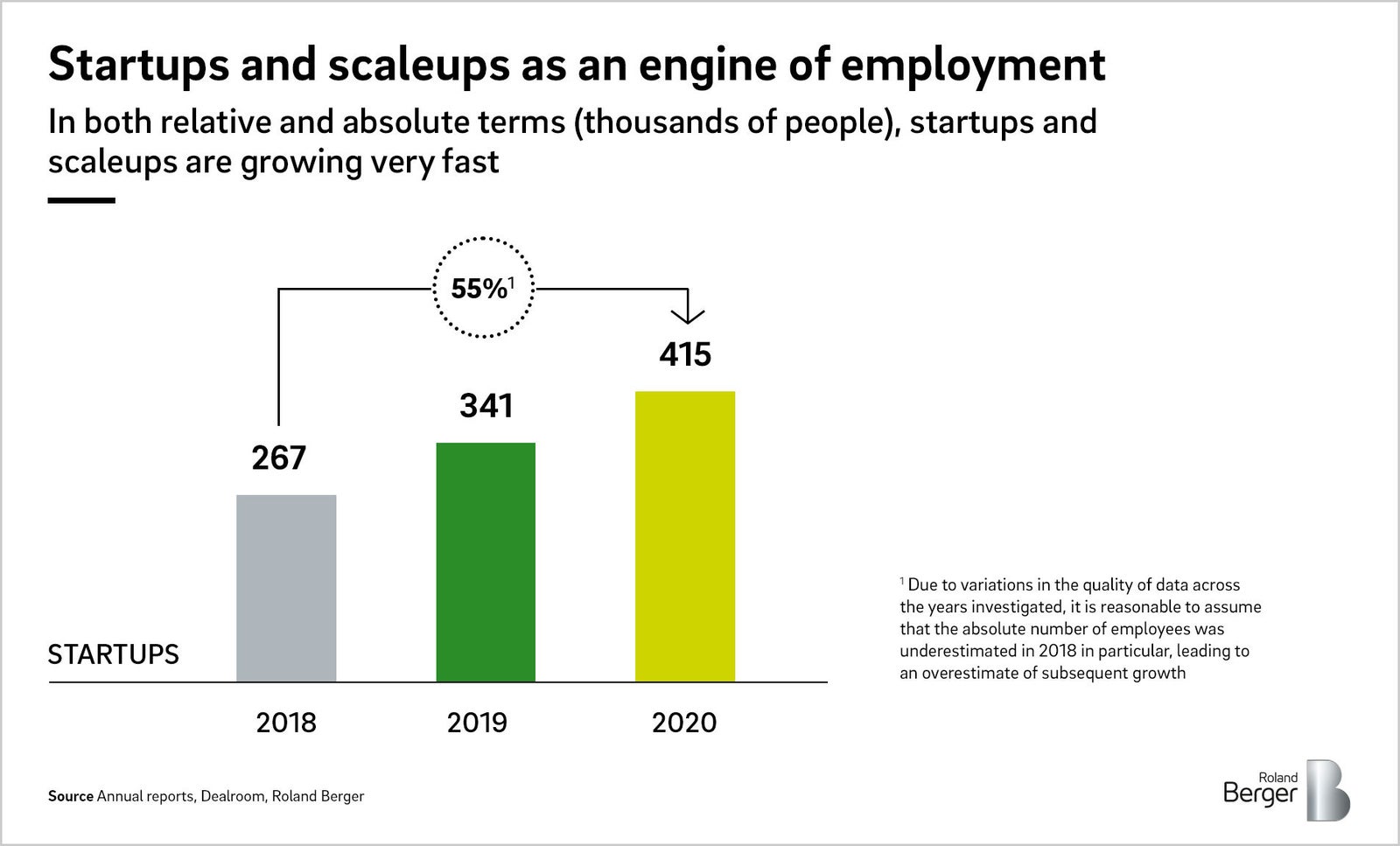
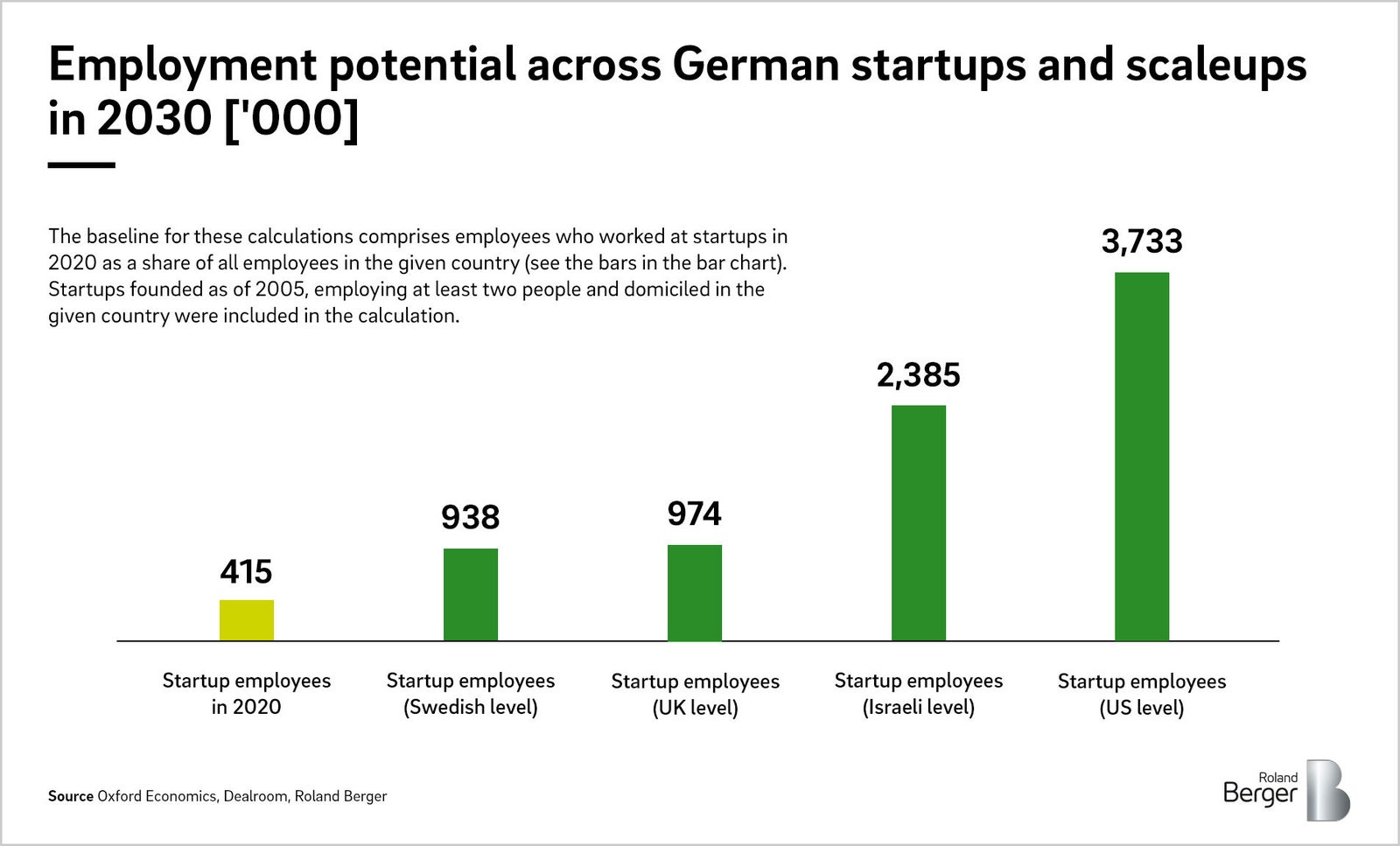
That said, for startups and scaleups to contribute to the positive development of jobs in this order of magnitude, more support – and the right support – is needed. The new government should resolve to provide this support as part of a startup strategy and deliver it promptly.
The study recommends a whole package of measures to exploit the employment potential to the full. These include support for startups via incubators and accelerators from universities as well as increased collaboration with established businesses. Broadening the startup base as a whole is a key lever for a vibrant startup and scaleup landscape. In particular, the low proportion of female startup entrepreneurs and young people with a migrant background who start new businesses shows how much potential still remains untapped. For that reason, the government should set an example with its own investments and link the funding instruments it creates more closely to the diversity of the startups and scaleups it helps to finance.
Germany also needs to break new ground when it comes to facilitating access to late-stage capital. According to the study, the venture capital funds based in the country are often simply too small to give successful startups the growth capital they need to make the decisive breakthrough. One important way to enlarge and add to the number of VC funds is to involve private institutional investors such as insurers and charitable foundations. And if German and European startups and scaleups are to have a chance of standing up to international competition, then the
digital world
requires clear, fair and enforceable market rules. The Digital Services Act and the Digital Markets Act are good proposals from the European Commission in this regard. It is vital for these proposals to be anchored in law in 2022 without being watered down.