Sustainability is driving the next wave of chemical industry investment
In particular, sustainability represents one of the most promising growth avenues in Chemicals, as the sector faces mounting pressure to reduce its environmental footprint while meeting growing demand for sustainable products. Clean technology investments have grown approximately 13% between 2023 and 2024, approaching USD 1 trillion in 2024.
However, given complex regulatory environments, geopolitical uncertainty, and shifting customer expectations toward 'green premiums,' capital goods firms must carefully select their sustainability investments. By developing a comprehensive understanding of market demands and customer transformation timelines, leaders can manage uncertainties while positioning themselves for long-term growth in the evolving chemicals sector.
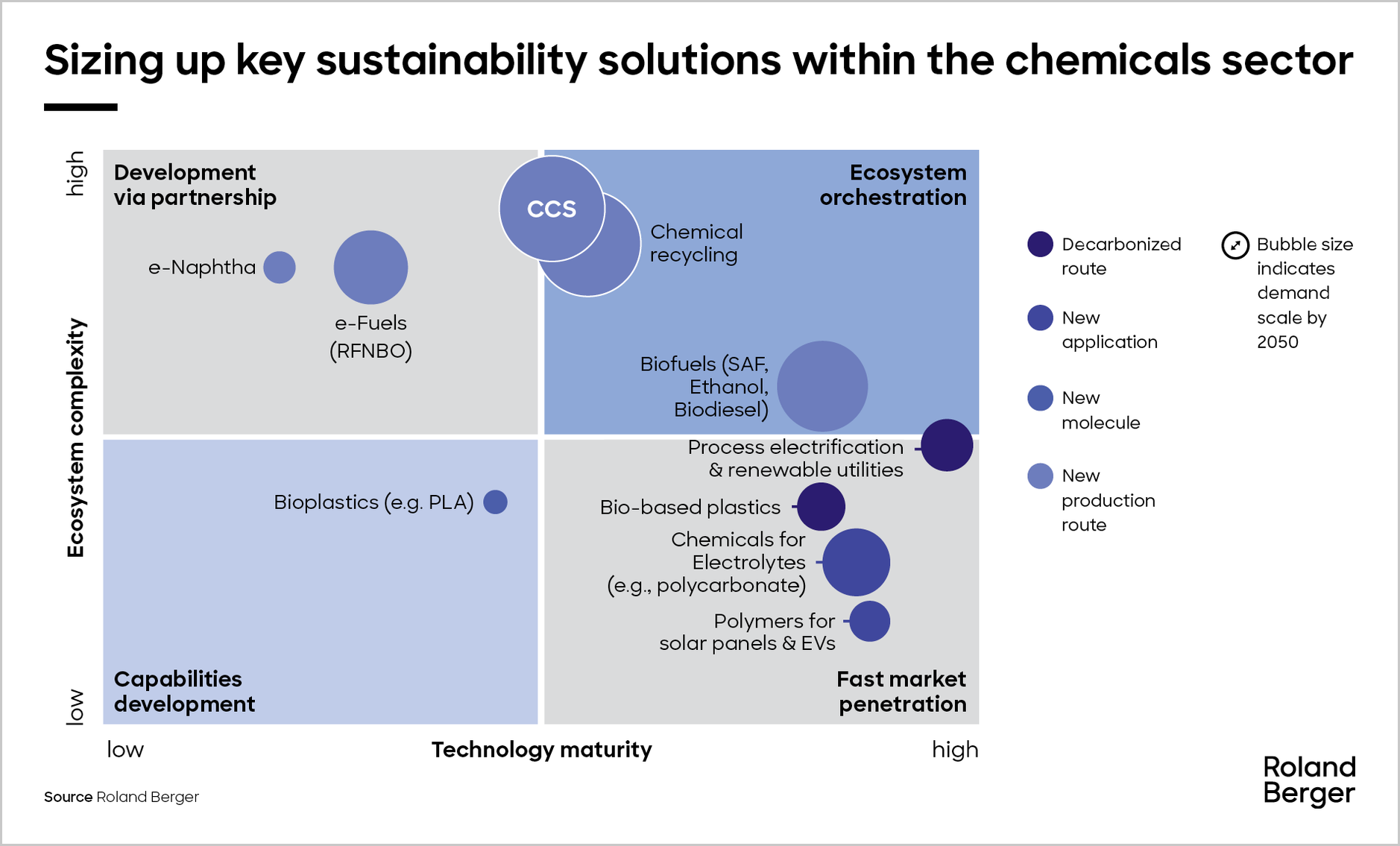
Numerous sustainability technologies are approaching maturity levels that enable commercialization within the next decade but it is important to understand the technology maturity, ecosystem complexity, and the value pool size of these technologies to contextualize the potential opportunity. Although each market faces its own unique headwinds, the most promising mid-term opportunities for capital goods providers lie where high demand intersects with higher technology maturity.
Three technologies stand out as potential strategic focus areas for capital goods players:
- Carbon capture and storage (CCS)
- Chemical recycling
- Biofuels (including sustainable aviation fuels, ethanol, and biodiesel)
These high-potential technologies warrant additional consideration as they are each part of complex ecosystems yet represent promising growth avenues in the chemical industry's sustainability transition.