AI as a strategic lever for growth
- 3.1. Developments in AI – globally and in the GCC
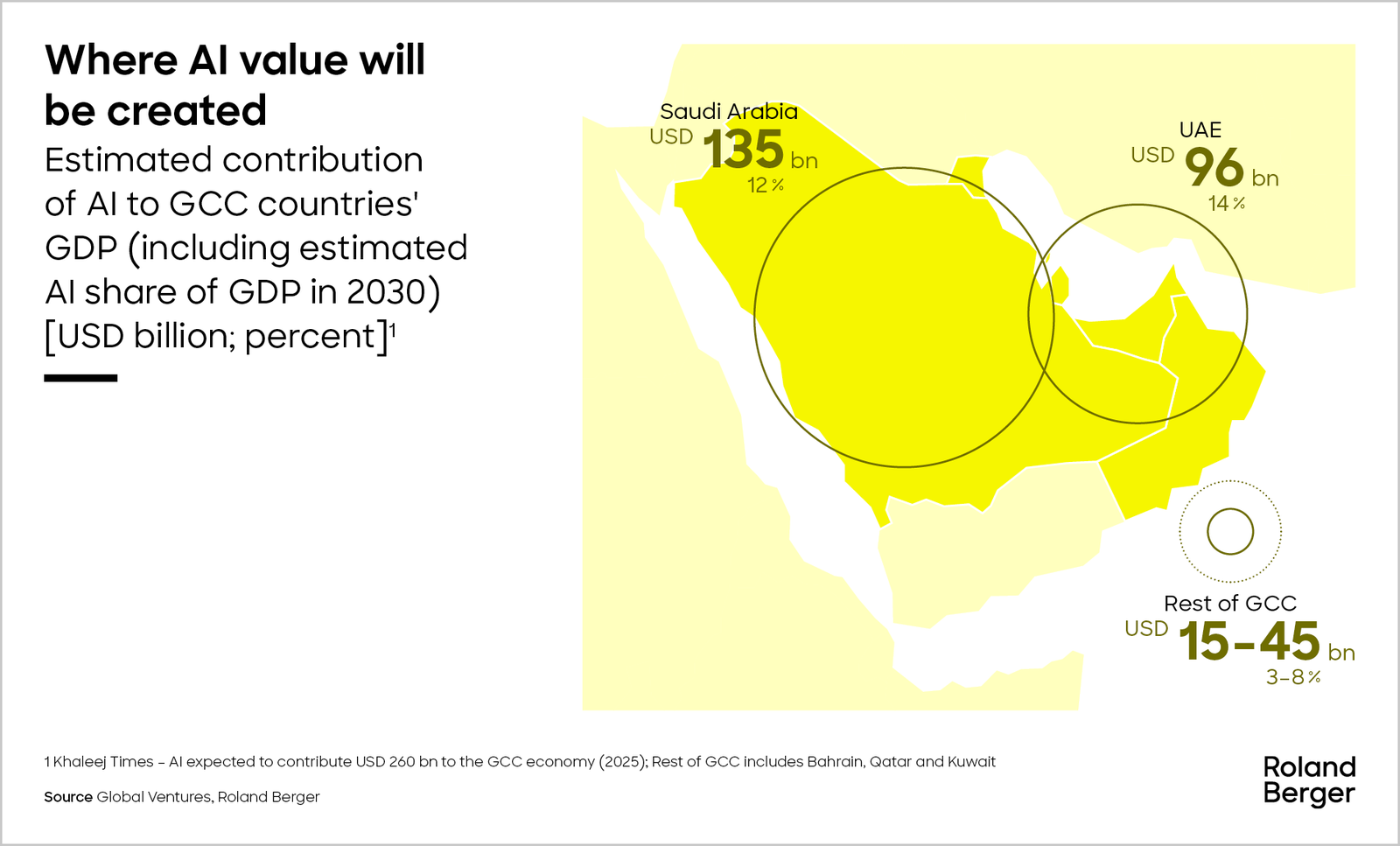
The global surge in AI has accelerated across industries and functions, driven by breakthroughs in large-language models. Today, roughly 80 percent of organizations deploy AI in at least one business area. Economist Impact projects that AI could generate up to USD 260 billion in economic contribution to GCC GDP by 2030, with banking estimated to contribute almost 14 percent to the GCC’s GDP by 2030. Governments are actively nurturing this ecosystem: the UAE appointed the world’s first "Minister of Artificial Intelligence" and integrated AI into school curricula; Qatar and Saudi Arabia have launched multi-billion-dollar AI incentive packages.
- 3.2. Horizontal and vertical applications
AI solutions in fintech can be categorized as horizontal (broadly applicable, e.g., fraud detection, chatbots) and vertical (sector-specific, e.g., credit scoring, underwriting, robo-advisory). Vertical AI is rapidly outpacing horizontal, delivering sharper value and compliance advantages.
AI is driving broad operational improvements, especially in process optimization. It reduces manual effort, accelerates decision-making and improves turnaround times. In marketing and sales, AI can lower customer acquisition cost by up to 75%. Underwriting costs can be reduced up to 90%. Compliance functions benefit, particularly in KYC processes, with cost savings of 60–80%. On the revenue side, AI enhances speed and scalability, reducing time-to-market for new products by up to 40%. In customer service, AI platforms handle routine inquiries, accelerate resolution times and provide 24/7 support, delivering up to 150% ROI without increasing staffing needs.