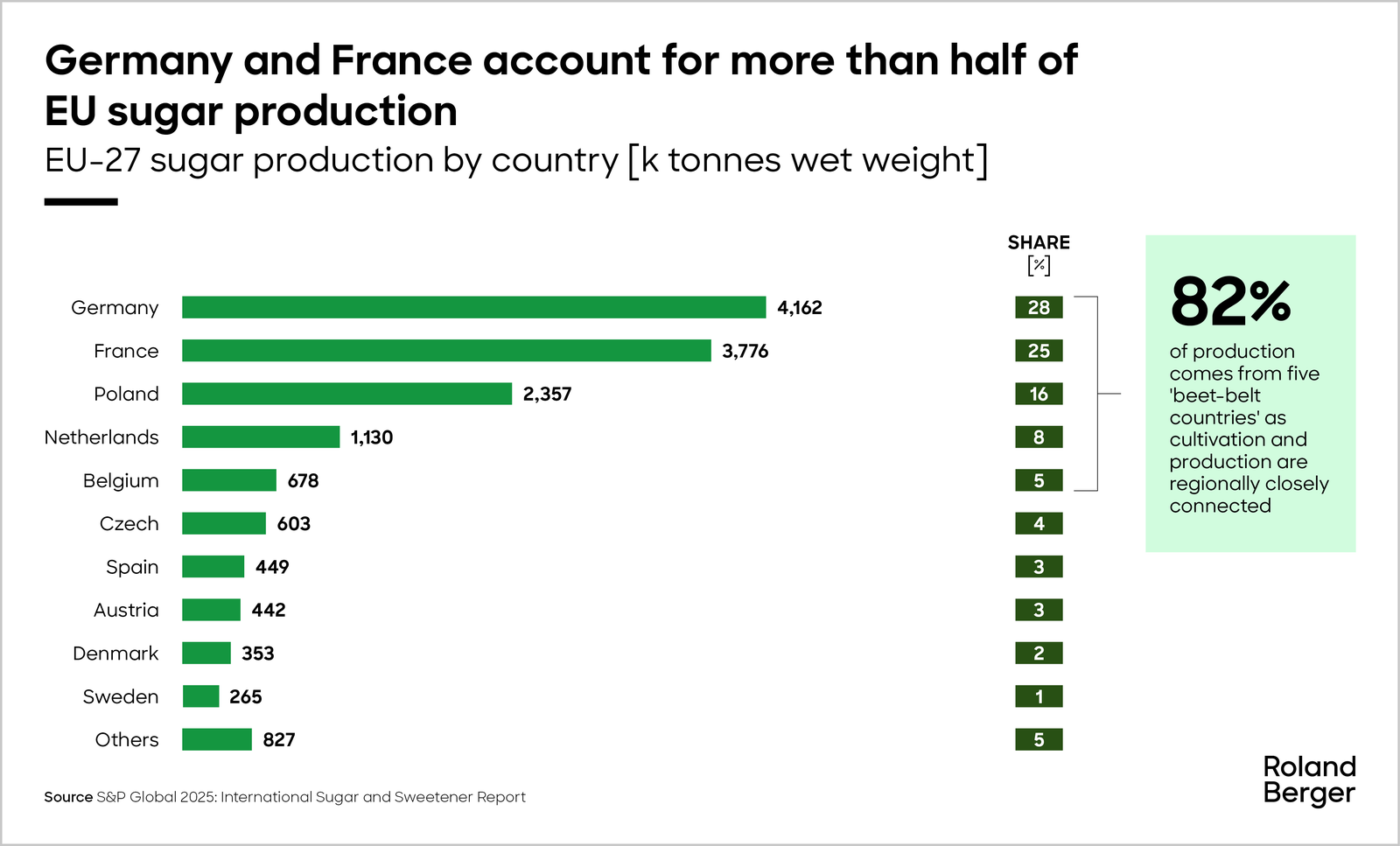
As a result of these challenges, Europe is already running a sugar surplus. An oversupply of one million tonnes is expected in 2025/26, and the problem is only likely to increase in the coming years. Producers are therefore looking to
valorize the by-products
of sugar beet production, such as beet pulp and molasses, and find new markets, especially in the non-food industry. This offers significant potential: Most sugar in the European Union (77% of total volume in 2023/24) is sold to food and drink manufacturers, whereas only 3% reaches the non-food market (biofuels, biogas, paper, bioplastics, fertilizers, chemicals, and cosmetics).
The main part of the report looks at the options producers have to exploit such opportunities. In particular, it outlines strategies to diversify sugar production away from the falling demand for refined sugar and into new areas to capture growth. These include sugar alternatives, such as nutrition solutions; alternative sweeteners, for example the growing market for natural sweeteners such as stevia;
fermentation,
which can be used to produce a myriad of in-demand food and other ingredients from sugar; and biochemicals, such as bioethanol and natural plastics. Other strategies outlined include managing price volatility, insecure sourcing, regulations, investment and consolidation opportunities.
Lead the change
The recommendations section of the report provides strategic responses and leadership imperatives to guide industry stakeholders through the market transition. It focuses on achieving the required shift toward demand-driven, end-to-end thinking, in which players not only process sugar but also maximize the value of every output, by-product, and partnership. Roland Berger’s strategic framework for sugar producers forms a core part of this, detailing a roadmap approach that ensures resilience, growth, and long-term value creation. The report also provides a practical four-step plan to implement the roadmap and wider transformation.
The report concludes with a series of key takeaways for leaders, from prioritizing strategy and
sustainability
to building alliances with stakeholders and investing in new capabilities. For more information, download a copy of the report or contact one of our experts.