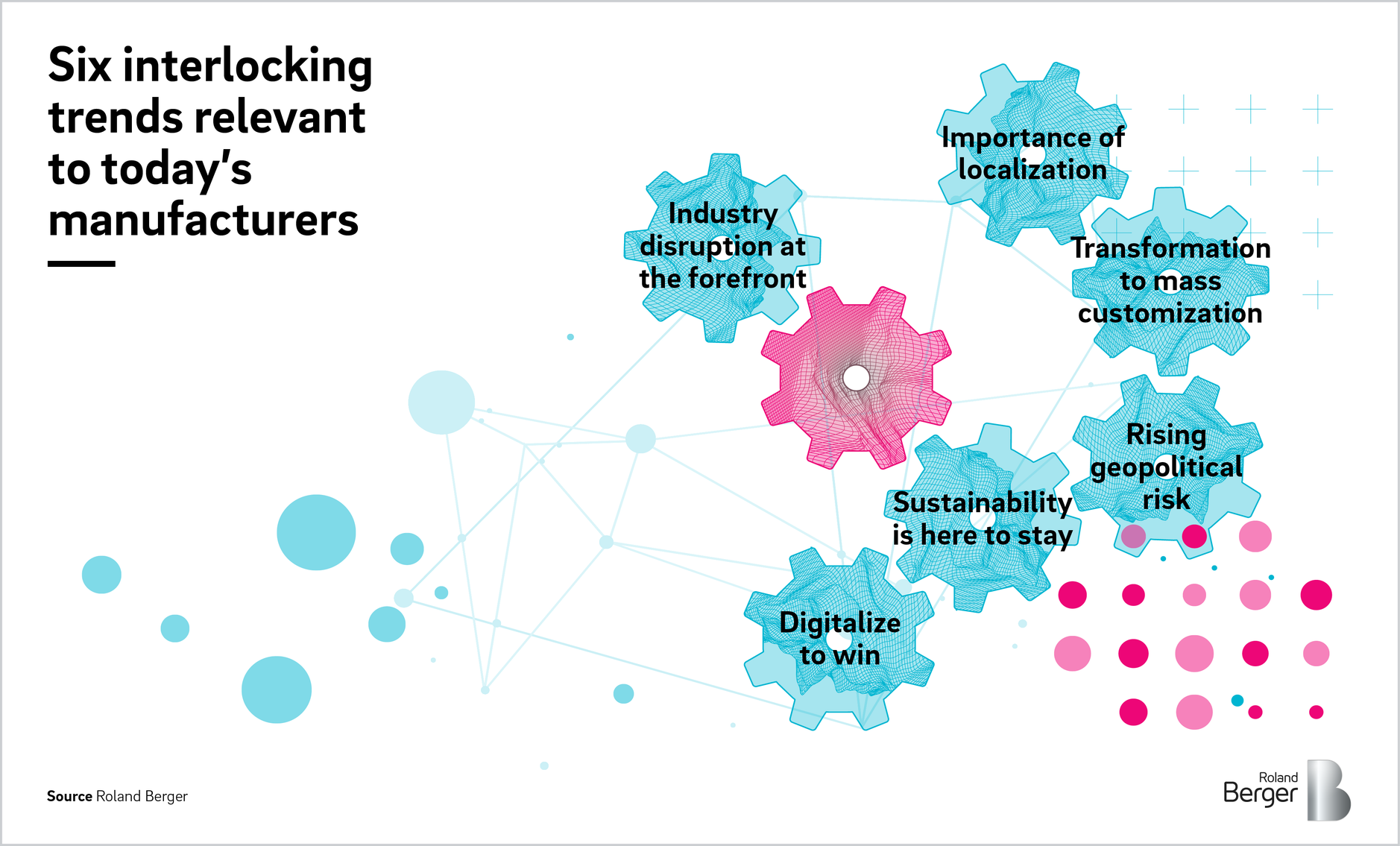
Among the findings:
- Business model innovation has come to manufacturing
Following in the footsteps of other sectors, manufacturing is increasingly looking at business model innovation instead of strictly focusing on product innovation. Additional sources of growth include new solutions, differentiation through software, and novel services.
- Digitalization is table stakes for competitiveness, and a prerequisite for sustainability
After many years of taking a
'wait-and-see' approach to digitalization
, manufacturers now realize digitalization is essential for them to succeed, and rank digitalization (77%) and sustainability (72%) as the most relevant and important trends. There has been considerable investment uptick in both over the last two years, and manufacturers are investing and making progress in both areas with long-term goals in mind.
- Reshoring and localization are gaining traction (and becoming a competitive advantage)
After decades of outsourcing, locating manufacturing within the market it serves is taking on new importance in wake of geopolitical risk, the accelerated pace of climate events, and broken supply chains, among other factors. More manufacturers are pursuing or considering localization and reshoring, with the U.S., Canada, and Mexico topping the list for intended destination. Among survey respondents, 52% stated they are implementing or expanding localization initiatives, and another 22% are piloting initiatives. Additionally, a whopping 52% plan to build new facilities as part of their relocation strategy.
- Technology leaders are much more likely to pursue lot-size-one or individualized manufacturing
Digitalization is playing an important role in the ability to deliver customized products, as well as the development of new products, solutions, and services. Customization initiatives and pilots are already being planned or are underway or expanding at 78% of companies; 34% of them are pursuing fully individualized manufacturing approaches, with the goal of lot-size-one (producing a single item) – the exact opposite of traditional mass production. Among companies that consider themselves to be early adapters, 54% are pursuing individualized manufacturing.
Manufacturers making the most progress are the ones that have figured out how to weave the opportunities, surprises, and exigencies into a coherent strategy – and turn them into a competitive advantage that might mean the difference between muddling through and being an industry leader.
For more information on the key findings and how next gen manufacturing leaders are disrupting themselves to increase their competitiveness and resiliency, download the full report.