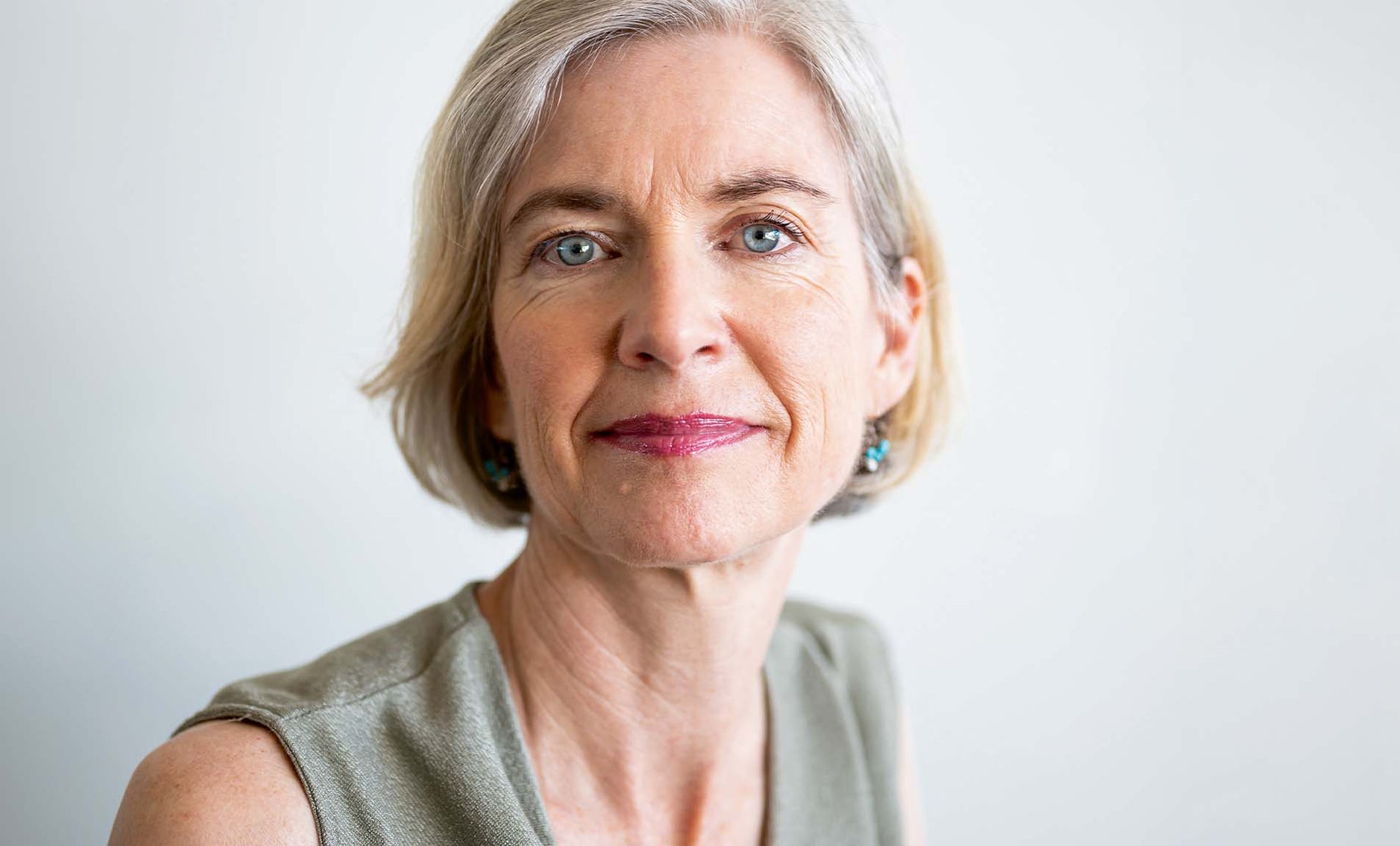

Discovering the potential of gene editing made Jennifer Doudna literally laugh out loud. But the scientific breakthrough is no laughing matter. Besides winning her a Nobel Prize the new technology could, in the wake of a global pandemic, be poised to make giant leaps toward a new generation of health care. She talks to Think:Act about the opportunities and the risks it brings.
The dawn of a new scientific age – or of a nightmare of reengineered human beings? The ability to rewrite the "code of life" through gene editing has sparked strong, sometimes conflicting reactions. The technology that makes it possible – CRISPR associated protein 9 (or Cas9) – is the brainchild of the US biochemist Jennifer Doudna and her colleague, Emmanuelle Charpentier, a French microbiologist. Champions and sceptics alike believe that the ability to adapt and rewrite genes represents a milestone in scientific and human development, with consequences ranging across public health, agriculture and biomedicine. Business is also starting to grapple with the prospect of gene editing and the commercial possibilities CRISPR offers.
The advent of CRISPR comes at a time when, thanks to the worldwide pandemic, science and scientists have moved to the center of the global public square – and yet discussion around gene editing, perhaps one of the greatest life-changing innovations of all, remains relatively muted.