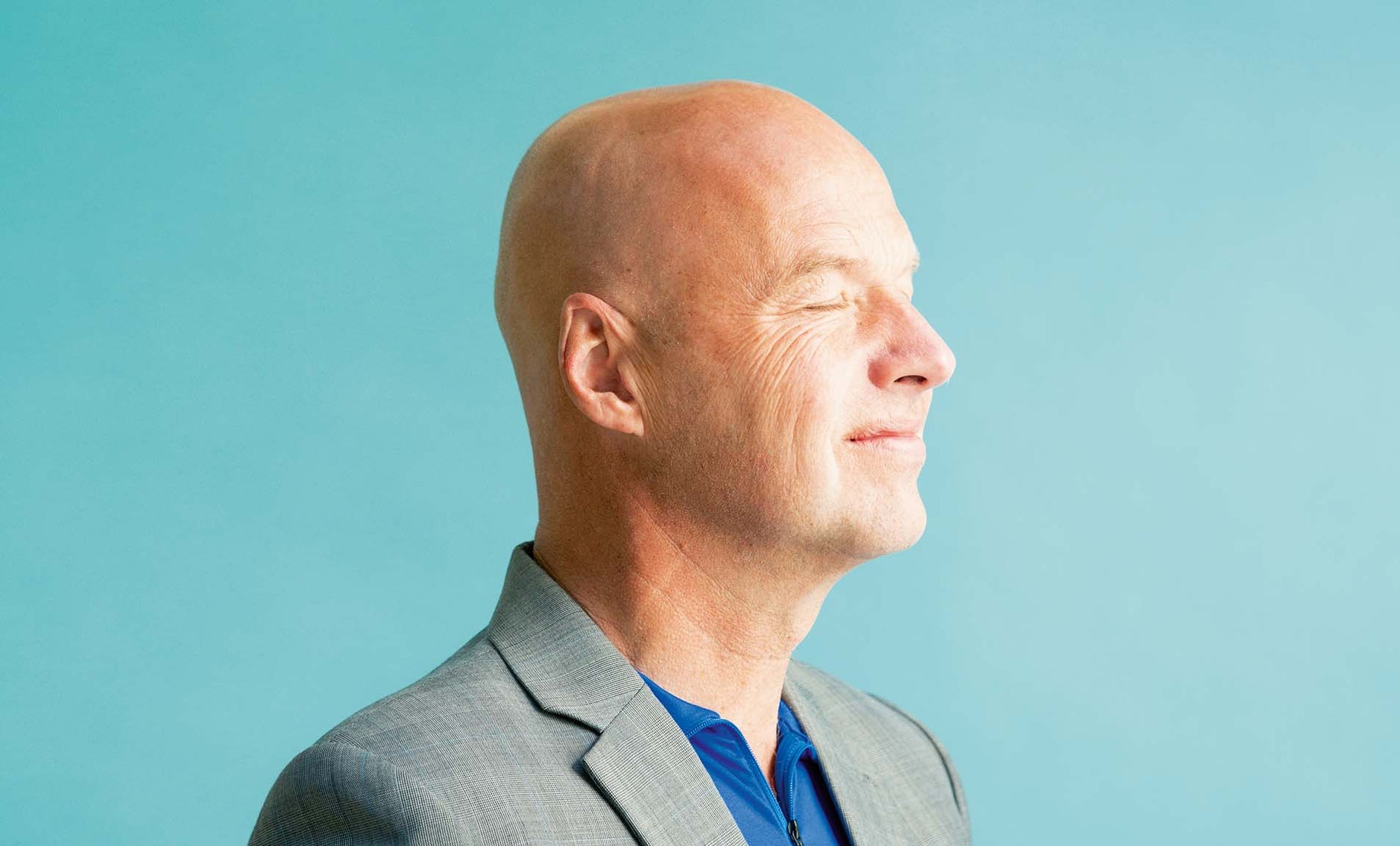

Artificial intelligence and robotics pioneer Sebastian Thrun explains how he decides which ideas to pursue next and why technology's rapid pace is, if anything, not fast enough to solve global problems and alleviate suffering.
Saturday October 8, 2005, was one for the history books. That morning, for the first time, an unmanned vehicle autonomously navigated a treacherous course through the Nevada desert. It had won what the Pentagon's innovation arm DARPA had called the "Grand Challenge." The sensor-studded SUV "Stanley" pulling over the finish line didn't just put German-born computer scientist Sebastian Thrun and his team on the map. It's also widely considered the pivotal event that turned self-driving vehicles from a science fiction fantasy into real science fact. Robo-cars suddenly seemed within reach, setting off billions in investments by automotive and IT incumbents and launching dozens of startups.