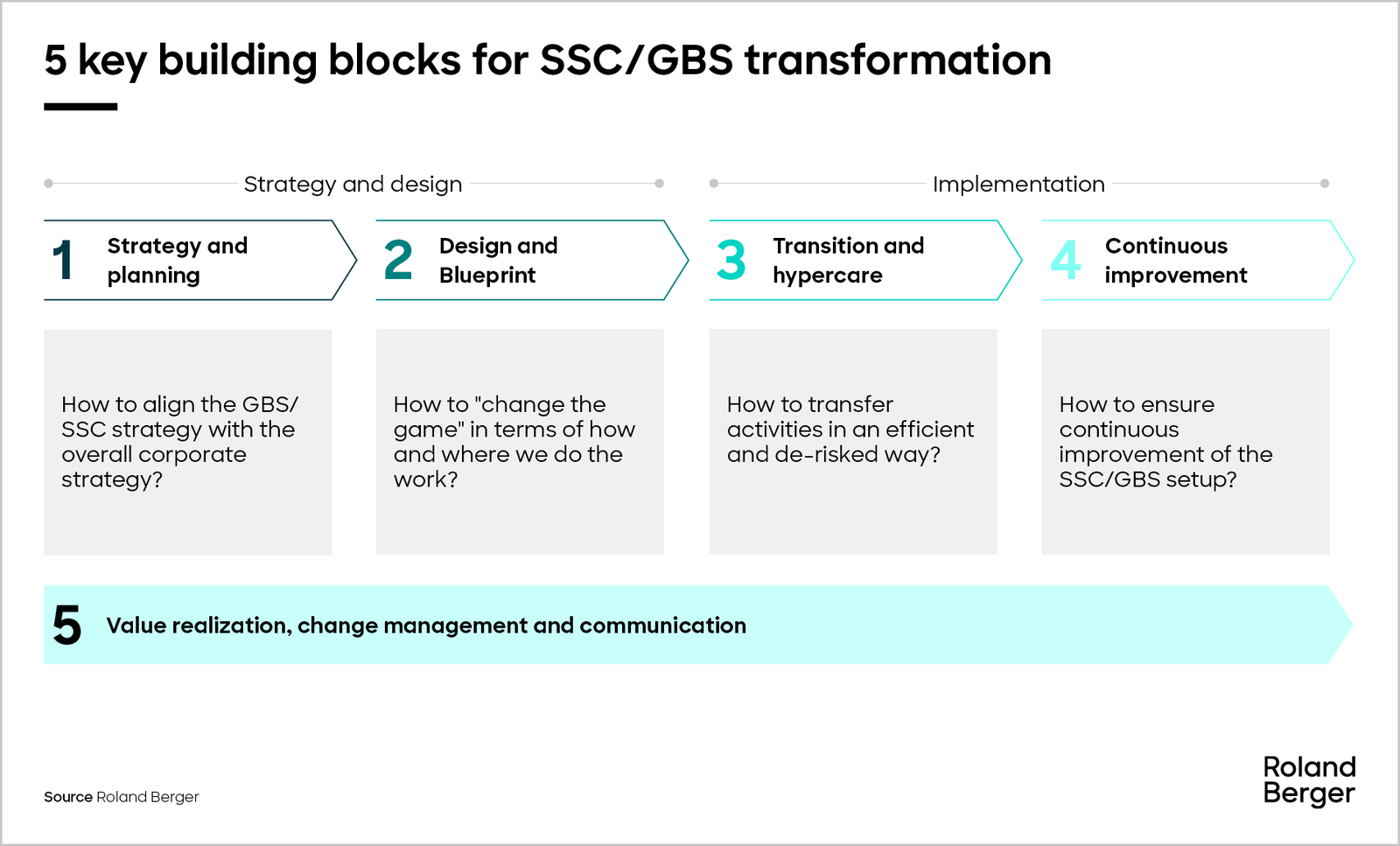
1) The strategy and planning phase determines whether GBS structures should be applied and identifies the relevant areas. There are additional factors to consider besides pure cost efficiency, such as a critical minimum size, the autonomy or separation of individual business units, or regional aspects.
2) Design und blueprint are crucial for the success of SSC/GBS structures. This is where the key parameters are defined, such as:
- Make-or-buy
- Delivery model
- Regional structure
- Management concept
- Relevant functions and allocation of tasks per function between GBS and regional units
We discuss these questions with our client in a structured manner, based on defined criteria and drawing on our experience of a wide range of companies with established SSC/GBS structures.
The choice of SSC/GBS locations often plays a special role, as does the selection of an external managed service provider, depending on the model. We provide support here, too, by applying our market knowledge and a proven selection and evaluation model.
3) In the transition and hypercare phase, the aim is for processes to be transferred and stabilized with as little disruption as possible. The focus here is on recruitment, documentation, training and work shadowing in order to ensure that knowledge is transferred as securely as possible and any impact on business operations is mitigated. There are various options here, and these differ mainly in whether the process status quo is transferred over and then optimized in the GBS or whether the transformation takes place before processes are moved over to the GBS.
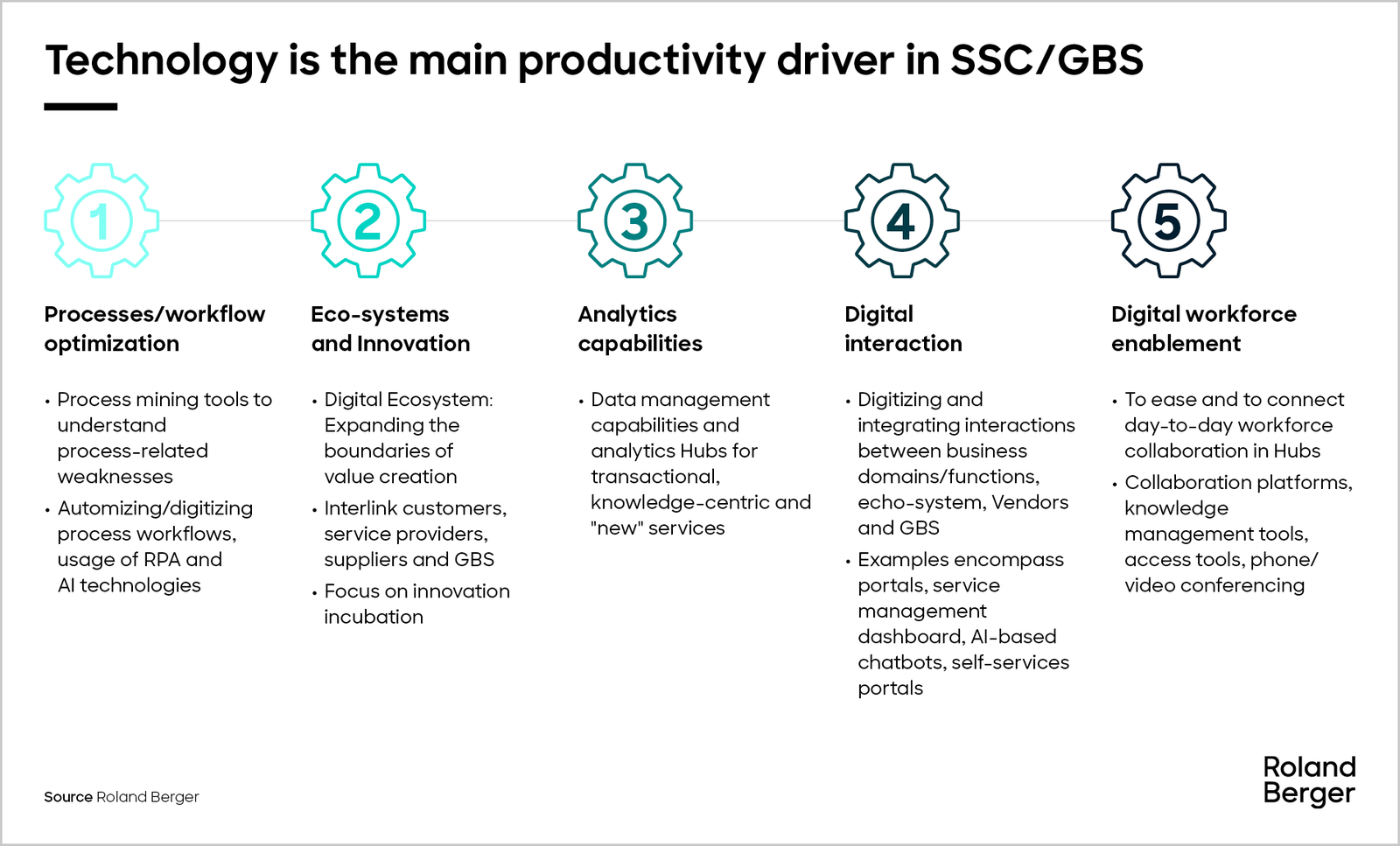
4) Once processes have been successfully stabilized is when the continuous improvement process begins and it never really ends. The goal of successful GBS is to achieve annual productivity gains through standardization and bundling, and in particular through technology and digitalization. The aim here is to realize technology-driven efficiency gains in all areas and to leverage the economies of scale of a GBS organization.