Cross-functional complexity remains the decisive bottleneck
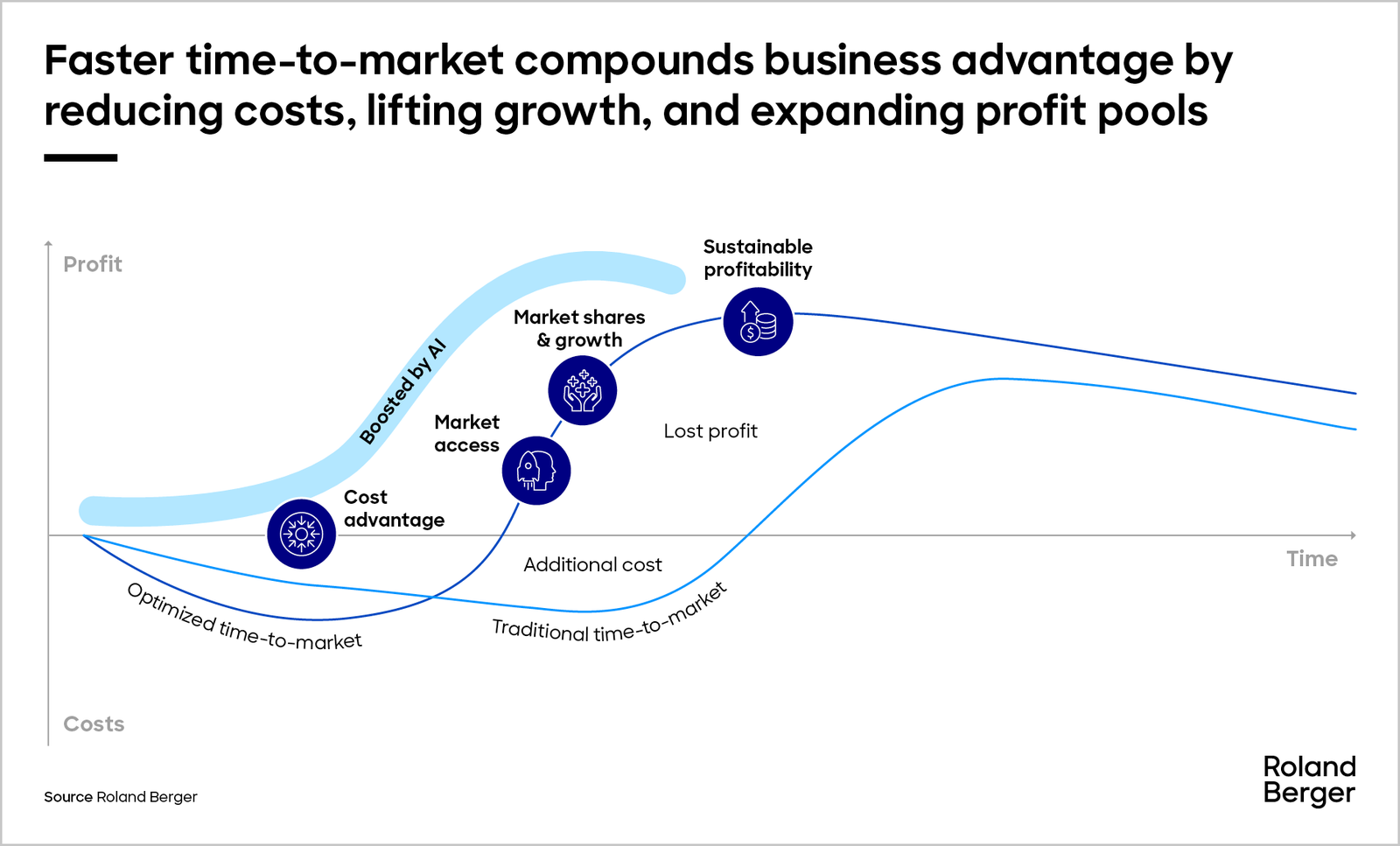
The real bottleneck is cross-functional complexity. Repeated alignments, handovers, approvals, clarification loops, and waiting times slow organizations down. Product management, engineering, procurement, quality, manufacturing, and sales all contribute to the final launch date but often work with different data, priorities, and decision cycles. Under growing competitive pressure, these delays become strategically costly.
One of the strongest levers lies before development even begins. AI can bring together market signals, customer feedback, competitive moves, and internal engineering knowledge, helping teams define clearer requirements faster. In
pharmaceuticals,
for example, generative AI is already used to pre-structure medical reports, study protocols, and regulatory documents by searching existing research data and drafting first versions. Experts can then focus their time on review, judgment, and approval rather than starting from a blank page.
The same logic applies throughout development and validation. Simulation,
digital twins,
and AI-supported quality testing can significantly reduce physical prototypes, test loops, and late rework. In aerospace, AI-supported simulations help assess component geometries virtually, comparing load capacity, weight, and manufacturability before a prototype is built. Unsuitable variants can be excluded earlier, validation becomes more targeted, and development iterations are compressed without compromising quality or safety.