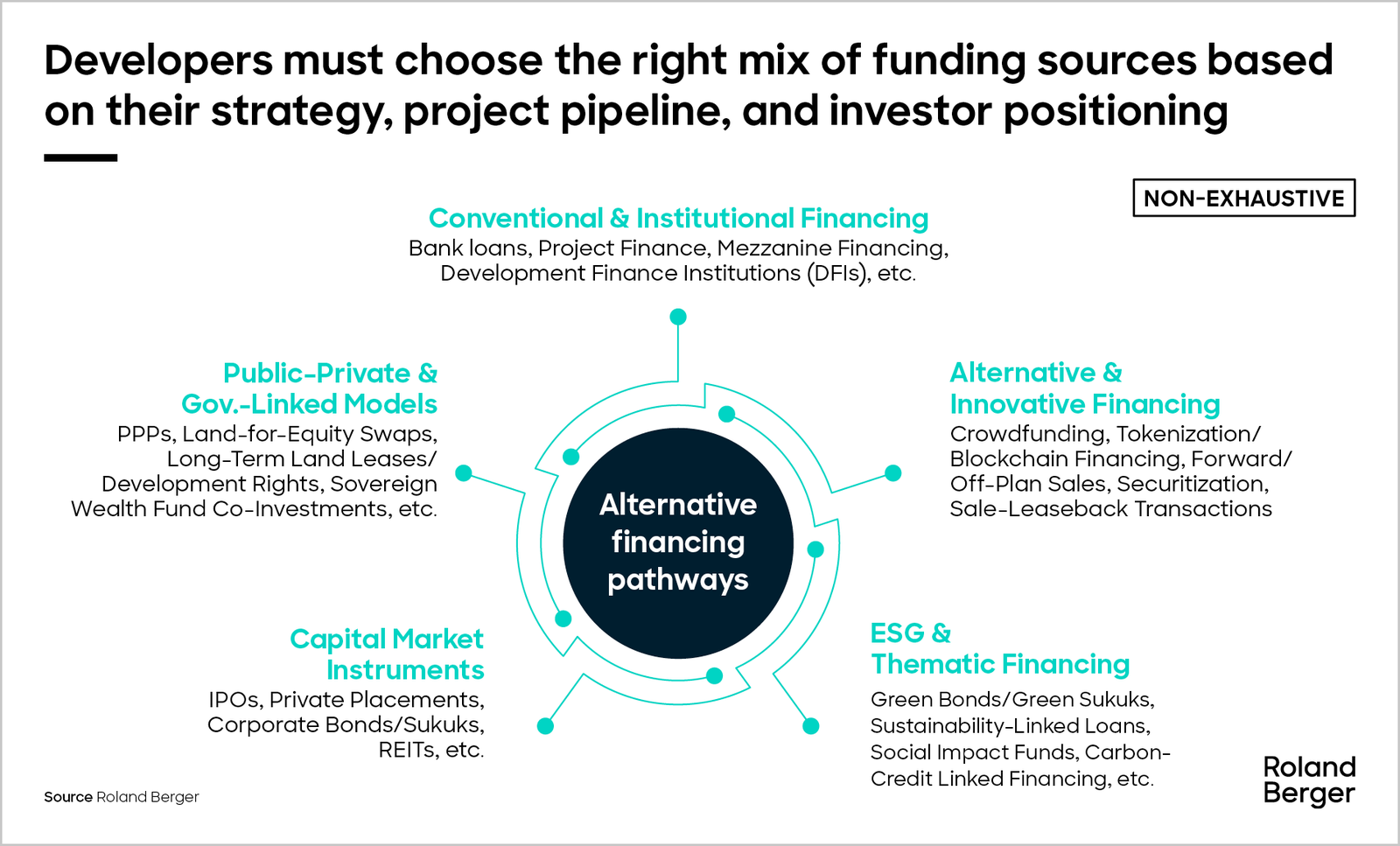
Conventional and institutional financing
Traditional sources of funding remain central for real estate developers. Bank loans, whether bilateral or syndicated, provide straightforward debt financing from local or international banks, with syndication allowing multiple lenders to share risk on large projects. Project finance, typically structured through a special purpose vehicle, is “non-recourse” - meaning repayment depends entirely on project cashflows – and is often used for large-scale developments. Mezzanine financing offers a hybrid of debt and equity, giving lenders higher returns in exchange for greater risk and filling funding gaps between equity and senior debt. Development finance institutions such as the IFC (International Finance Corporation) or EBRD (European Bank for Reconstruction and Development) also play a role, supporting projects that enhance sustainability or social impact.
Public-private and government-linked models
PPPs (public-private partnerships) are a common mechanism, and include arrangements such as “build-operate-transfer” – sharing both risk and capital between public and private actors. “Land-for-equity” swaps provide another route, with governments contributing land in return for project equity, reducing upfront costs for developers. Long-term leases or development rights similarly lower capital intensity by avoiding outright land purchases. Sovereign wealth funds, both domestic and foreign, can also act as co-investors, helping finance and de-risk large developments.
Capital market instruments
Capital markets provide multiple ways to access larger pools of capital. IPOs allow developers to list shares on exchanges and raise equity from public investors, while private placements achieve the same with institutional or strategic backers, without going public. Debt issuance offers further options, through corporate bonds or sukuks. REITs pool income-generating property assets into listed vehicles that provide both liquidity and dividend yields to shareholders.
Alternative and innovative financing
Developers are also turning to newer, less conventional channels. Crowdfunding platforms pool contributions from retail investors for specific projects, while tokenization and blockchain financing enable fractional ownership through digital tokens, improving liquidity and accessibility. Revenue-based financing and securitization monetize future cashflows, such as rents or leases, by packaging them into tradable securities. Forward or off-plan sales likewise generate upfront capital by selling units before construction is completed. Joint ventures (JVs) with international developers can bring capital, expertise and risk-sharing, while “sale-leaseback” transactions release capital by selling an asset and leasing it back for continued use. Meanwhile, private credit and debt funds offer flexible but costlier alternatives to bank lending, often with faster execution.
ESG and thematic financing
Finally, thematic instruments are gaining ground. Green bonds and green sukuks fund environmentally sustainable real estate projects, while sustainability-linked loans tie borrowing costs to performance against ESG (environmental, social and governance) targets. Social impact funds focus on affordable housing, healthcare and community infrastructure. In addition, carbon credit-linked financing allows projects that generate tradable carbon credits to channel those revenues into development funding.