With resources at apremium, another general trend is markets’ efforts to secure their supply of materials, which will lead to lock in effects. For example, Europe and North America are currently focusing on nickel-based materials and battery players secure this material via long-term agreements or direct investments, so will likely stick to the technology as they know they can recycle the nickel in the future. Indonesia, meanwhile, has legislated to ensure that most of its local available raw materials, such as nickel, can only be processed in country. A closed-loop project with CATL, for example, requires the battery giant to process 60% of its nickel on Indonesian soil.
Competitiveness: Overcapacity looms
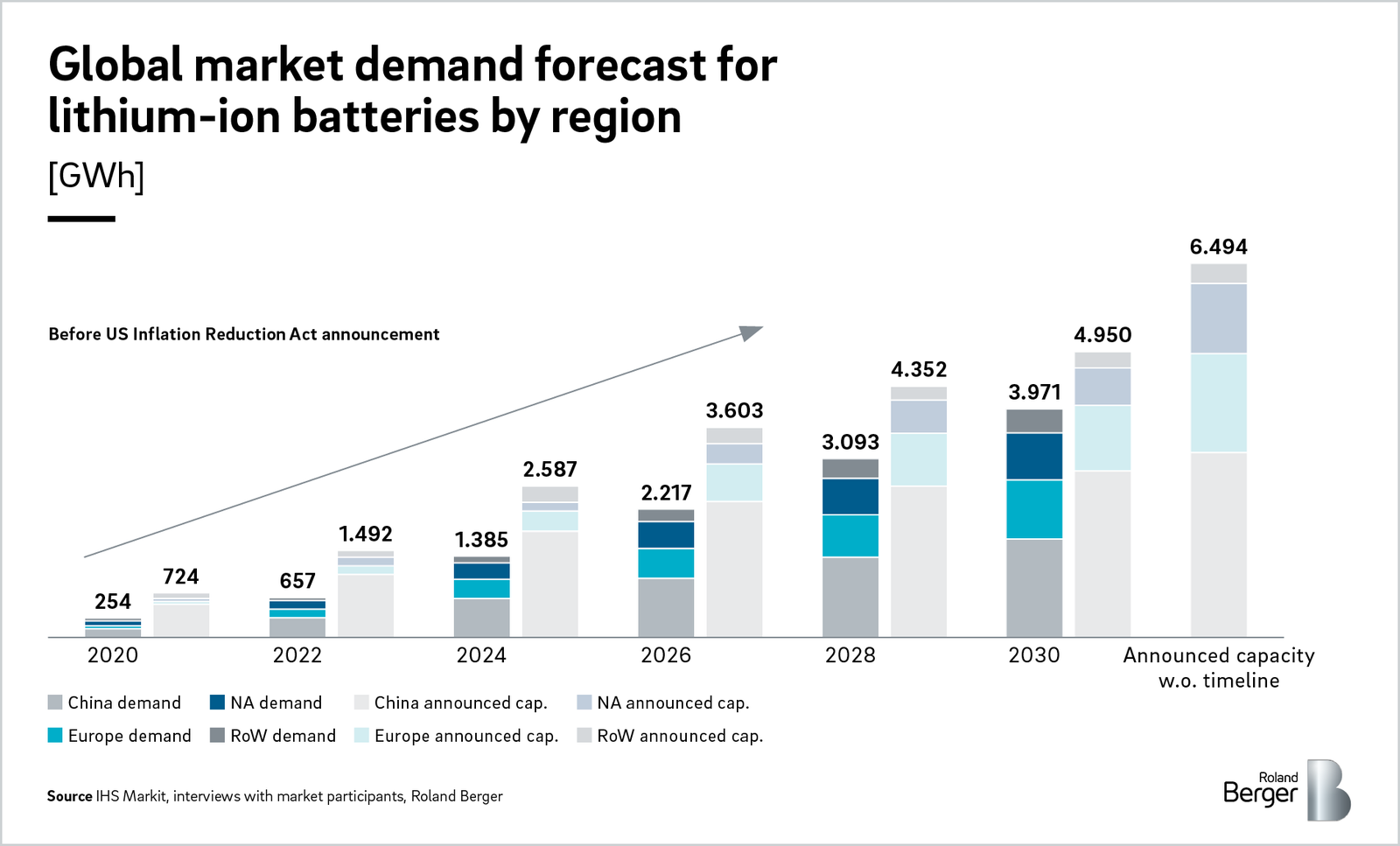
The LiB market is in danger of becoming overheated. Demand is insatiable, especially from the EV market, and producers are at the limit of their capacity to meet it. However, as more and more producers emerge, overcapacity will become a problem. The EV industry is forecasted to account for 90% of global battery demand in 2030, equivalent to four terawatt hours (TWh). However, announced global capacity for 2030 is more than 6 TWh by now. While demand forecasted are constantly adjusted to higher numbers, this initial announced installed overcapacity will lead to low utilization and ultimately low or negative profits. Consolidation, delay as well as stranded investments, are likely – as the battery industry also faces a huge war on talent.