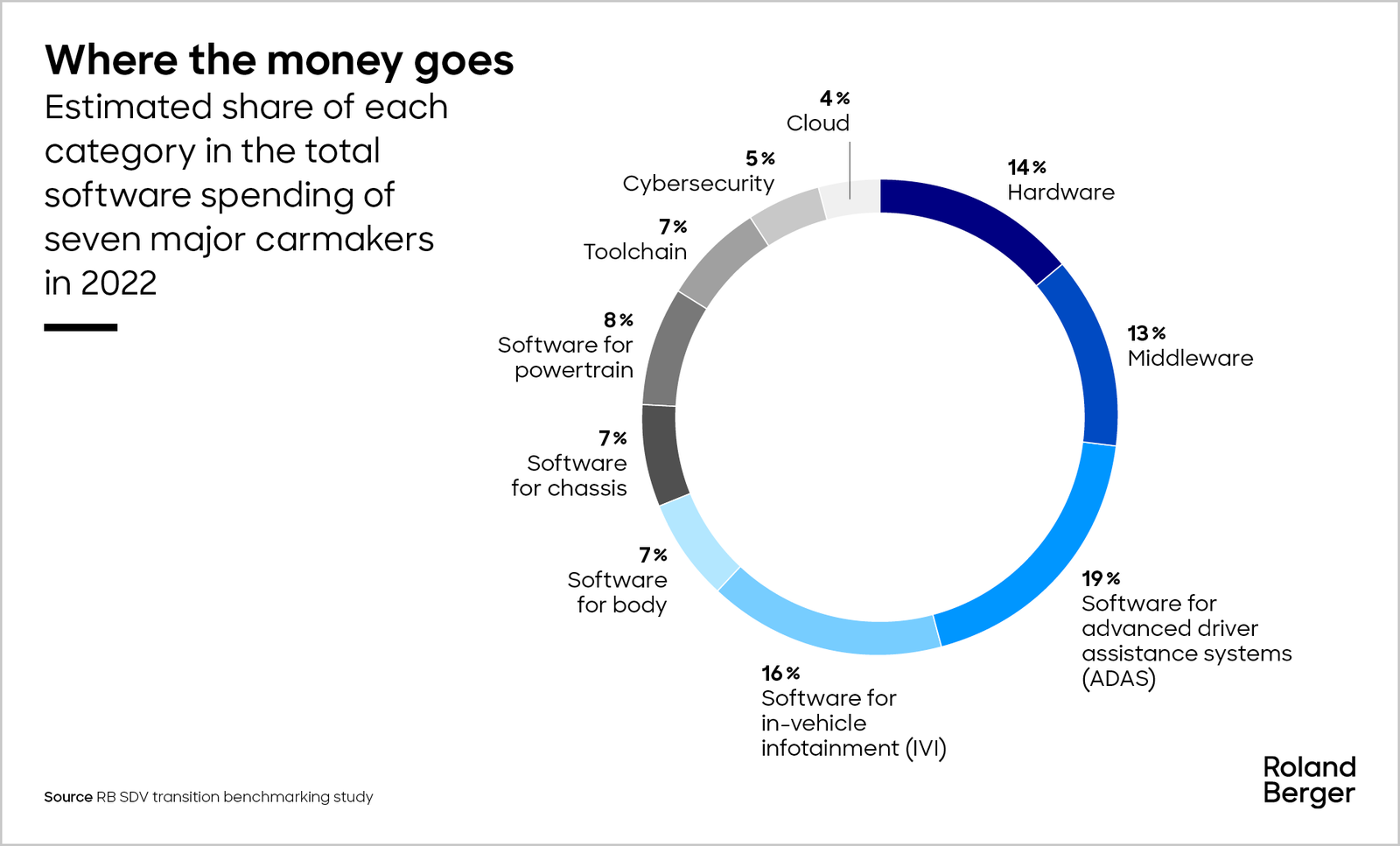
Software for advanced driver assistance systems (SW – ADAS) covers features such as lane keeping, adaptive cruise control, and parking assistance. This is a major focus for carmakers as they seek to differentiate themselves from competitors. In the long term, some carmakers (e.g., Mercedes-Benz, BYD, General Motors) will look to maximize their in-house development of ADAS software, while others rely on suppliers or partners. This category is expected to grow extremely quickly.
Software for in-vehicle infotainment (SW – IVI) is a key spending area for carmakers, and includes entertainment, navigation, and connectivity features such as multimedia, maps, and voice assistants. These features are crucial to user experience and, in the long term, some carmakers (e.g., Volkswagen, BMW) will aim to control more of them in-house; others will prefer to rely on suppliers or partners. This category is expected to grow rapidly.
Software for body (SW – Body) includes features, such as lighting, climate control, and door locks. This is a stable spending category as most of the software functionality is embedded in the hardware offerings of suppliers. As a result, the pace of growth will be slow.
Software for chassis (SW – Chassis) covers steering and braking features like power steering, anti-lock brakes, and stability control. Like body software, this is a stable spending category, expected to grow slowly.
Software for powertrain (SW – Powertrain) controls engine and transmission features including the battery management system, engine control unit, and transmission control unit. This is a growing spending category as carmakers are developing more complex software for
electric powertrains.
Some (e.g., GM, Scania) are willing to increase their insourcing of powertrain software. We expect moderate growth in this sector.
Toolchain software supports the software development lifecycle including continuous integration, continuous delivery, testing, and debugging. This is also a growing spending category, with many carmakers outsourcing the work to suppliers or partners due to a lack of in-house capability. This category is expected to grow at a moderate pace.
Different approaches lead to major spending variations
Our analysis shows that although the seven companies share similar spending patterns, there is a major gap between the highest-spending OEM and the lowest: Despite similar levels of target functionality, the top spender invests five times more in software than the lowest spender.
While this can partly be attributed to portfolio complexity and other objective factors, there are fundamental differences in how OEMs approach the SDV challenge: some approaches can generate significant cost efficiencies and help curb soaring SDV budgets. In future articles, we’ll explore these topics in more detail as well as outlining how to create an efficient SDV roadmap and the benefits this can bring.