The Water Health Scenario: a roadmap to 2040
Summa Equity's Water Health Scenario outlines a systematic approach to restore Europe's water systems by 2040, built on eliminating harmful substances through bans, phase-outs, and substitution, using advanced treatment to capture pollutants at their source or along their pathways, protecting populations from contamination, and restoring ecosystems through remediation initiatives.
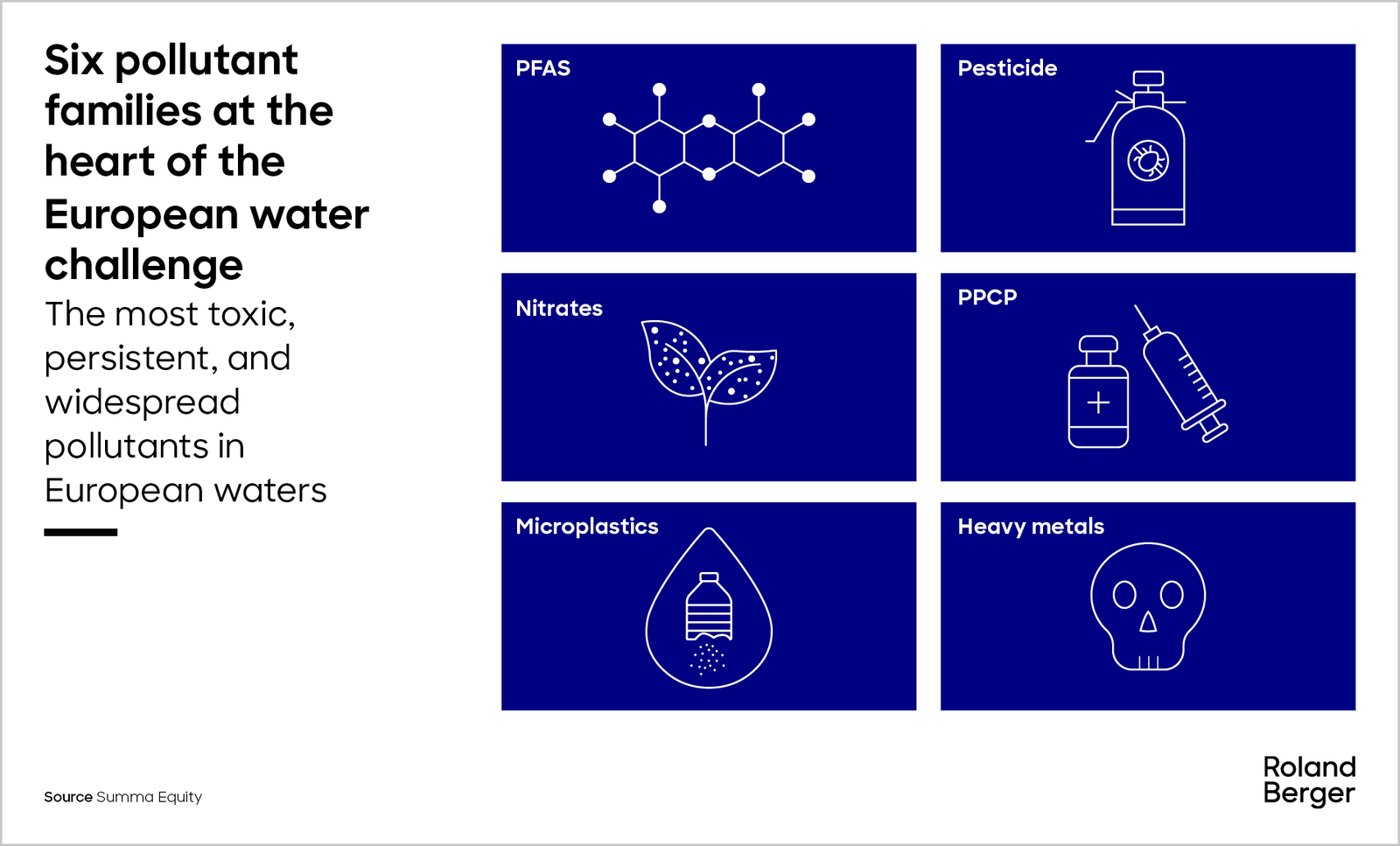
The report poses that by 2040, these measures would cut pollutant emissions across all major contaminant groups by more than 50%, with around 75% of European water bodies achieving compliance with Environmental Quality Standards, compared to less than 40% today. PFAS exposure would shrink from approximately 200 million people today to fewer than 5 million, while pesticide exposure through tap water would fall from 45 million to fewer than 8 million people. Nitrate contamination would be eliminated for all Europeans. PPCP residues would be reduced by 70%. Microplastic ingestion would drop sixfold. Heavy metal exposure would be cut by around 90%.
Achieving this requires €226 billion in incremental capital expenditure over the next 15 years, distributed across the four levers, representing a 30% increase in water treatment spending. But the economic case is clear: Water health markets could reach €370 billion in annual revenues by 2040, driven by expanding demand for advanced treatment, resource recovery, and ecosystem restoration. In total, this transformation could unlock a €1 trillion water market opportunity — while preventing at least €180 billion annually in health impacts, ecosystem losses, and cleanup expenses.
This isn't only about avoiding risks — it's about unlocking innovation, creating healthier communities, and building resilience for generations to come. With coordinated action, Europe can cut toxic exposures, prevent premature deaths, revive ecosystems, and position itself as a global leader in water health and circular economy solutions.
Access Summa Equity's full report here.