Understanding the new normal
In previous updates we analyzed the short- and mid-term impact of the Covid-19 crisis on different industry sectors and their ability to recover. In order to understand the new normal, we now take a closer look at the longer-term impact of the current crisis on a number of different sectors.
For agriculture, food and beverages, construction and wholesale and
retail trade
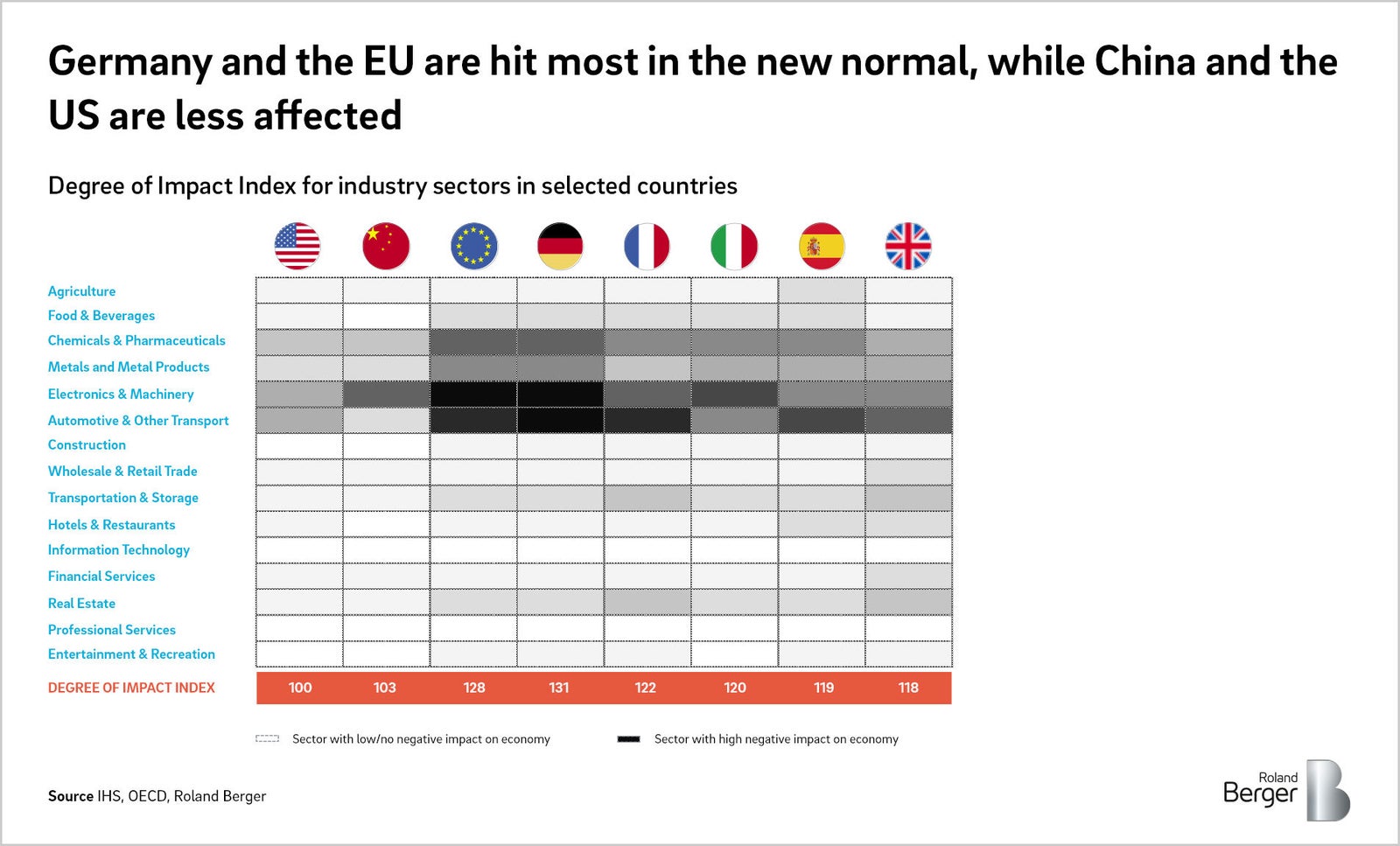
the impact will likely be small. For example, long-term demand for new office space may be dampened due to increased remote working but negative long-term effects on the construction of residential real estate is unlikely. Information technology and professional services, by contrast, stand to benefit from the crisis: With more people working from home, digital tools and services will be in demand, while the need for professional services will increase due to greater uncertainty in many areas of life.
Other industries may be somewhat more impacted. The pharmaceutical sector may suffer due to regionalization and localization of the production of critical goods. Financial services could be affected by the increase in the number of defaults and the decrease in demand for financing for large-scale capital investments. We are likely to see less demand for corporate real estate services, but private demand will remain unaffected. Entertainment and recreation is suffering in the short term due to health-related restrictions, but is likely to largely recover longer term.
Worst hit in the long term, however, will be automotive, transportation and storage, electronics and machinery, metals and hotels and restaurants. For example, decreased purchasing power and increased personal economic uncertainty mean that people will be less likely to buy automobiles in the new normal, just as companies will be less likely to invest in machinery. De-globalized supply chains will disrupt the metals industry – and also reduce the amount of business travel. This, in turn, will have a negative impact on spending in hotels and restaurants.
By combining our outlook for specific industries with our forecasts for different regions, we can calculate a "Degree of Impact Index" for selected countries. We express this as a score for each country, indexed to the impact of the crisis on the United States (= 100). Countries with a high share of manufacturing sectors and a high degree of trade openness, such as Germany, are particularly affected and thus have a higher score. Those with a large domestic market and therefore less global interconnectedness, such as China and the United States, have a lower score.