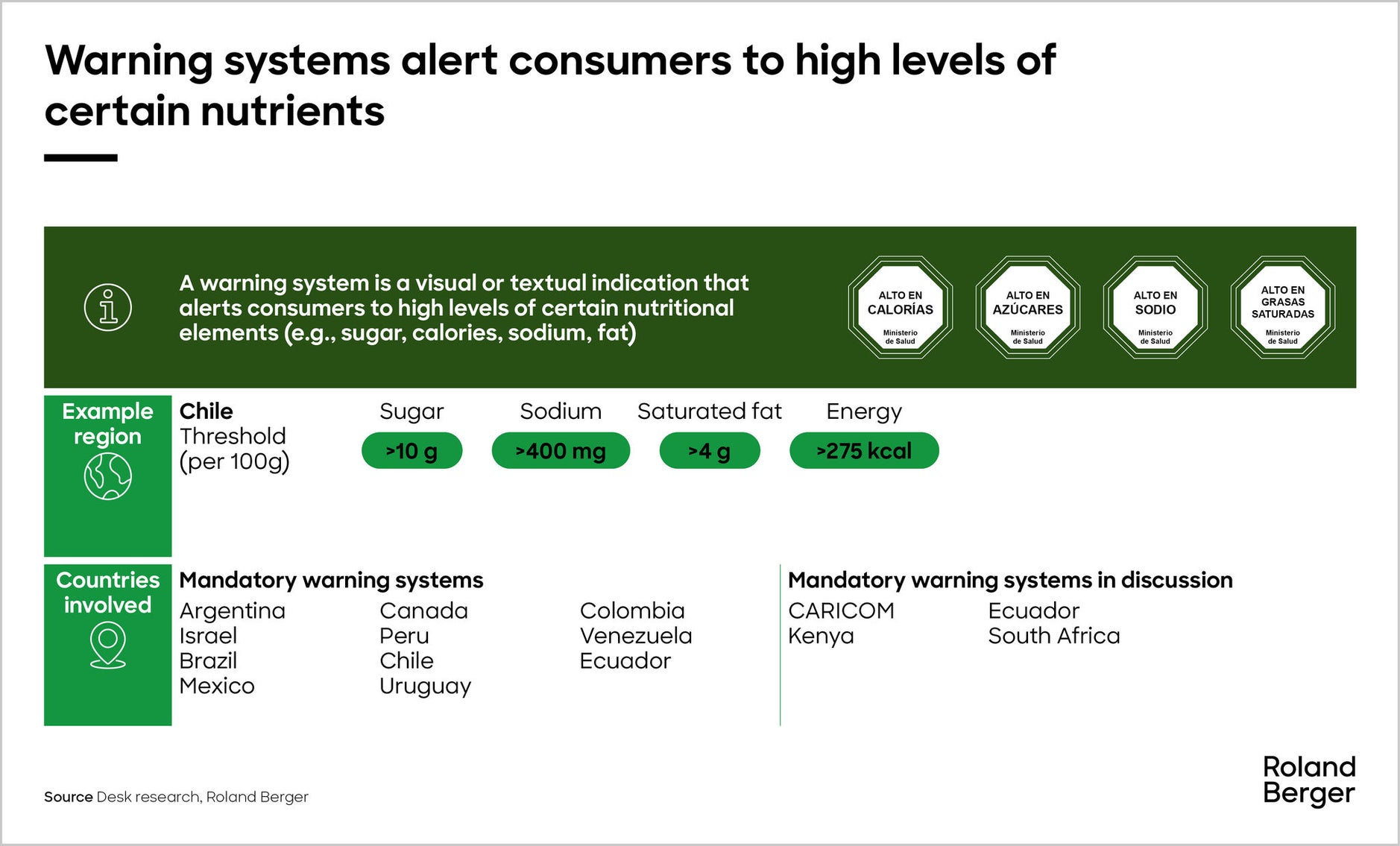
Front-of-package nutrition labels have been shown to have an impact on consumer health. In 2016, Chile implemented a multi-pronged obesity reduction program that combined front-of-package warning labels with marketing restrictions, school-based restrictions and taxation. A study published in the Lancet in 2021 examined the effects of Chile's multi-pronged program by analyzing purchase data from a sample of the population. The study compared data from 18 months before and after the program's implementation. It revealed a 3.5 % reduction in calorie intake, as well as reductions of 10.2 %, 4.7 % and 3.9 % in sugar, sodium and saturated fat consumption, respectively.
The researchers also observed changes in consumer behavior within specific food categories. For instance, consumption of industrialized fruit and vegetable juices with warning labels decreased by 47 %, while purchases of meat substitutes with warning labels declined by 11 %. However, overall consumption within each category remained relatively stable as consumers predominantly switched to products within the same category that did not bear warning labels.
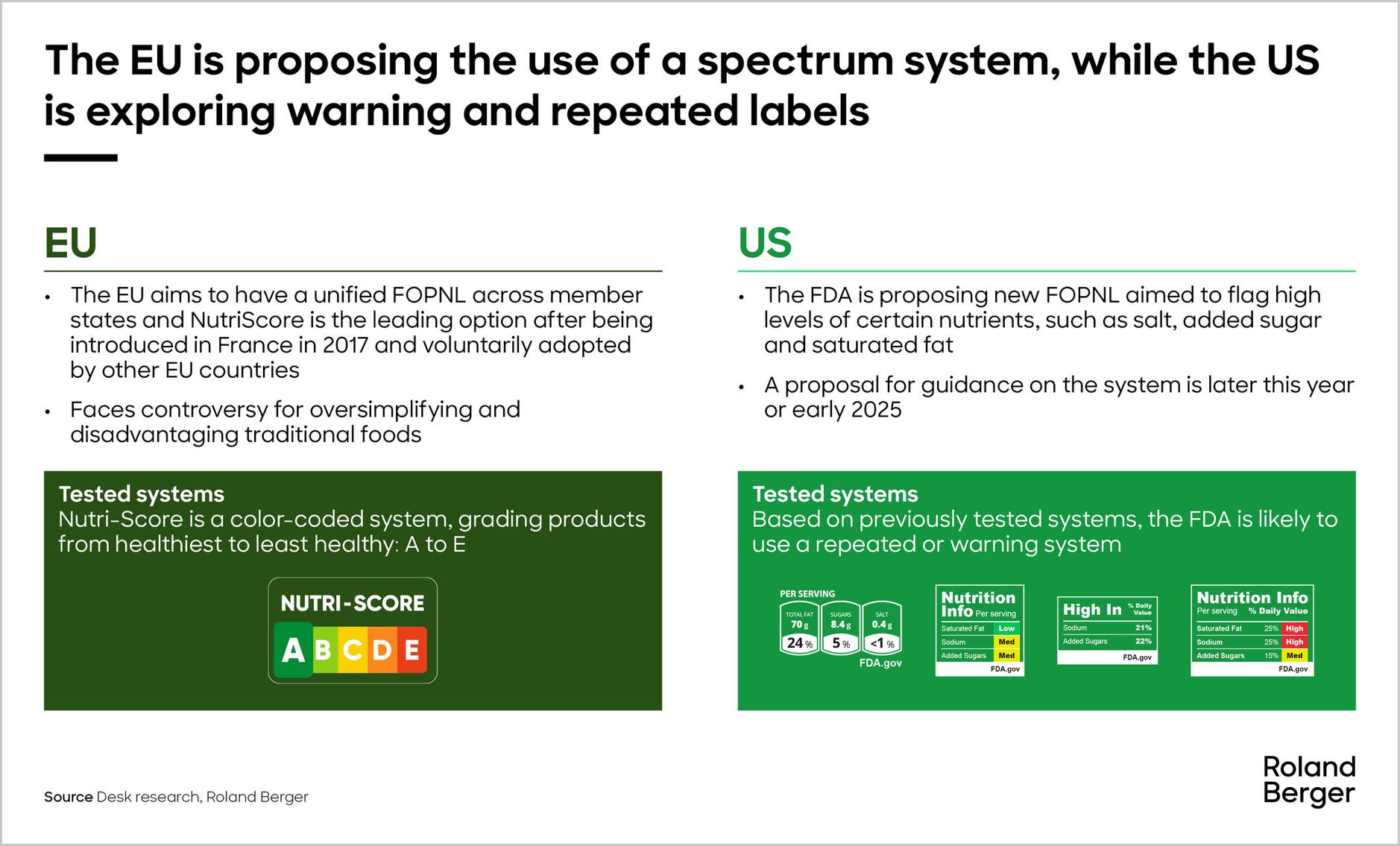
While obesity rates have continued to rise in Chile after the implementation of the multi-pronged obesity reduction program, policymakers consider it an early success story in the adoption of front-of-package nutrition labels. Currently, both the United States and the European Union are in different stages of implementing mandatory
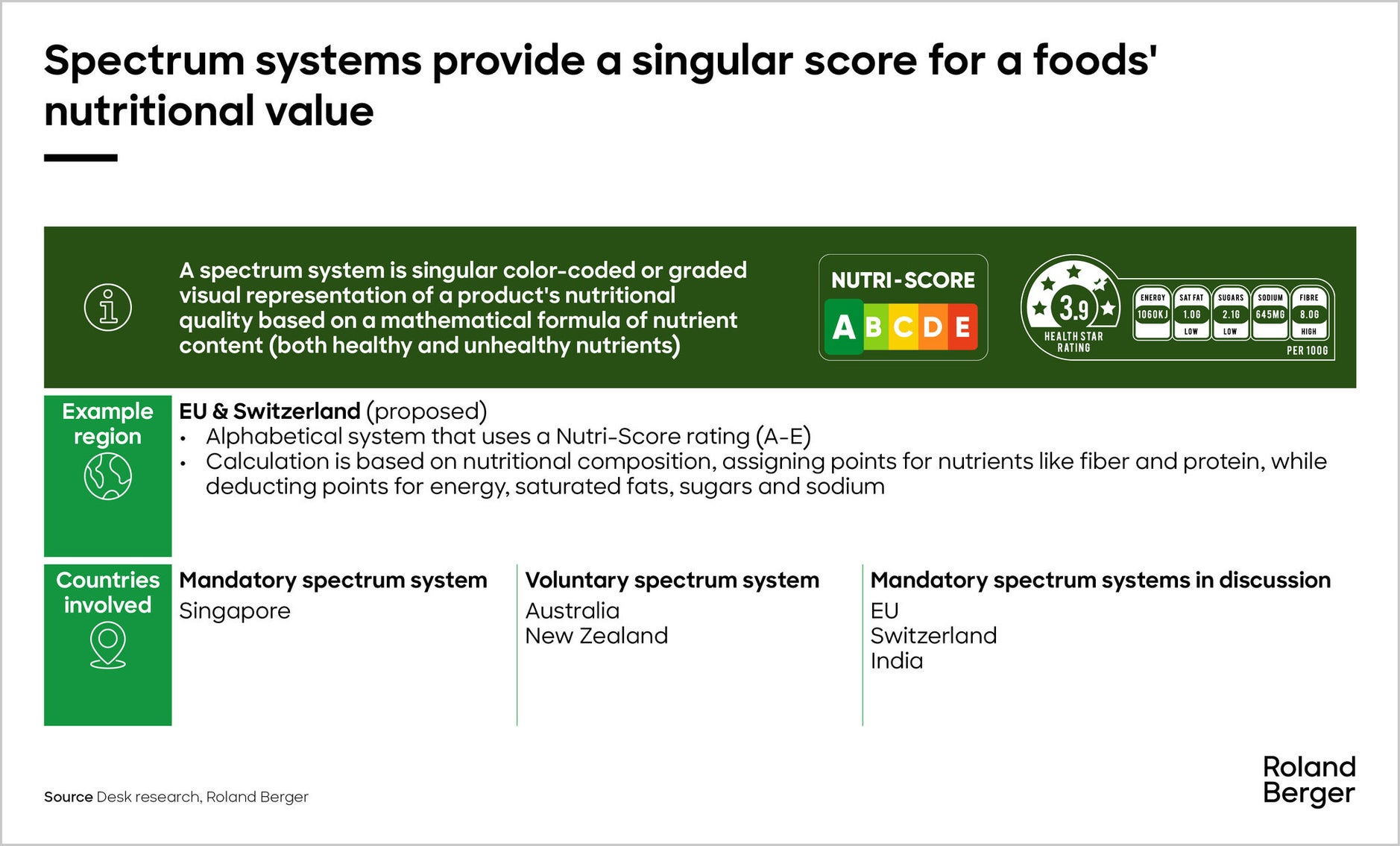
front-of-pack nutrition labels. Several EU member states have already adopted NutriScore, a voluntary spectrum system. However, there is controversy surrounding a potential EU-wide implementation, as many Southern European member states see it as placing traditional foods at a disadvantage.
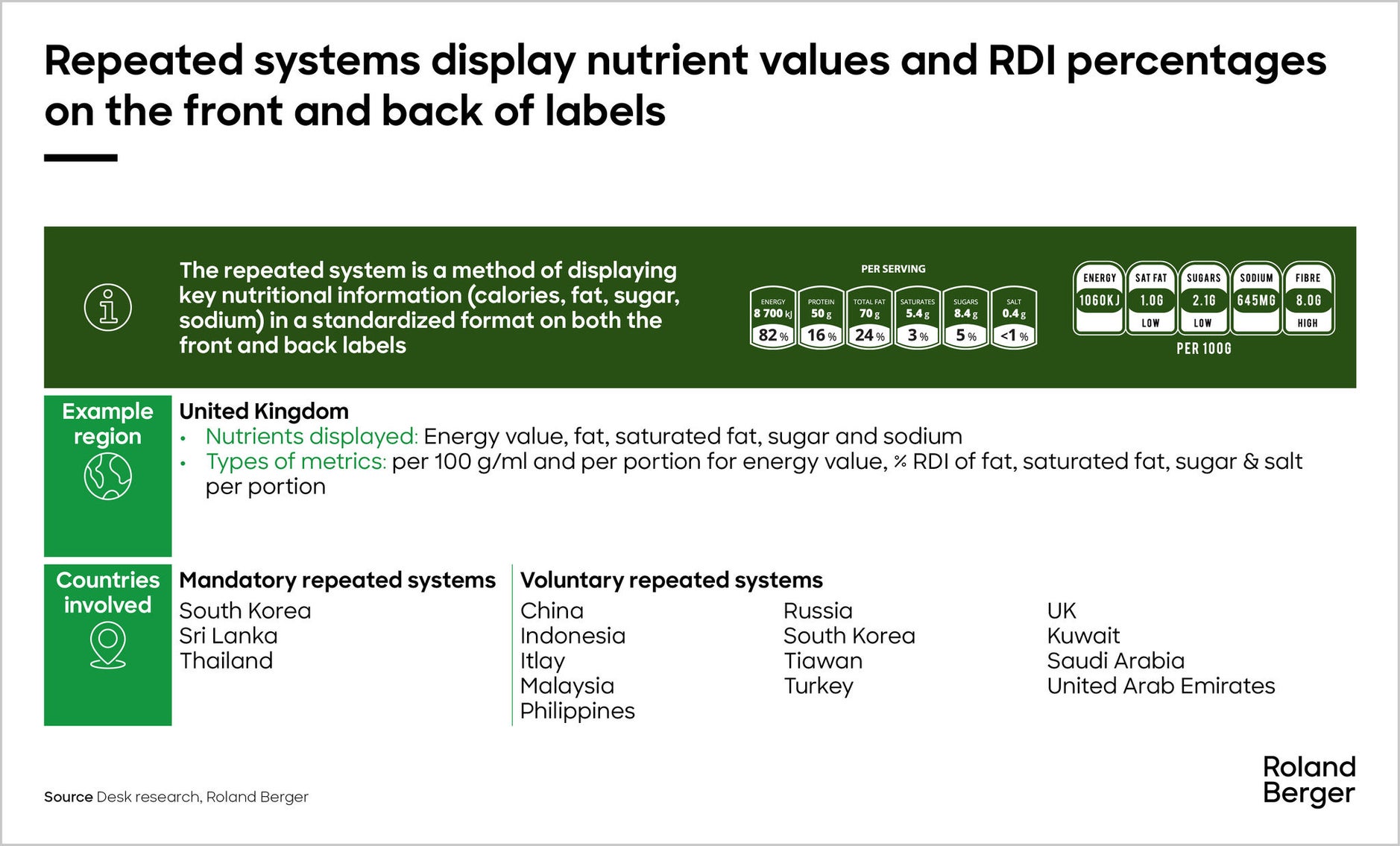
In the United States, extensive research has been conducted on various front-ofpackage nutrition labels, with a proposal expected later in 2024. The US Food and Drug Administration looks likely to propose either a repeated or warning system.