This article was originally published on 08.05.2025 and updated on 17.02.2026.

Regenerative agriculture
How regenerative agriculture is reshaping our food system and the planet.


This article was originally published on 08.05.2025 and updated on 17.02.2026.
The adoption of GLP-1 drugs for weight loss is exerting noticeable pressure on the food industry, driving changes in consumer behavior and dietary preferences. These changes present both challenges and opportunities for stakeholders throughout the food value chain. Leveraging our expertise in the food industry, we provide insights into the GLP-1 market and consumer spending trends, offering guidance, especially for F&B brands and retailers, on how to navigate this evolving landscape.

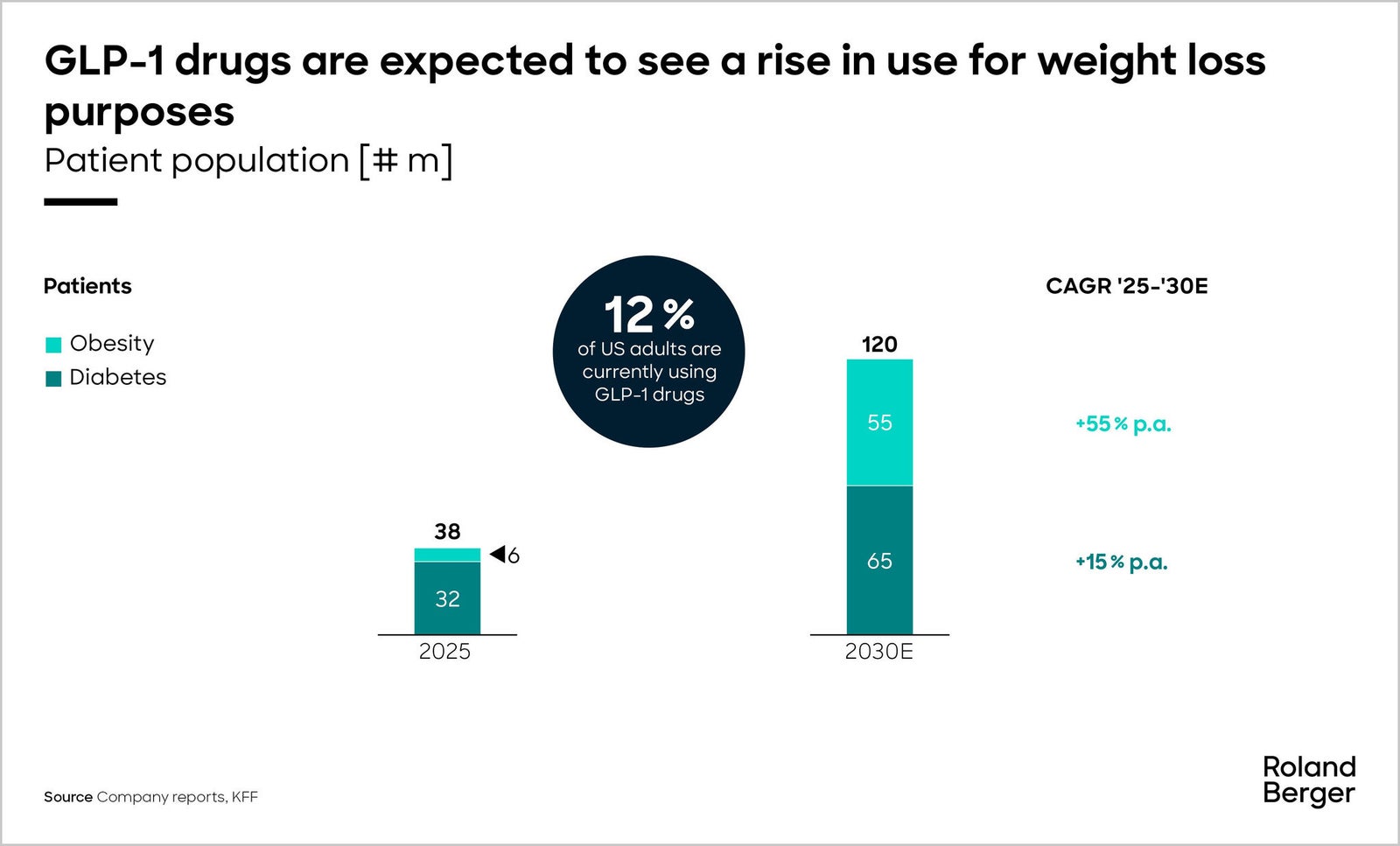
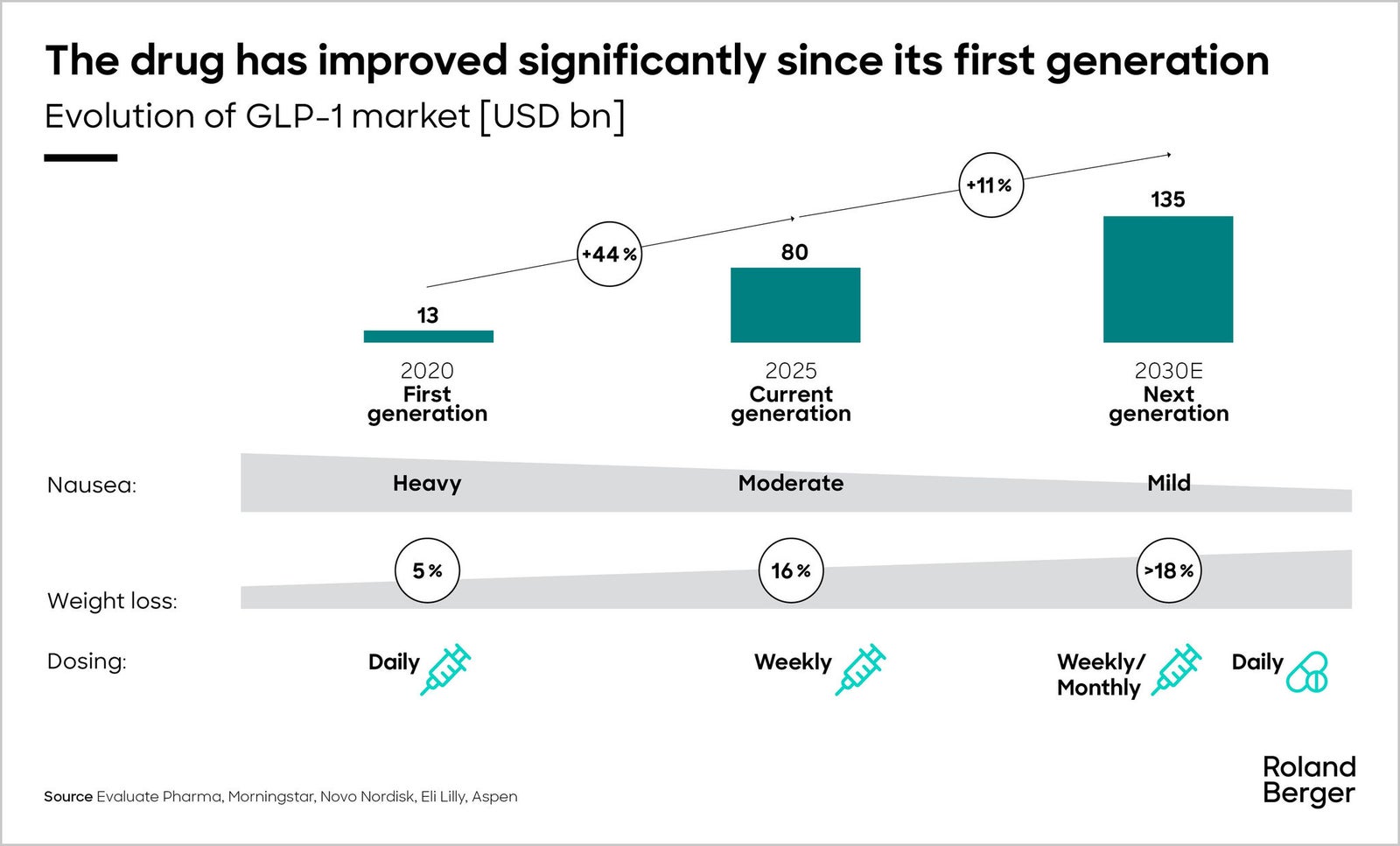
The market for GLP-1 drugs is expanding rapidly. Originally developed to treat diabetes, these drugs have become popular for their weight loss efficacy. Market projections suggest that the GLP-1 drug market will will almost double to USD 135 bn in the next five years as the number of GLP-1 users triple from almost 40 million to 120 million worldwide.
With rapid growth comes inevitable challenges, and GLP-1 drugs are no exception. Although much has improved since the first generation came on the market in 2005, pharmaceutical companies are investing significant resources to address four main obstacles:
GLP-1 drugs significantly alter consumer behavior. Users of these drugs consume 15-40% fewer calories compared to placebo groups and exhibit reduced cravings for sweet, salty, fatty and alcoholic foods, leading to notable changes in dietary patterns.
This shift has a direct impact on their spending habits. A recent study found that households with at least one GLP-1 user spend approximately 6% less on groceries, and 9% less for high-income households. With the expected growing number of GLP-1 users, this could have a potential impact of USD 55-90 bn on grocery spending in the US in 2030. The most affected product categories include chips & savory snacks (-11%), sweet bakery items (-9%) and soft drinks (-7%), which translates into short-to-medium term losses of USD 7.5-8 bn within these segments in the US market.
Research on rebound weight gain after discontinuation of GLP-1 drugs shows that many users regain weight within a timeframe similar to their usage period. The FDA currently approves GLP-1 drugs for up to two years for weight loss. The long-term impact of GLP-1 on consumer behavior and the food & beverage industry is still to be seen, but the short-term impact of a growing group of users is already significant.
Though GLP-1’s impact is primarily felt in the downstream part of the value chain, the spillover effects of changed consumer behavior among a small but rapidly growing segment are hitting across the industry in varying degrees:
For F&B brands focused on calorie-dense snacks, focus should be on product innovation for “better for you” lines. With GLP-1 users' limited daily caloric intake, products need to have sufficient nutritional value or smaller serving size. Reduced salt and low-fat alternatives also align with current market trends, offering a safe mid-term strategy.
Producers of dairy, sports nutrition and functional food products can capitalize on healthier lifestyle trends. Marketing the benefits of their products specifically to GLP-1 users and developing new functional ingredients with health & nutrition claims can help capture market growth. Emphasizing high-fiber content or gut-healthy bacteria can be effective, especially given common digestive issues among users. Of course, taste and affordability remain crucial for all segments.
With reduced overall spending in supermarkets, we suggest two focus areas for retailers. The demand for smaller serving sizes can be effectively addressed with a tailored private label segment, where specific “GLP-1 friendly” aspects of products can also be highlighted. Being among the first to offer reduced serving sizes can mitigate any revenue impact of reduced volumes.
Additionally, supermarkets need to ensure that shelf allocation and online offerings clearly reflect their efforts to cater to GLP-1 users. Attracting and retaining this emerging consumer segment by offering dietary supplements, high-protein alternatives, and the like is vital to preserving market share over the next decade.
The total number of GLP-1 users is expected to increase significantly over the coming years as pharma expands production capacity, reduces prices, develops new products with fewer side effects, and offers more user-friendly dosage forms. This growing group of users will consume fewer calories and have altered preferences, impacting particularly the savory snacks, confectionery, and soft drinks segments at around USD 7.5-8 bn a year by 2030 in the US. GLP-1 is both an opportunity and a threat for players in the food value chain – the food industry must adapt to the rapidly growing GLP-1 consumer segment with tailored solutions.
With extensive experience advising top-tier F&B companies, Roland Berger excels at crafting strategic solutions that address current challenges while seizing emerging opportunities. As your dedicated partner, we combine deep industry knowledge with innovative thinking to ensure your business remains resilient and competitive. Through robust execution plans and continuous support, we help refine product offerings, redefine marketing tactics, and realign operational processes to achieve sustainable growth and long-term success.
Contact us about how we can help future-proof your business and portfolio.