There can be little doubt that the
crypto economy
is here to stay. With it come a variety of interesting new areas for investment funds, private companies and public authorities to explore. Crypto mining is one such avenue. This is the proof-of-work process used to create new coins and validate transactions via a powerful computer system, or “mining rig,” dedicated to solving algorithmic puzzles.
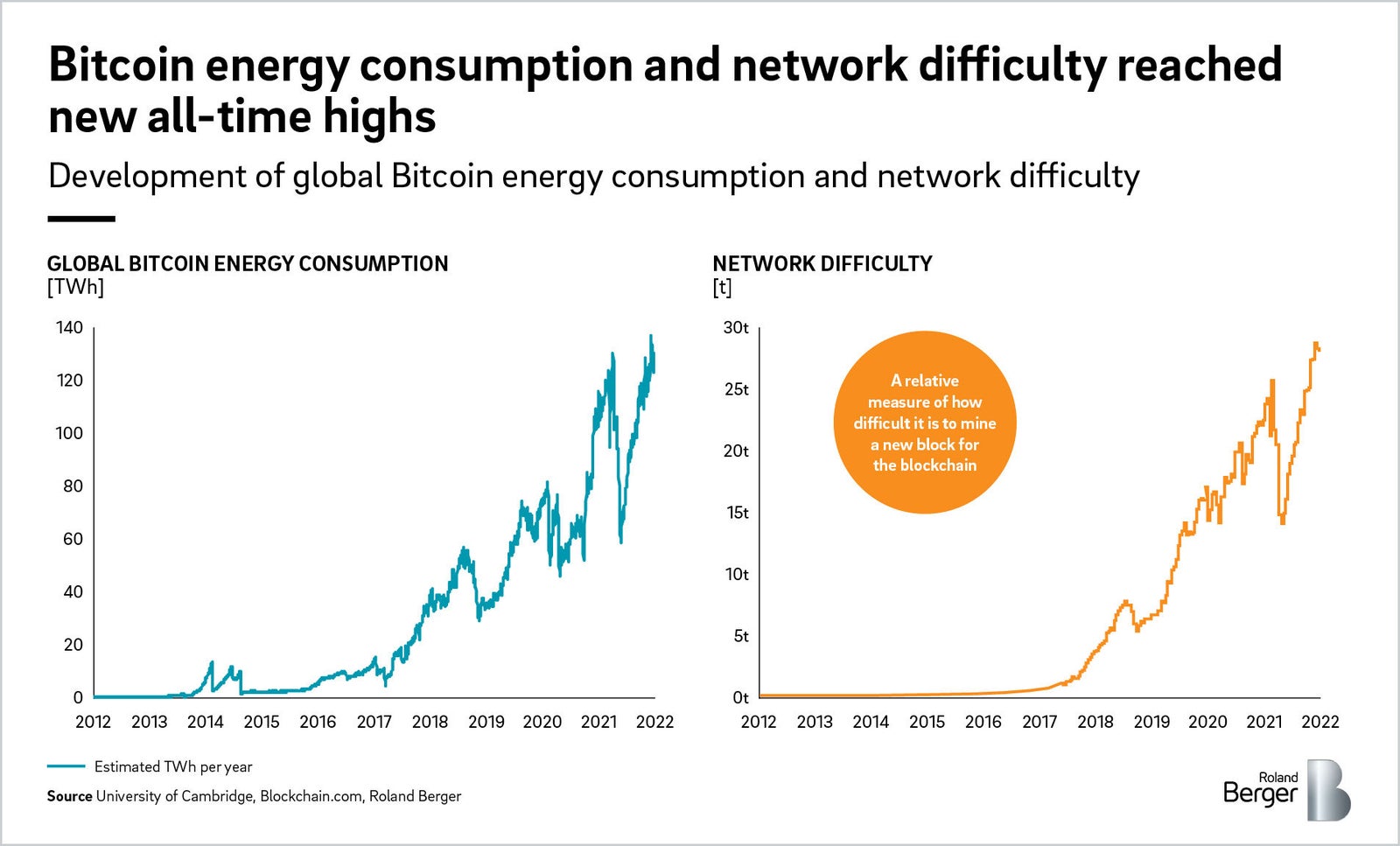
It is an energy-intensive procedure: According to the University of Cambridge, the total annual power consumption of Bitcoin, the most widespread cryptocurrency, is currently 145 TWh, which is approximately 0.32% of total global energy consumption.
Just half a decade ago, crypto’s impact on the world’s
energy grids
was negligible. But in the past five years, Bitcoin’s energy consumption has grown from 11.8 to 120.5 TWh per year; the equivalent of adding 2,400 wind turbines to the grid every year. For context, the United States has installed an average of around 3,000 wind turbines a year, according to the USGS. And this could continue to rise rapidly: NYDIG, a Bitcoin financial services company, estimates that electricity consumption from Bitcoin mining could grow to 706 TWh by 2027.