Dynamic capabilities: A solution for more agility
In the classic management literature, dynamic capabilities are a highly regarded approach. They allow businesses to change and innovate continuously. These changes can be both reactive (adapting to changes in the market) and proactive (creating new markets). Dynamic capabilities give companies a sustainable competitive advantage in a rapidly and constantly changing market environment. Yet the basic assumptions of the approach are not restricted to private-sector organizations. Dynamic capabilities also provide interesting starting points for the challenges facing public administration. It is therefore worth taking a closer look at the approach in the context of the current modernization debate.
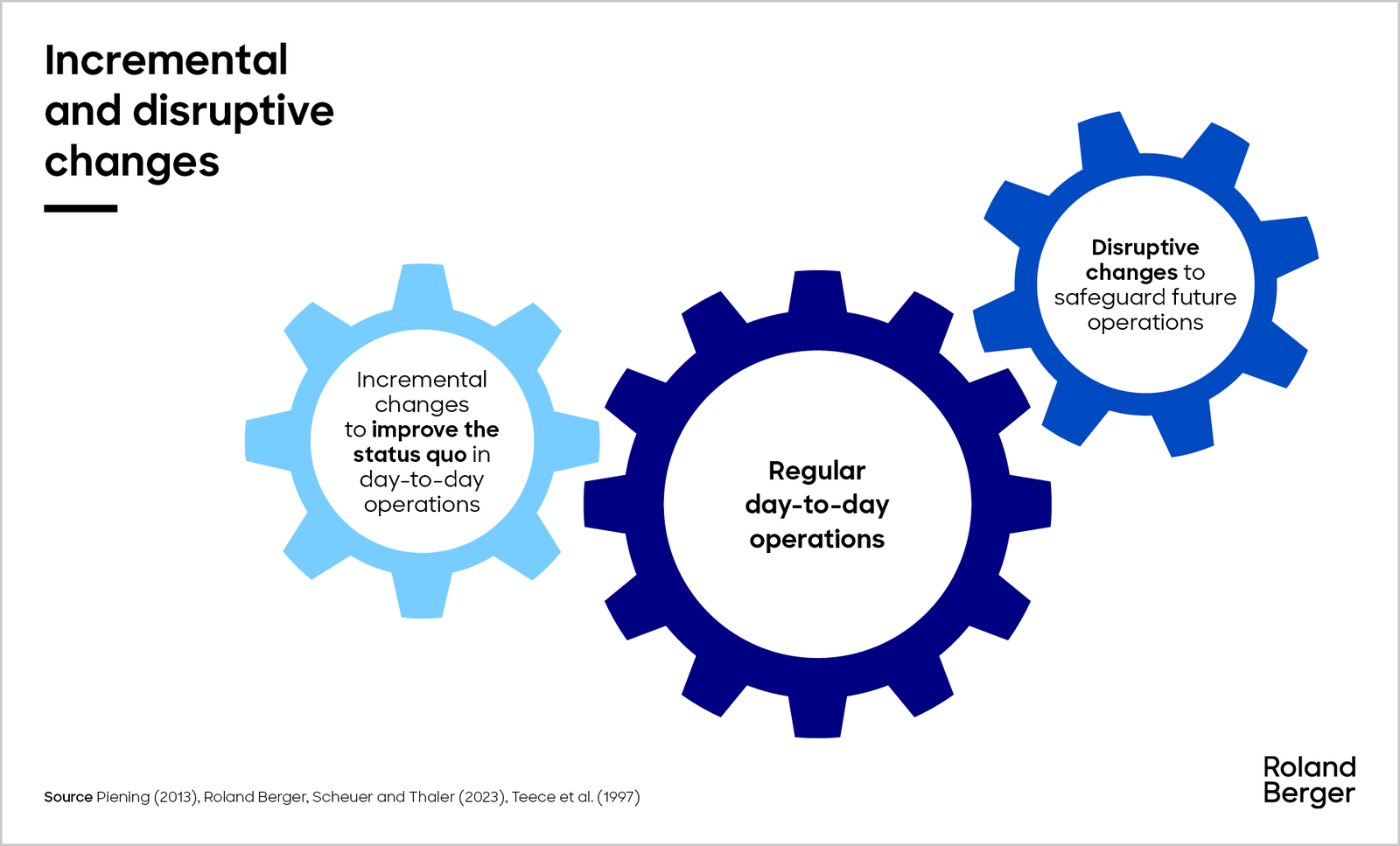
Academics David J. Teece, Gary Pisano, and Amy Shuen were the first to describe the approach in detail in their 1997 publication "Dynamic Capabilities and Strategic Management". Dynamic capabilities are now referred to in the literature as the "holy grail" of sustainable competitive advantage. Basically, there are two types of organizational (collective) capabilities:
- Ordinary capabilities refer to existing tasks and processes that a public administration must perform in order to fulfill its basic functions. As a rule, these are efficient and well-established processes.
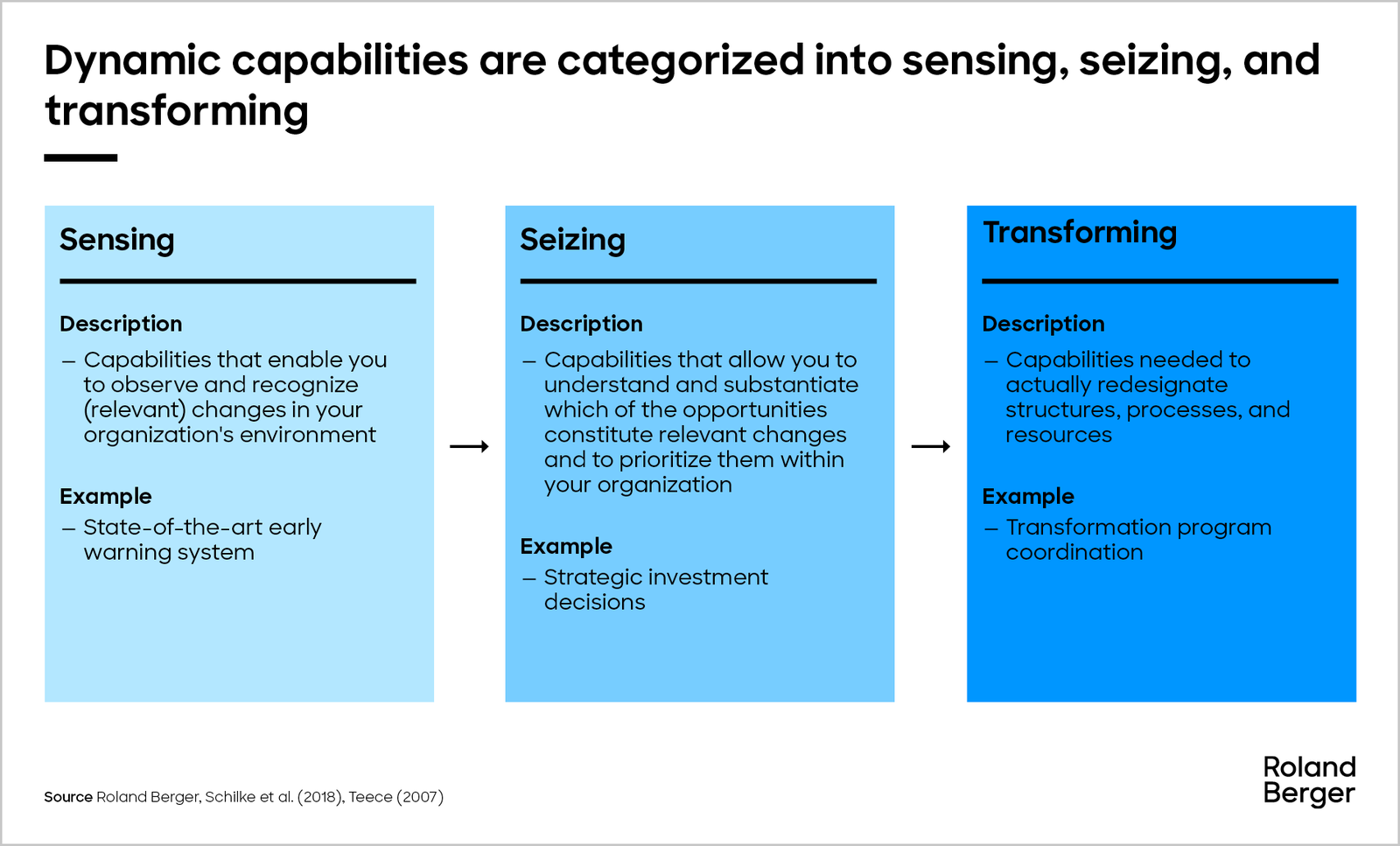
- Dynamic capabilities, on the other hand, contribute to the (proactive) adaptability of organizations by integrating, building, and reconfiguring internal and external competences. This can happen internally through cross-functional teams or through cross-organizational co-creation or the early involvement of service recipients. One example is the targeted integration of citizens or companies in the testing of new solutions. The approach is based on the interplay of skills, routines, methods, structures, and decision-making rules within an organization. In most cases, the literature speaks of collectively learned capacities (in the sense of capabilities) within an organization that are not easily transferable.
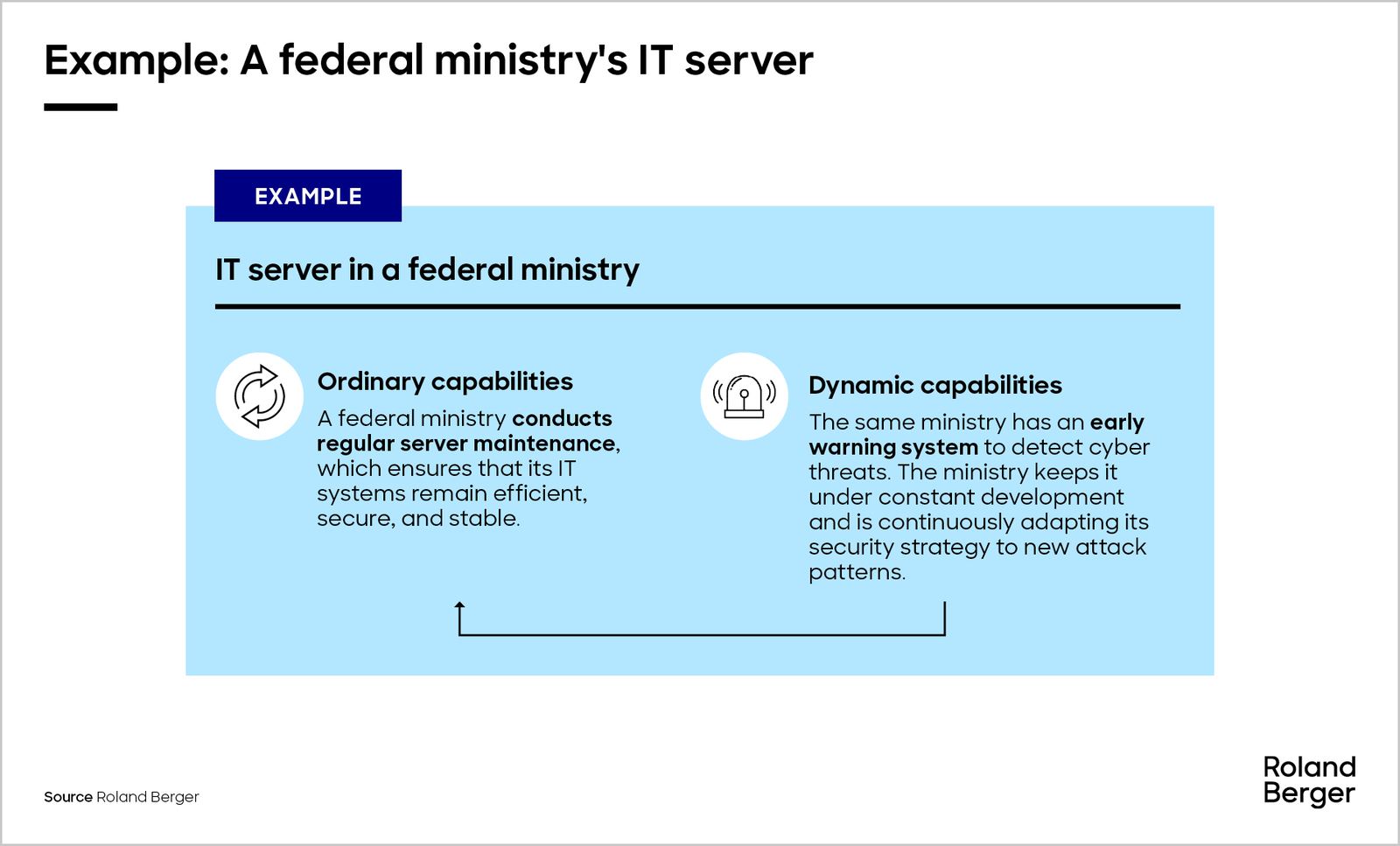
Both types of capabilities are important for the future – operational task fulfillment as well as dynamic evolution and adaptation. It goes without saying that the IT systems of a federal ministry or a local authority must be stable and secure in day-to-day operations. But they must also be able to defend themselves against the latest cyber threats and anticipate new and emerging threats in order to guarantee the security of people's data – both today and tomorrow. To this end, they need to regularly readjust their early warning system. Constant realignment demands bold, experimental, and, where necessary, scenario-based approaches.