Unlocking value: Applying game theory in awarding processes
The most immediate use of game theory in procurement is in competitive awarding processes such as auctions and negotiations. A well-structured approach provides significant benefits, including cost savings through competitive mechanisms that can generate more than 10 percent additional savings compared to traditional negotiations, making it a highly effective strategy for cost reduction. Clear award mechanisms and selection criteria ensure fair treatment of suppliers and reduce disputes, while a structured process improves cross-functional acceptance and joint decision-making.
To successfully apply game theory in supplier negotiations, organizations should ensure all participating suppliers are fully qualified to fulfill their needs. Conducting total-cost-of-ownership assessments, including all relevant product and service quality criteria, allows for effective supplier comparisons. Clearly defining selection procedures and award mandates helps prevent ambiguity. Transparent alignment on negotiation mechanisms with all stakeholders is also essential to facilitate a fair and efficient process.
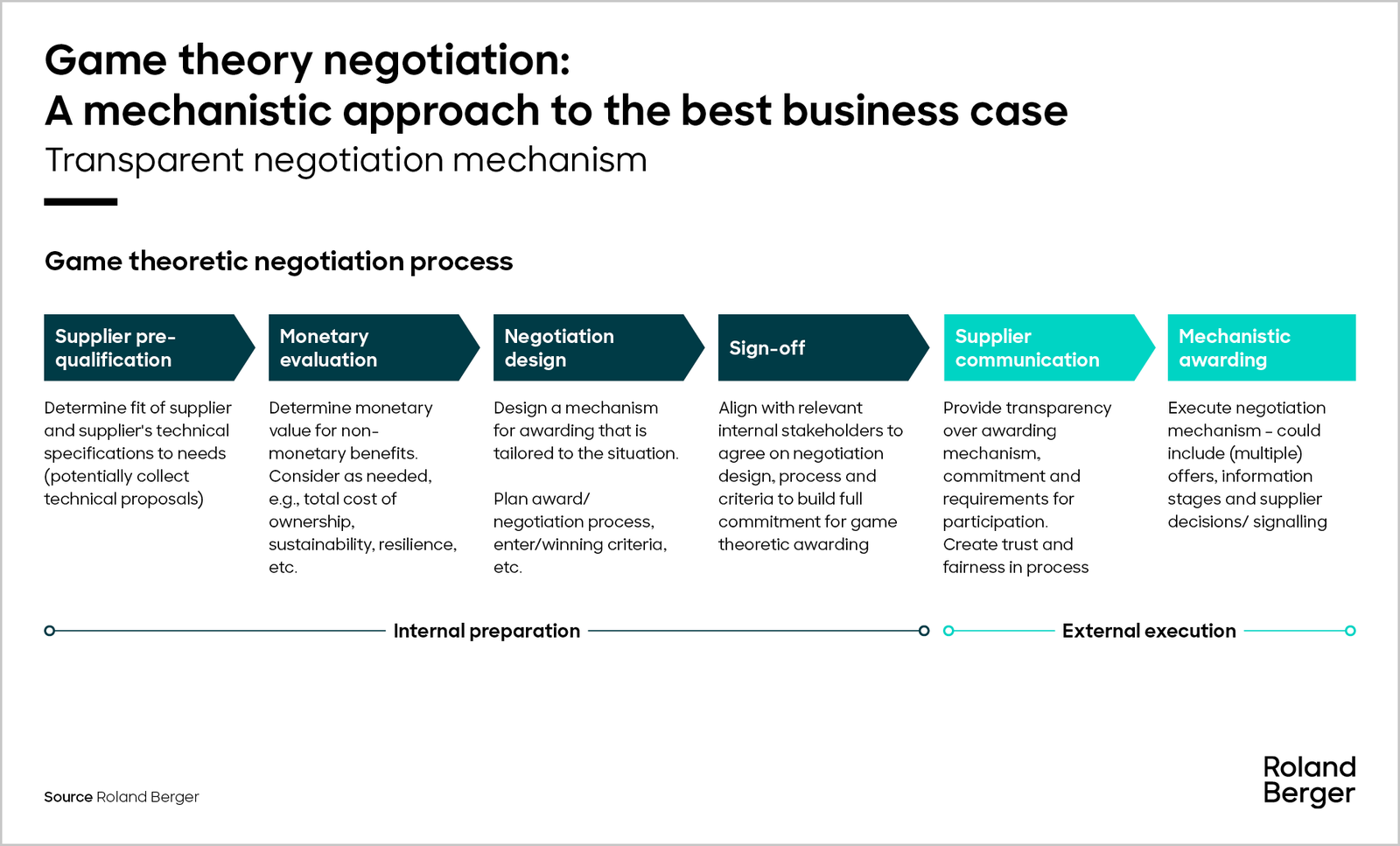
Ultimately, a strong commitment to the process as well as clear communication of award mechanisms and rules of the game to suppliers are crucial to the success of game theory approaches. In a game-theoretic awarding process, procurement professionals should:
- Qualify suppliers and ensure comparability between their offers on a technical level
- Perform total-cost-of-ownership assessments to ensure comparability between suppliers and offered products as well as services
- Define a clear scope and obtain a sourcing mandate to award the business
- Define mechanistic rules for selecting the winning supplier(s)
- Obtain commitment from internal stakeholders to support the process and its awarding mechanism
- Communicate rules and incentives to suppliers and ensure their understanding and participation, for example by conducting a test run with qualified suppliers
- Execute the mechanism and award the contract, either face-to-face or via a suitable digital tool