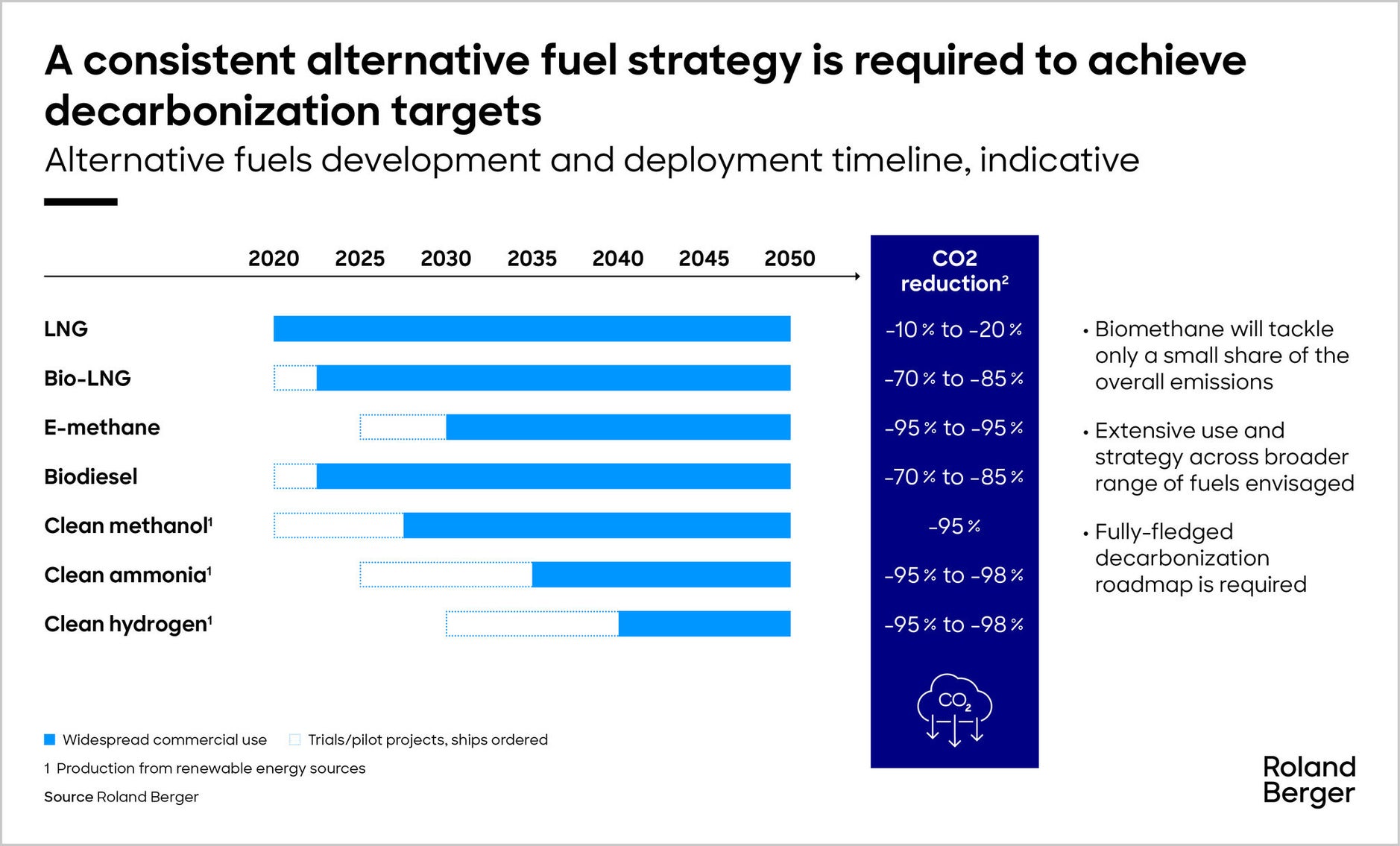
In the long term, green ammonia and methanol will be important solutions. Today, the production cost of these green fuels remains high due to the lack of economies of scale. The cost of ships equipped to run on these innovative fuels is similarly elevated, reflecting the nascent state of the technology. As a result, the International Energy Agency estimates that the total cost of ownership (TCO) for a bulk carrier operating on green ammonia or methanol is 60-100 percent higher than for a conventional fuel oil-driven bulk carrier. This difference should shrink over time, as carbon taxes rise, economies of scale appear and new engine technology is widely adopted, paving the way for greater adoption of sustainable fuels in the maritime sector.
Currently, many shipping companies are betting big on methanol and ammonia. For example, as of 2024, Maersk has ordered 24 container vessels equipped with dual fuel engines capable of burning methanol, biodiesel and conventional fuel. Evergreen has also ordered 16 methanol-enabled vessels for delivery in 2027. Vessel engine manufacturers are fueling this trend, with significant ongoing research into developing engines compatible with ammonia and methanol. For instance, MAN Energy Solutions has introduced an ammonia engine suitable for a wide range of vessels and is engaged in a three-year research project to create a viable methanol retrofit for medium-speed engines. Additionally, Wartsila is set to deliver its inaugural four-stroke ammonia engine on a vessel in early 2025.
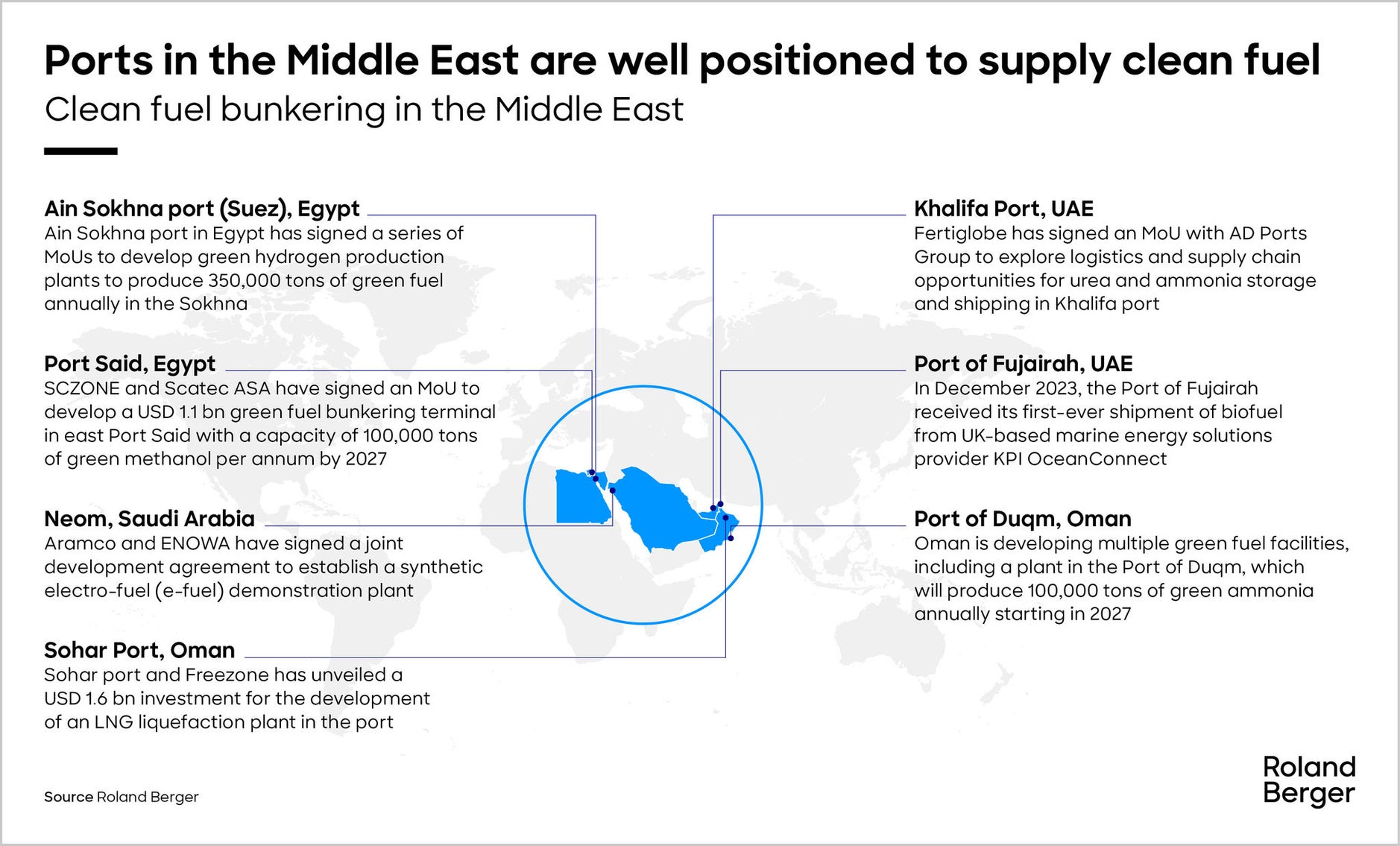
As infrastructure providers, ports are also readying themselves for the transition. The Port of Ijmuiden in the Netherlands has been awarded the first hydrogen bunkering license, for instance. Similarly, the Maritime and Port Authority of Singapore is preparing for ammonia bunkering to take place in its waters from 2026.