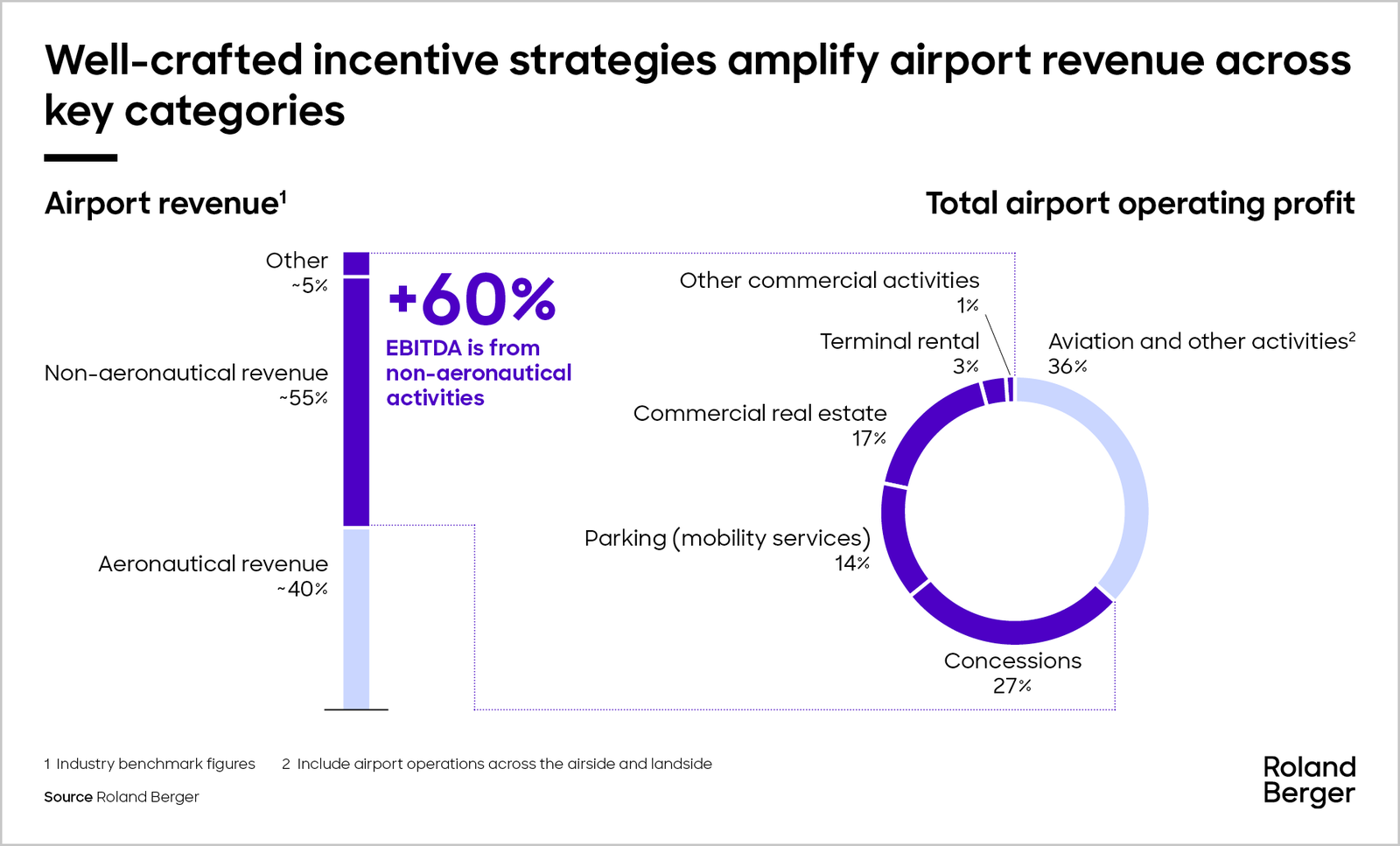
To achieve these objectives, airports are deploying a wide range of measures. Retailer incentives are tailored to attract brands that complement the existing mix, expanding commercial diversity and tenant quality. Service-linked lease terms reward operators that maintain consistent standards, while flexible parking models or revenue-share partnerships increase usage and convenience. Airports are also experimenting with temporary brand-sponsored lounges or experiential spaces that create unique passenger interactions, enhance brand visibility and draw premium retail partnerships. Together, these measures reinforce non-aeronautical performance by attracting stronger tenants, improving service quality and maximizing commercial yield, while positioning the airport as a competitive commercial destination.
Aviation services incentives
Aviation services providers such as ground handlers, fuel suppliers and GSE operators are critical enablers of airport performance. As airports grow in complexity and ambition, many are extending incentive schemes to these partners to strengthen alignment and improve service delivery. The strategic goals are wide-ranging: Airports want to enhance transparency on performance risks, accelerate equipment modernization, build operational resilience, support sustainability initiatives, improve service quality and expand capacity.
To achieve these aims, airports are experimenting with a variety of incentive models. Financial rewards can be offered for data sharing on service performance, helping identify root causes between airline and service provider and enabling prediction of delays at the airport level. Airports may also provide investment support for the purchase of GSEs in exchange for reduced equipment rent charges. Joint training subsidies can raise service quality, while preferential charges are used to attract new providers or push for additional capacity. Together, these approaches strengthen collaboration across the airport ecosystem, ensuring smoother operations and better service outcomes.
Navigating regulations and governance
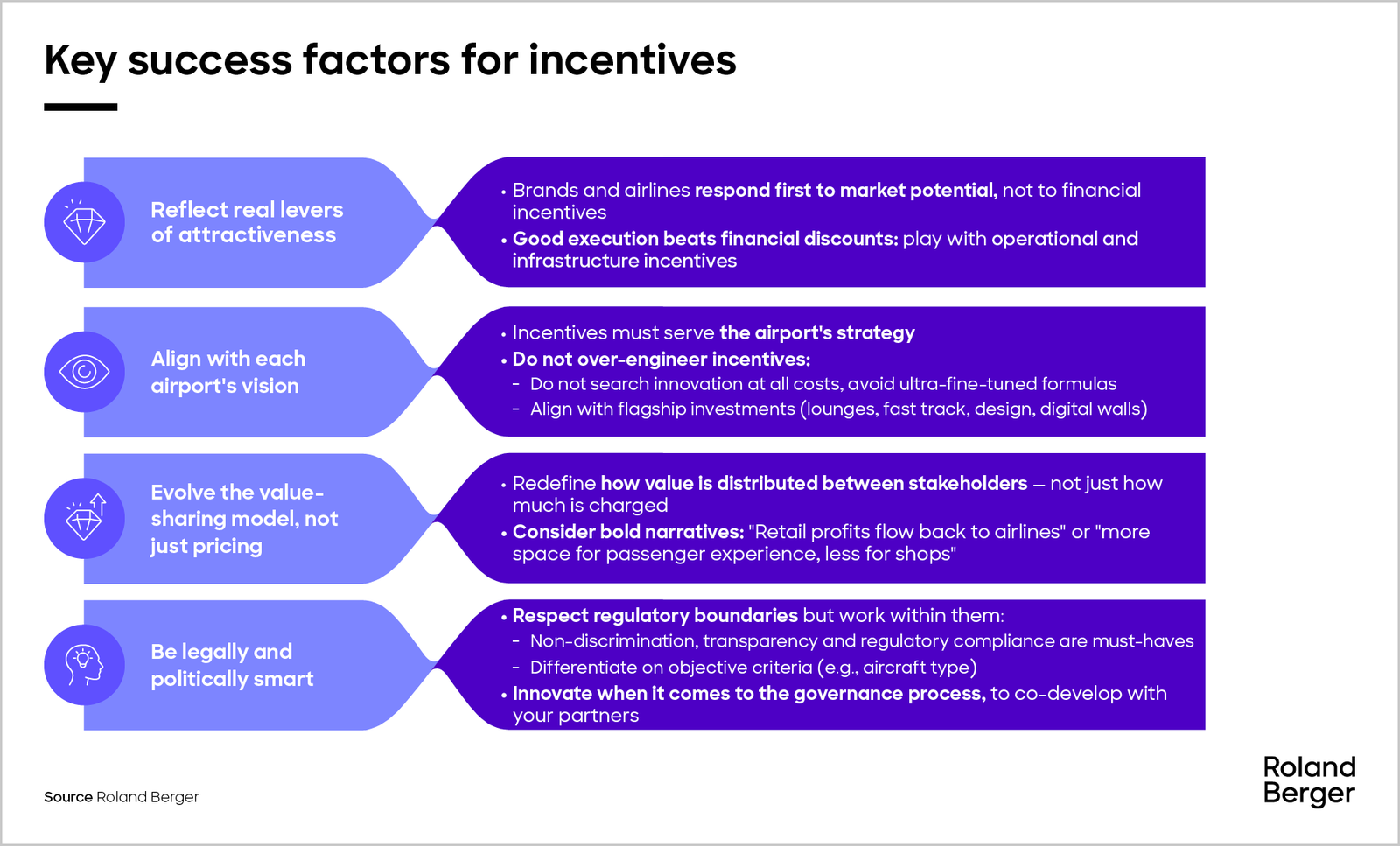
Designing effective incentives is not only about commercial logic: It also requires careful alignment with existing regulatory frameworks. In Saudi Arabia, airports operate under the oversight of the General Authority of Civil Aviation (GACA), while in the wider Gulf similar roles are played by the UAE’s General Civil Aviation Authority (GCAA) and Qatar’s Civil Aviation Authority (QCAA). These bodies set policies for aeronautical charges, safety and competition, and in some cases principles from national competition authorities, such as Saudi Arabia’s GAC, must also be observed when incentives affect market dynamics among service providers, retailers or airlines.
To remain compliant, incentive schemes need to follow clear principles: They must adhere to civil aviation regulations on charge setting and discounts, maintain transparency across airline and tenant categories, avoid preferential treatment that undermines fair access, and be backed by economic justification and measurable outcomes. Incentives should also be linked to quality-of-service performance, with penalties and rewards defined in advance.
Leading airports globally embed such principles into their governance. They ringfence incentive budgets, use dashboards to track ROI, partner performance and passenger satisfaction, and document program logic for regulatory review. Manchester-Boston Airport, for example, maintains a dedicated Air Service Incentive Plan (ASIP) with budget lines for landing fee waivers and marketing support, strictly managed within its financial cycle. Dublin Airport similarly applies incentives for longhaul route development, closely monitored for performance and market impact. By institutionalizing incentive governance and embedding transparency, airports ensure their incentive strategies are both competitive and defensible under regulatory scrutiny.