The risks of waiting
While delaying action might seem convenient, we at Roland Berger believe that it comes with significant risk:
Hidden financial liabilities
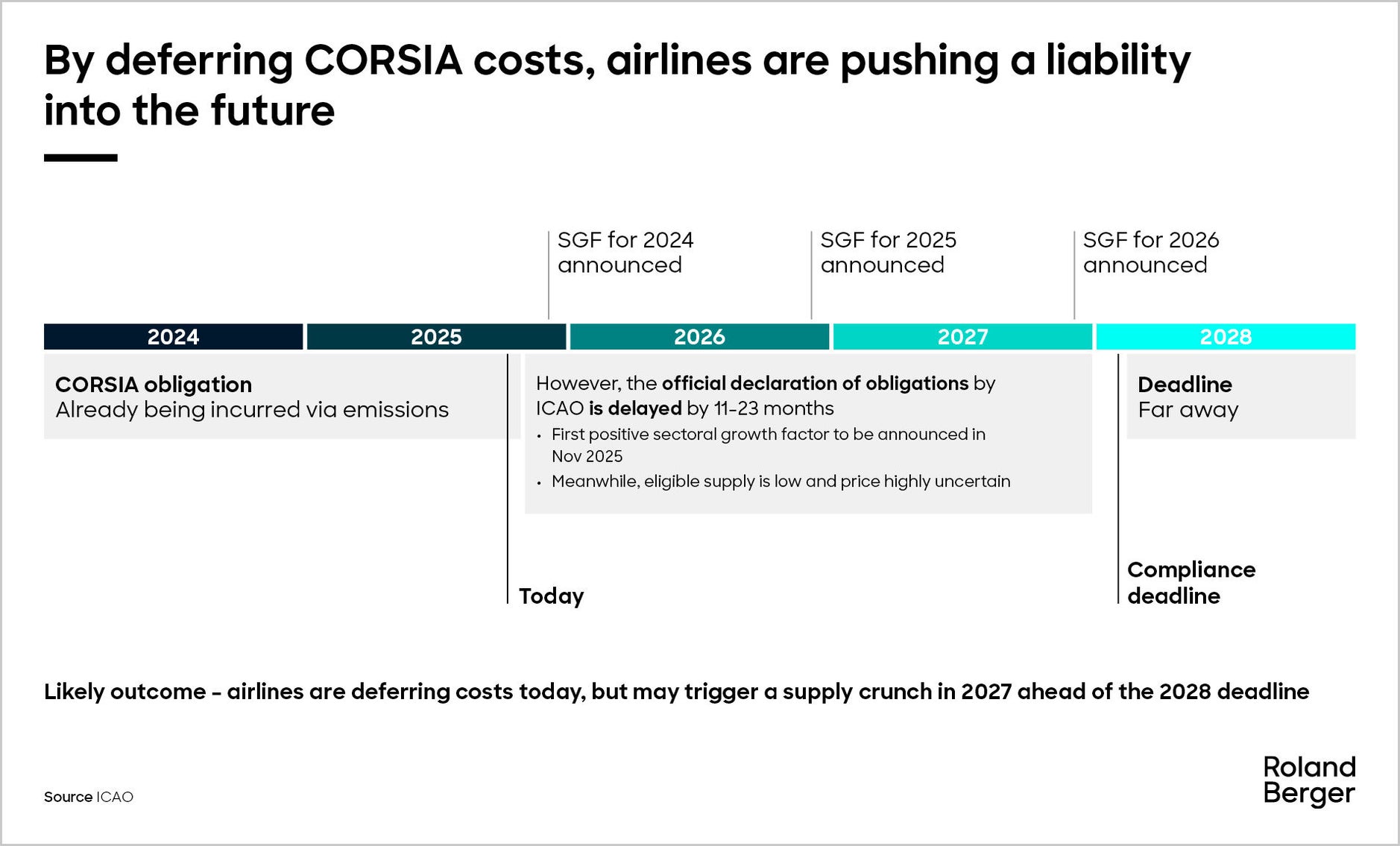
While it may not seem like it, airlines have already begun to incur CORSIA-related costs. It is highly likely for the 2024 sectoral growth factor to be non-zero (to be confirmed in November 2025), and airlines will have to eventually offset a share of all their eligible emissions from 2024. Hence, if airlines have not already started tracking the cost associated with this liability, and booking it as such (or passing it on to their customers), they will, at some point, have to take a hit on their margins to buy the necessary volume of eligible offsets instead — or risk having to either overcharge future customers (B2C), or back-invoice customers for past CORSIA expenses (B2B).
Rising costs over time
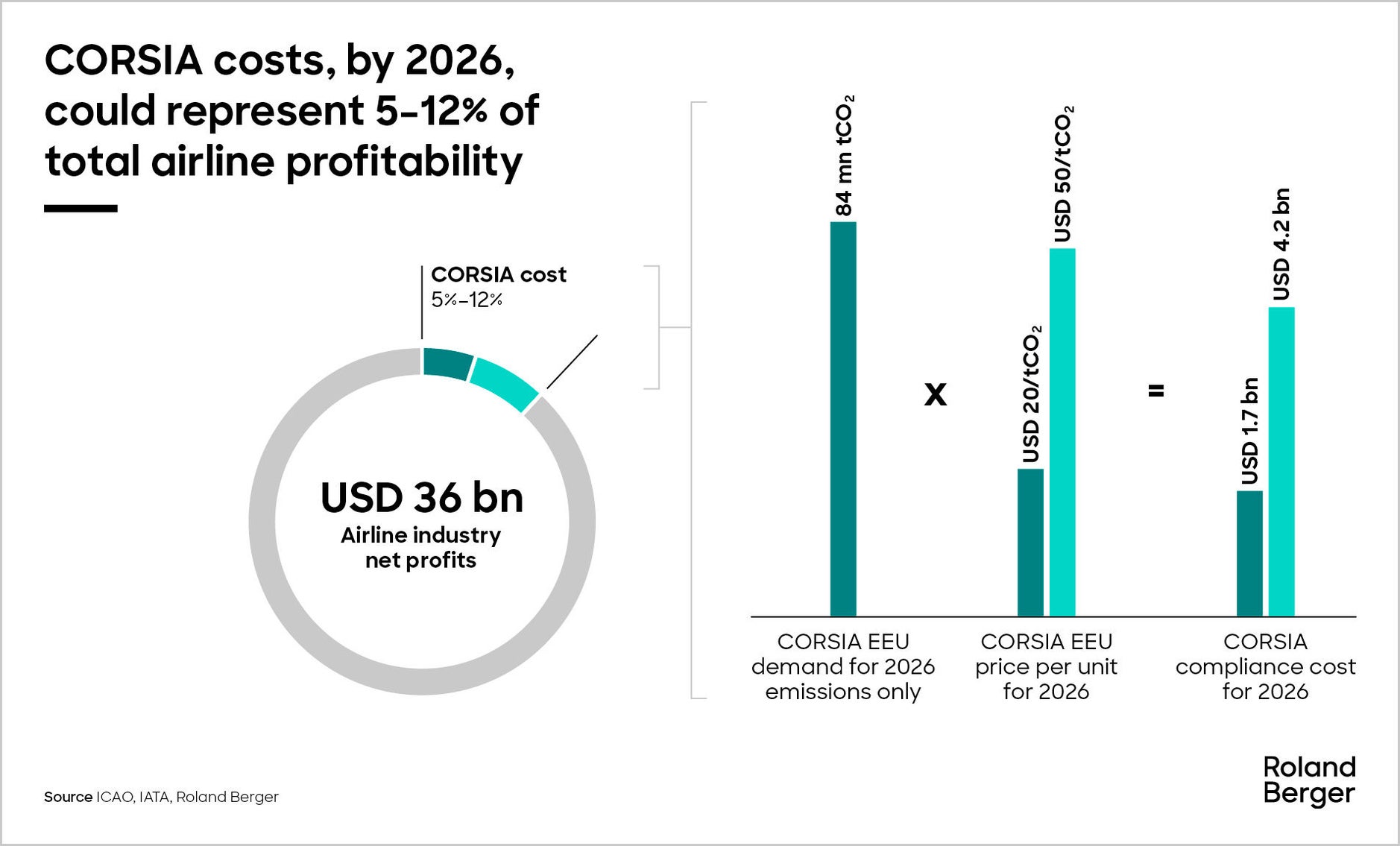
The volume of offsets airlines will need to procure will naturally increase as sectoral growth factors and eligible emissions rise. In addition, the dollar value of this liability is further impacted by the price of eligible offsets, which - just in the last 12-18 months - increased by over 10x due to lack of eligible offset supply.
Last-minute supply crunch
Delaying offset purchases until closer to the 2028 deadline could force airlines to buy whatever is available - often at inflated prices and potentially lower quality. In comparison, acting proactively can offer alternatives, such as buying eligible SAF, investing in earlier-stage offset projects, and/or implementing a customer cost pass-through strategy.
Proactively tackling CORSIA compliance
At Roland Berger, we believe airlines should take a proactive approach to CORSIA compliance. This includes tracking financial liabilities early, developing cost pass-through strategies, and sourcing eligible offsets ahead of time to avoid price spikes. By preparing now, airlines can reduce their overall compliance costs and avoid last-minute challenges.
Conclusion
CORSIA compliance is no easy feat. The scheme presents real challenges: uncertain offset costs, limited eligible supply, and reputational risks tied to voluntary offsets. However, procrastination could expose airlines to significant hidden dangers, including the need to purchase lower-quality offsets at a premium. Instead, we advise developing a proactive CORSIA compliance strategy–starting now.