EU and UK leading the regulatory charge
The European Union and the United Kingdom are setting the pace with aggressive SAF mandates. Under ReFuelEU, airlines will be required to use 2% SAF by 2025, increasing to 6% by 2030 and 70% by 2050. Similarly, the UK has introduced its own SAF mandate in 2025, which rises even faster than the EU’s to 10% by 2030, and will cap HEFA-based SAF and push diversification into emerging technologies like Power-to-Liquid (PtL) sooner than any other mandate. These policies are creating a structured and predictable demand curve, in an effort to ensure that SAF becomes a mainstream fuel source in the coming years.
Fuel providers running slow
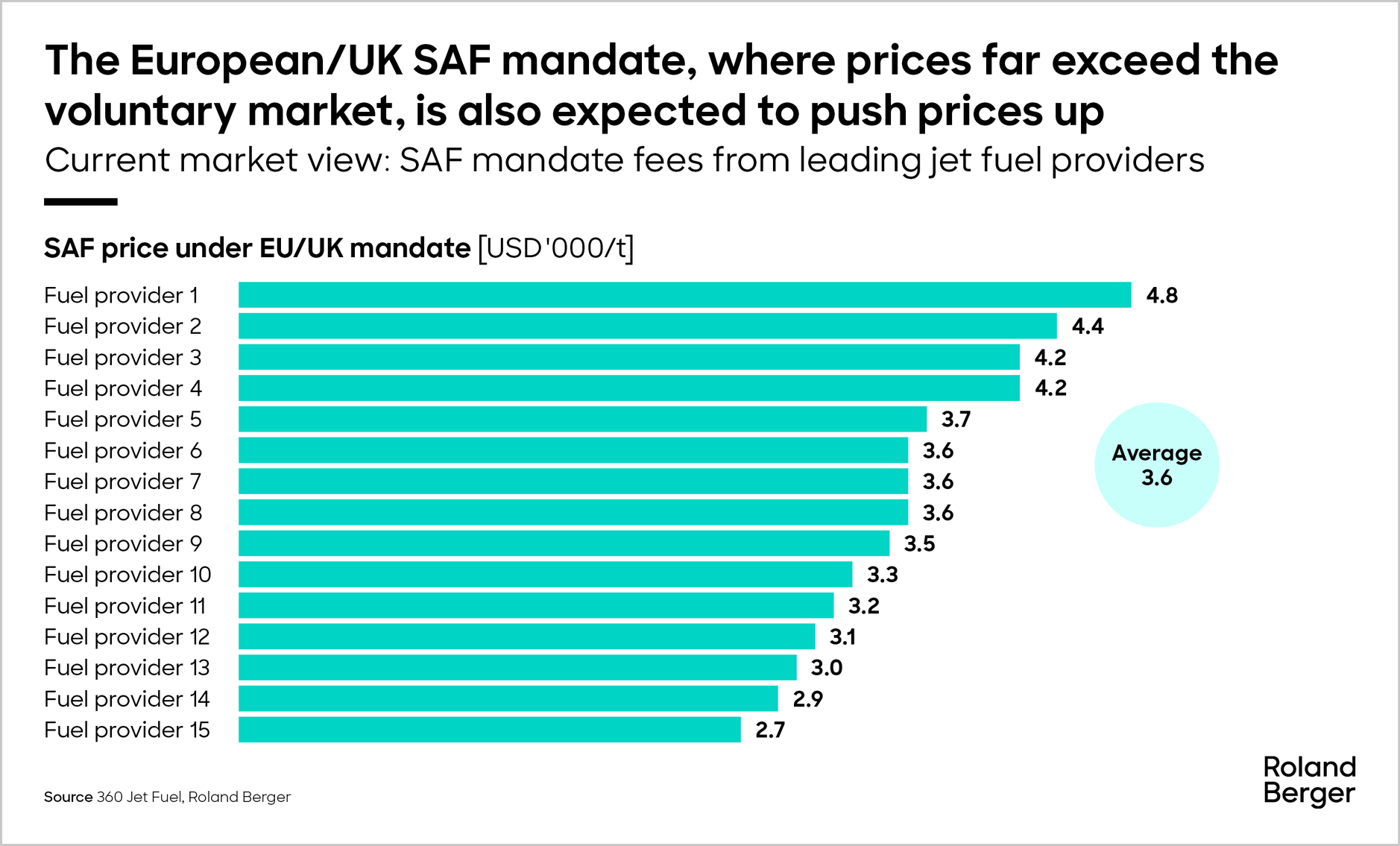
At the same time, given that the EU and UK mandates are applied to fuel providers at airports, it is ultimately their responsibility to source sufficient SAF to meet the volume targets. However, while all are already charging for
SAF at airports,
many have not yet secured SAF at all, or not to sufficient levels. Fortunately the mandate can still be met so long as fuel providers can source the required total SAF volumes and delivered them by the end of the year.
Global demand signals: Beyond the EU and UK
While the EU and UK lead in regulatory mandates, demand for SAF is emerging across the globe. Governments including Japan, Canada, India, and the UAE have all introduced meaningful SAF targets, reinforcing the global shift towards
sustainable aviation.
In North America, the U.S. aims to produce 3 billion gallons of SAF by 2030 under the SAF Grand Challenge.
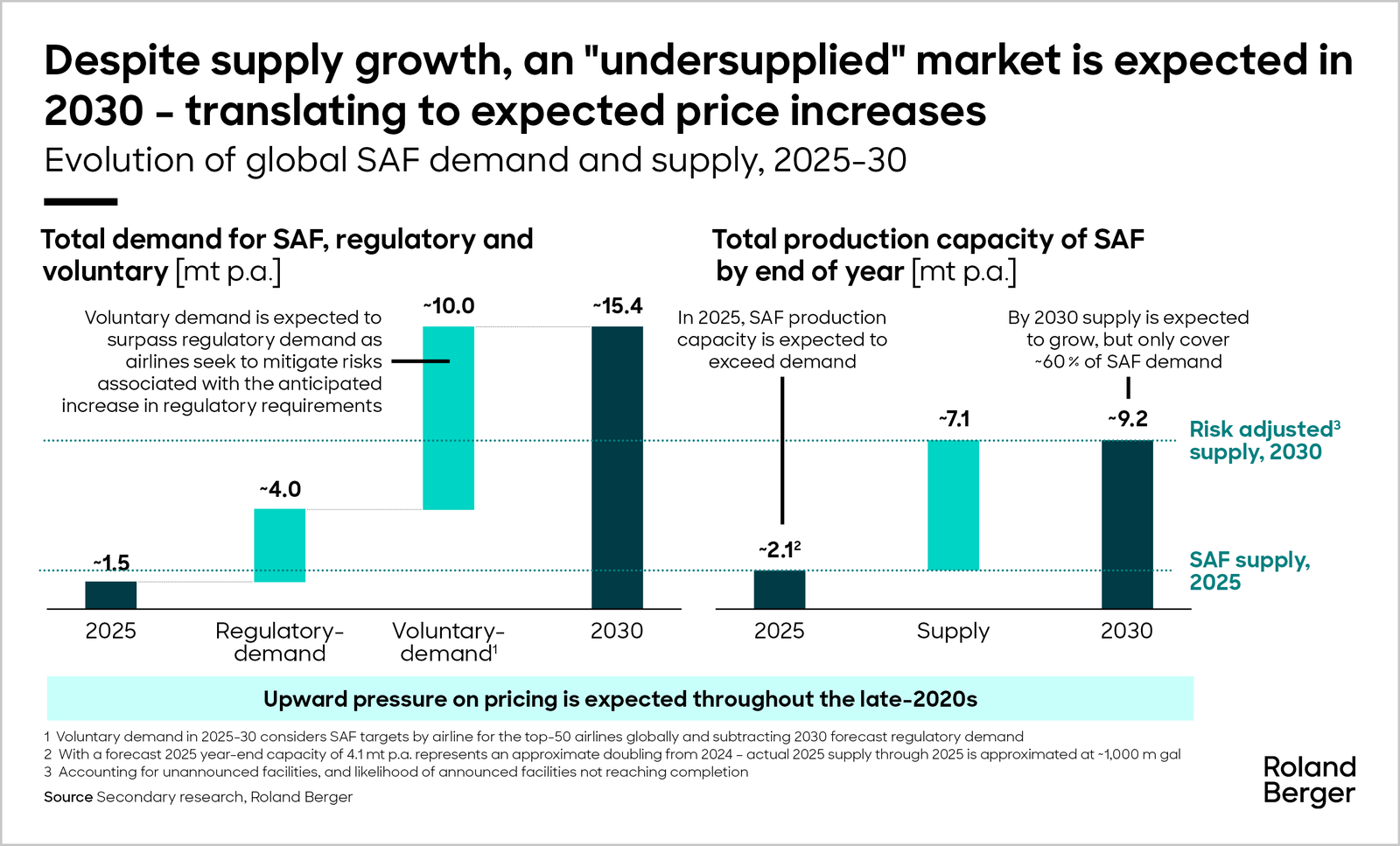
But it goes far beyond a government push. Major airlines globally are voluntarily committing to SAF adoption at a record pace, generally exceeding mandated SAF shares by 2030. Though there have been highly publicized roll-backs to some pledges by major airlines, the vast majority of SAF targets remain intact: these voluntary commitments, often tied to net-zero pledges, will further tighten supply and drive up prices.