Which of the technologies will lead the way in decarbonizing aviation – will it be hydrogen, SAF or some form of electric propulsion?
In our opinion, there are several technologies that complement each other well. These include both hydrogen and
SAF,
as well as the continued optimization of flight paths and air traffic management.
In the case of hydrogen, we see direct combustion in the turbofan or turboprop engine as one technology path, and the use of hydrogen-based SAF as another. And there are also today’s biomass-based sustainable aircraft fuels.
The use of hydrogen in fuel cells is an equally forward-looking approach. One of the things such fuel cells can do is supply electricity for electric motors, which could conceivably be used in a hybrid concept. Electrical energy is also important for supplying other onboard systems, such as the hydraulics and air conditioning. These systems are currently supplied by the engine.
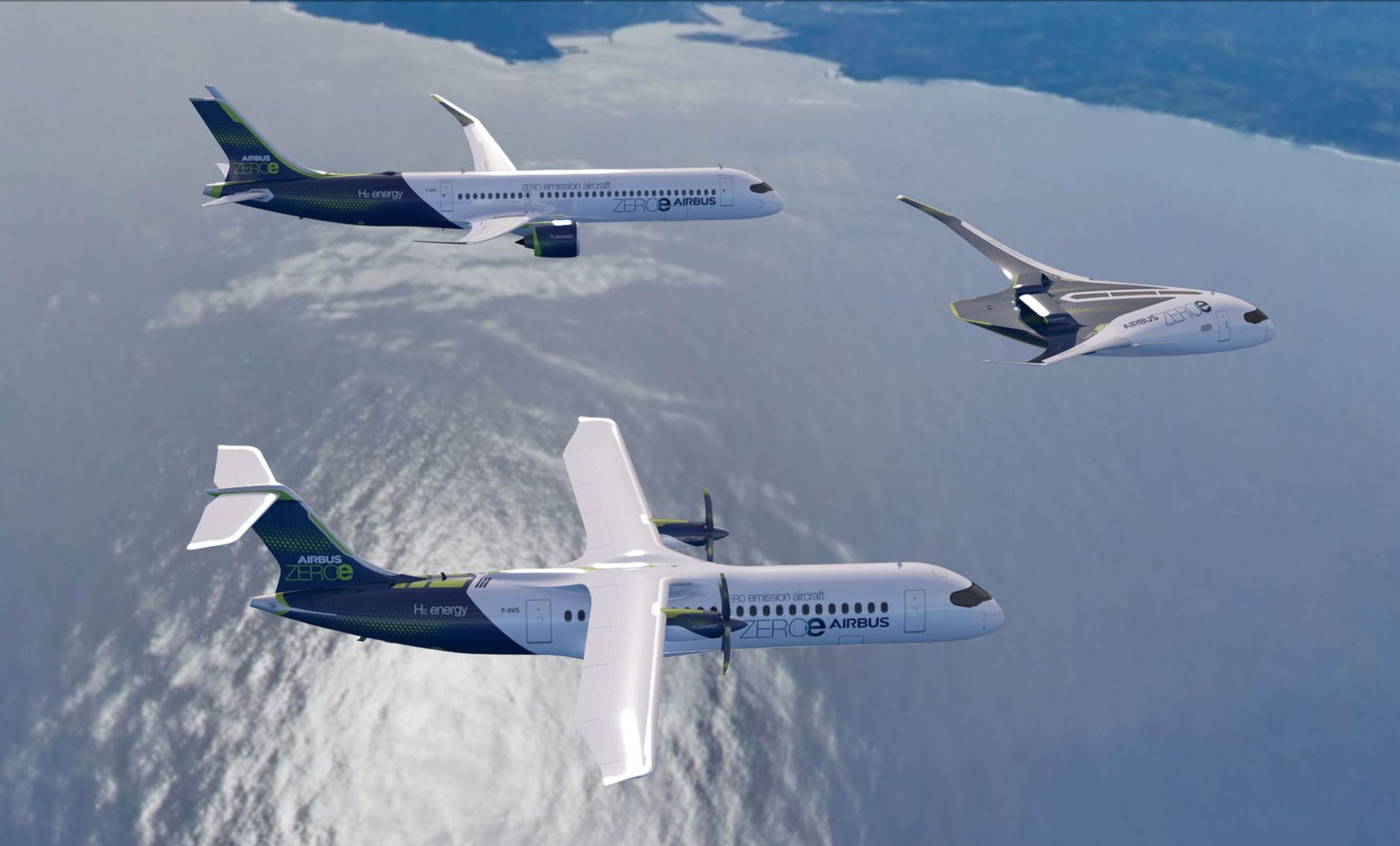
In the ZEROe concepts for hydrogen aircraft we distinguish between three core concepts:
- The first is an aircraft with turboprop propulsion for up to 100 passengers, with a range of about 1,000 nautical miles. The hydrogen tank would be located behind the rear pressure bulkhead behind the passenger cabin.
- The second envisages turbofan propulsion and capacity for up to 200 passengers. Here, too, the tank would be located behind the rear pressure bulkhead. The range is around 2,000 nautical miles.
- For the third concept, we're looking at the blended wing body. This, too, could fly 200 passengers some 2,000 nautical miles. The concept offers brand new possibilities for where the tanks could go. On the other hand, it requires a complete rethink of the cabin design and many other factors. And achieving certification is just as demanding as designing the aircraft architecture. The relevant certification bodies will have their work cut out dealing with the new design.