End customer focus:
defence
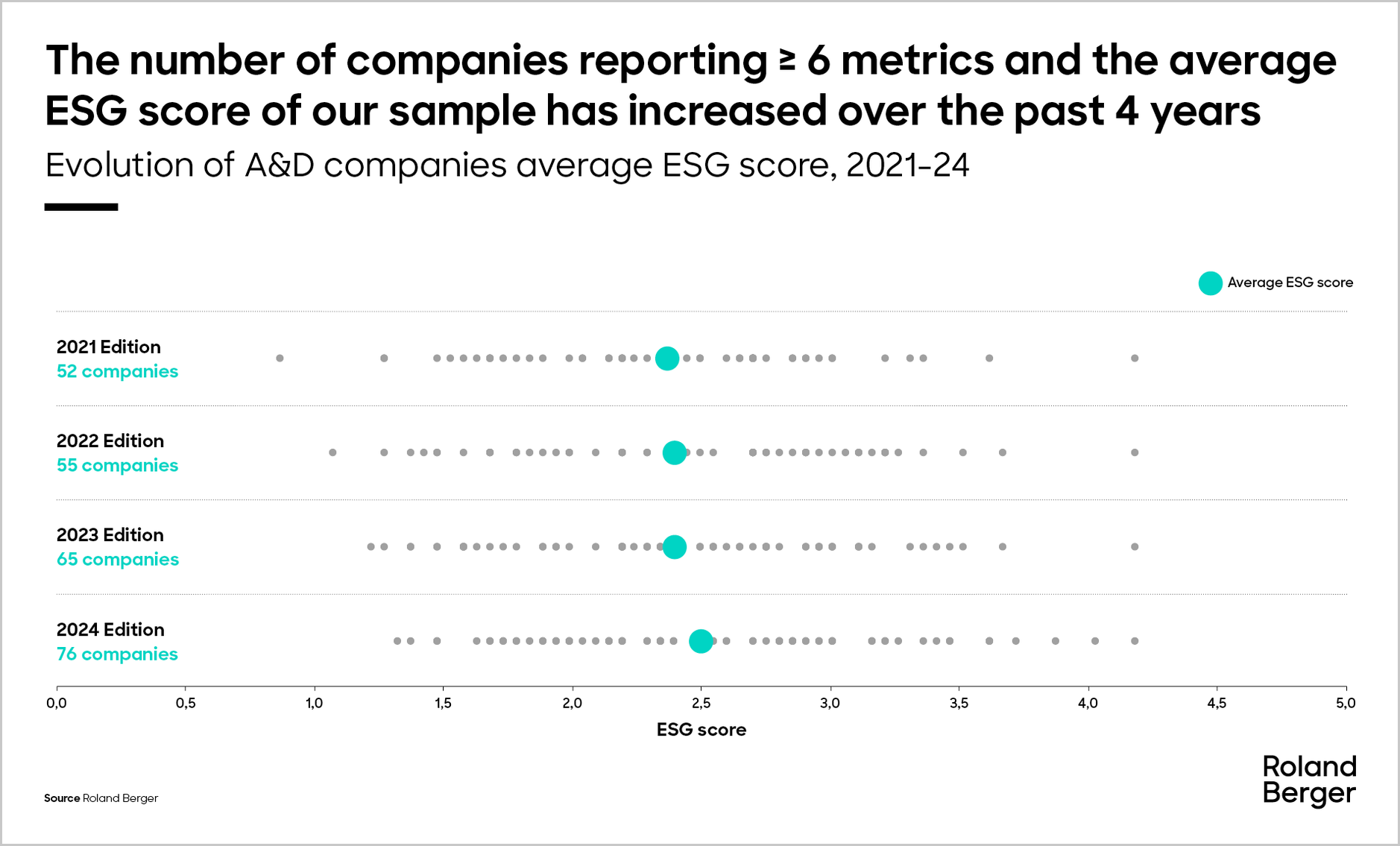
companies perform overall slightly better than civil-focused peers, which is due to the stress they have traditionally put of G, given the higher scrutiny to which Defence organisations are subjected. This is evidenced by the recent focus of Ministries of Defence, the closest of all Defence organisations to the general public, in developing ESG strategies (e.g., net-zero strategies). At the same time, in order to access funding in Europe’s sustainability-focused finance ecosystem, Defence companies are facing pressure to show good ESG performance.
Supply chain position: Original Equipment Manufacturers (OEMs) generally outperform Tier 1 and Tier 2+ suppliers in ESG metrics. This is due to the greater proximity of aircraft OEMs to the general public compared to their suppliers. As a reference,
airlines
, which interface directly with passengers, tend to outperform OEMs in ESG.
Home region: European companies tend to excel in ESG performance compared to their counterparts in other regions. Not surprisingly, this is due to the higher stress that European countries have put in ESG-related regulation (e.g., CSRD reporting requirements). Interestingly, Asian companies show better performance than those in North America, which is due to only the top performers disclosing their metrics, given the more relaxed ESG regulation in the region.
In general, a company’s ESG performance based on reported metrics is a reflection of the external pressure it faces (e.g., scrutiny, regulation), and not a full depiction of its potential to reduce its impact on the environment, increase its positive footprint on society and improve its governance. This means that an organisation can learn best practices shared by current top ESG performers to increase its own performance.