Three strategies
How can airlines
transform their business
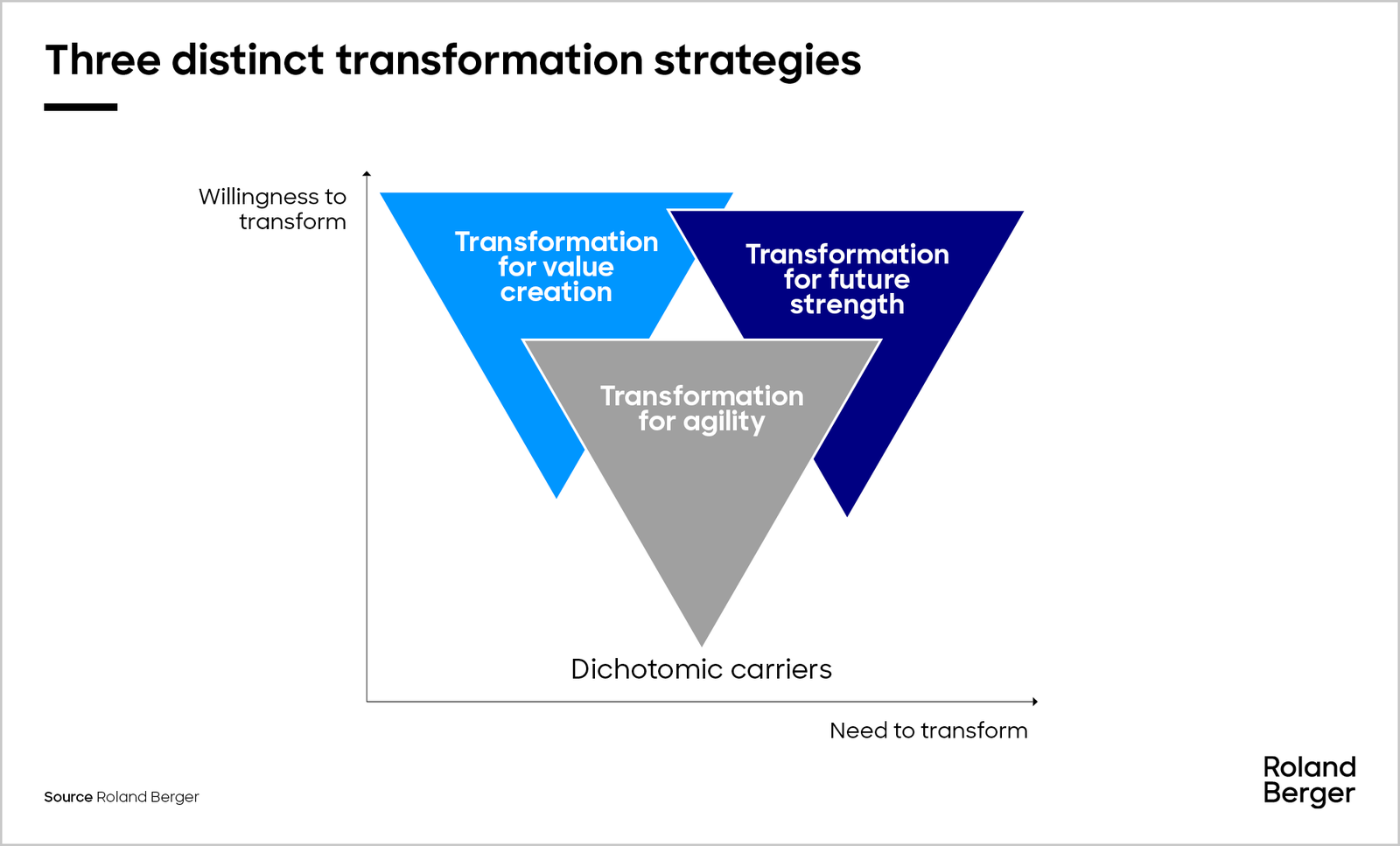
in line with the challenges of today and tomorrow? We identify three different strategies, each of them suitable for different types of carriers. The first we call transformation for agility. This approach is most relevant for global legacy players that, despite their best efforts to modernize, still lack agility. Often, their top management sees the need for transformation but this does not filter down to the rest of the organization. Players in this cluster need to become more agile, quickly responding to any changes in the market environment, digitalizing, streamlining processes and investing in true customer value.
The second transformation strategy is transformation for value creation. This is most applicable for mid-size players who have solid financial results post-pandemic and a new will to grow. They need to achieve an eight to 12 percent EBIT margin to finance their modernization efforts or pursue growth strategies. The strategy involves instilling a value creation culture within the organization, with attractive customer offerings, new products and state-of-the-art servicing.
Finally, we have transformation for future performance. This strategy is relevant for companies that were hard hit by the pandemic. Rather than falling into a cycle of doom, these players need a fresh strategy, well executed restructuring and a roadmap for the future. By establishing a new unique selling proposition (USP) they can elevate their products and become a relevant player in the aviation market.
Some players share characteristics with all three clusters above. This group includes players operating for the last ten to 20 years only, who are still grappling with the fundamental shifts in the aviation industry. To forge a cohesive path forward, these companies need a strategy that all their stakeholders can embrace unanimously.