Energy storage as a strategic solution
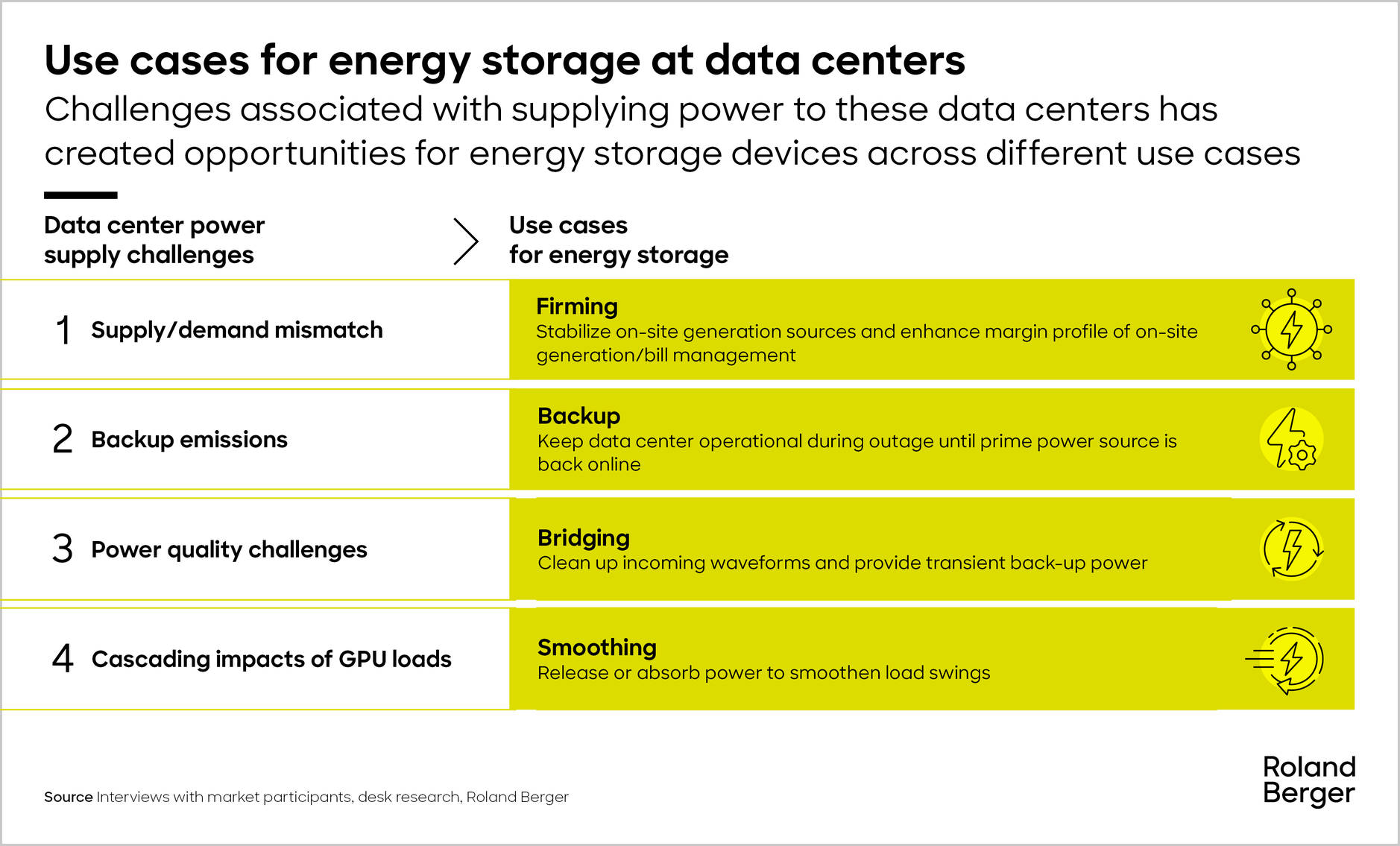
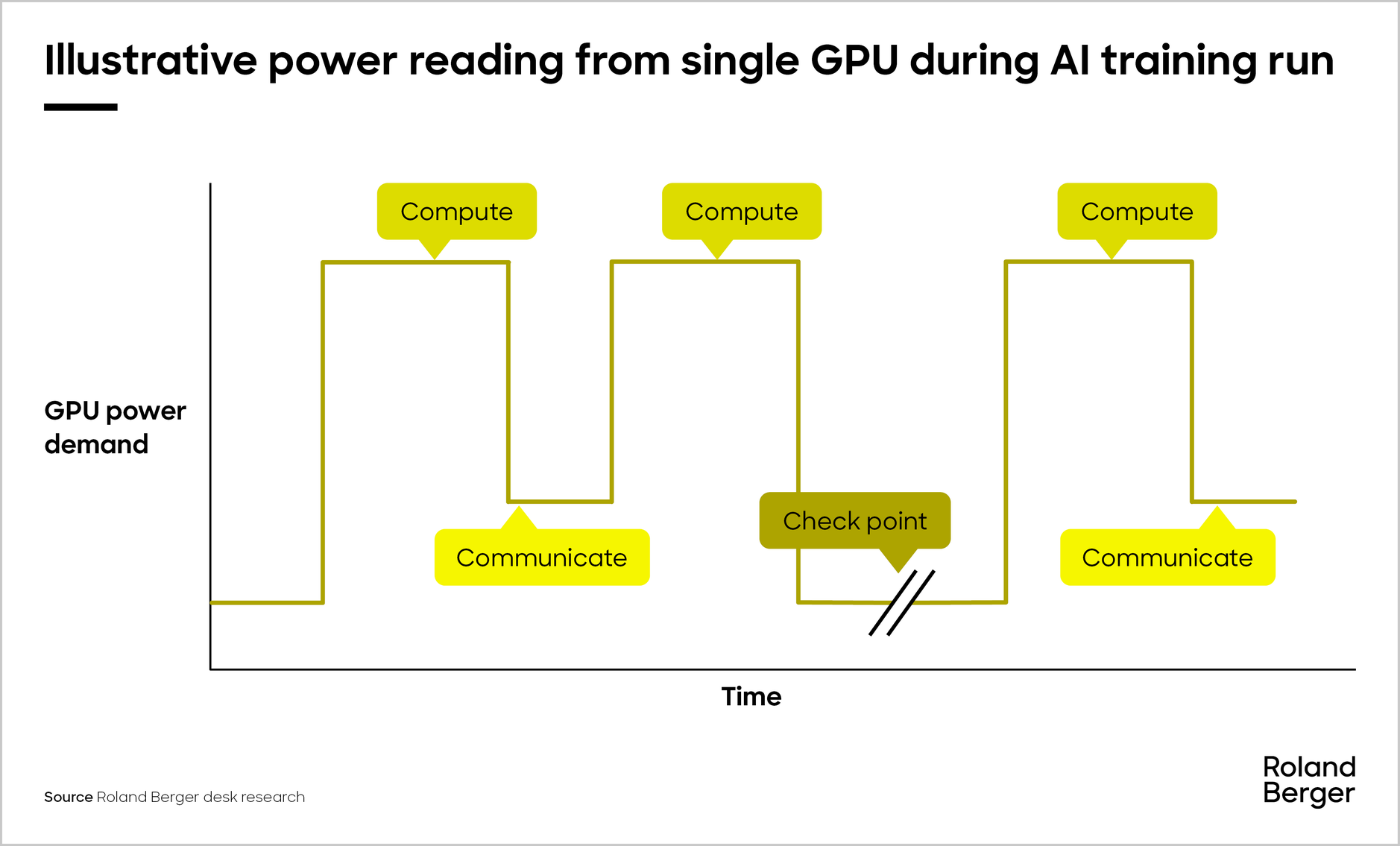
There are many different potential solutions for transient load mangement at AI data centers. Software based solutions and adjustments at the GPU level can provide partial mitigation by introducing secondary workloads or controlling ramp rates. However, these approaches often come at the cost of reduced efficiency or increased hardware stress. Energy storage technologies, including lithium-ion batteries and supercapacitors, offer a more comprehensive and sustainable solution, meeting strict operational requirements without unnecessary energy loss, however, at increased costs.
In the end, a combination of software, firmware and hardware (i.e., energy storage) solutions will be required to effecitvely and efficiently manage transient loads at AI data centers.
Tailoring battery strategies to data center needs
There is no single blueprint for deploying energy storage in AI data centers. Requirements vary widely depending on the type of compute, ranging from traditional workloads to AI inference and large scale training, as well as the characteristics of the power supply (i.e.,, grid connected vs. non-grid connected, source of on-site prime power generation). The frequency and intensity of training cycles, checkpoint behavior, and backup system design all shape the optimal storage configuration.
The role of Roland Berger
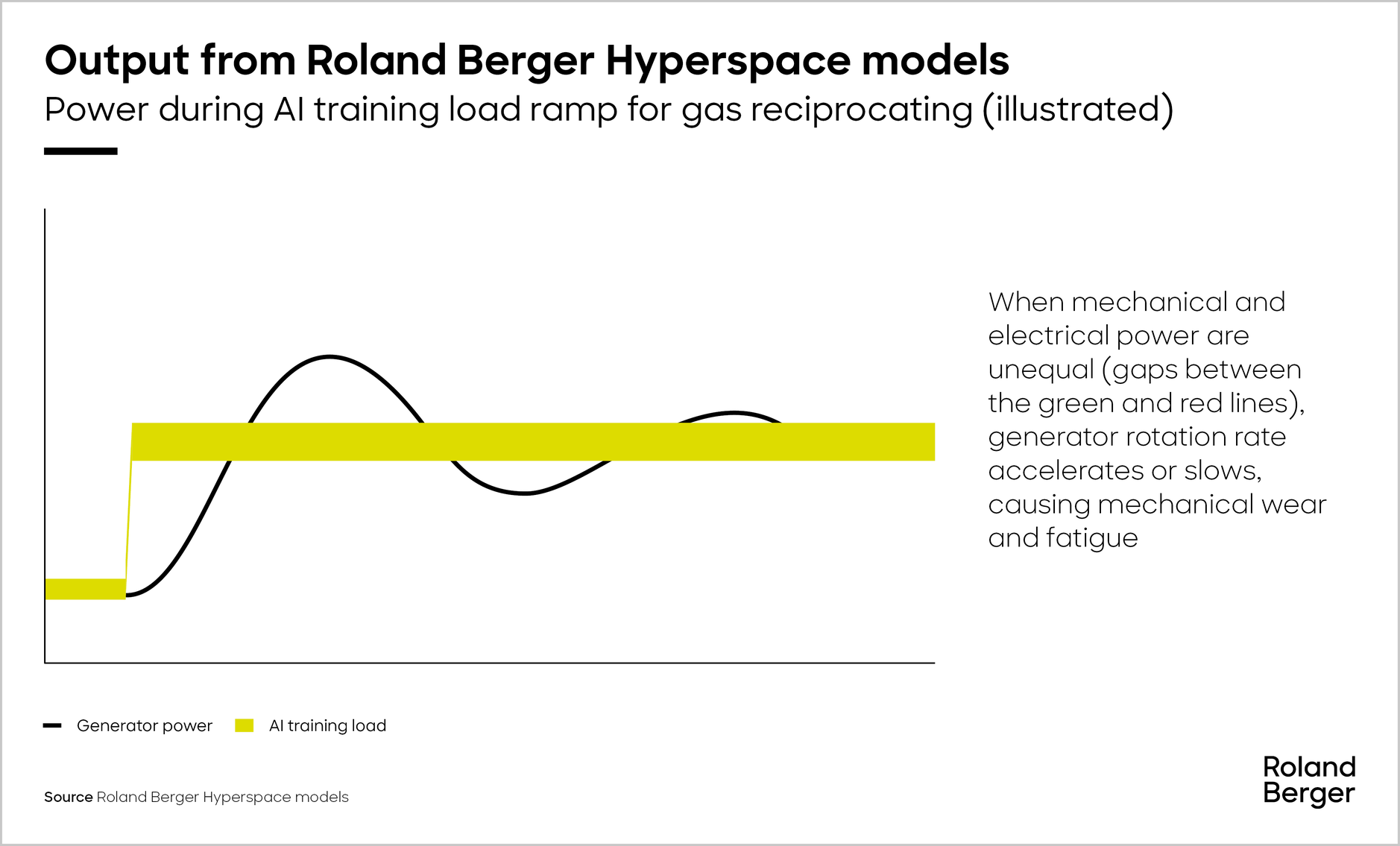
To navigate this complexity, Roland Berger has developed proprietary HYPERSPACE models, which simulates how AI workloads interact with different power generation and storage setups. By capturing real world operating conditions, including grid instability, equipment stress, and workload driven demand patterns, the model enables a rigorous assessment of both technical performance and economic outcomes across energy storage strategies.
This analytical foundation allows operators and investors to move beyond simplified assumptions and make informed decisions on system design. It supports the identification of the appropriate storage scale, the evaluation of trade offs across reliability and cost, and the design of resilient power architectures tailored to specific operating environments.
Building on these insights, Roland Berger supports end-to-end decision making, from defining energy strategies and prioritizing investments to guiding implementation and operational optimization. This ensures that energy storage is positioned as a core enabler of reliable and efficient power delivery, aligned with the evolving demands of AI driven data centers.
Charting the path forward
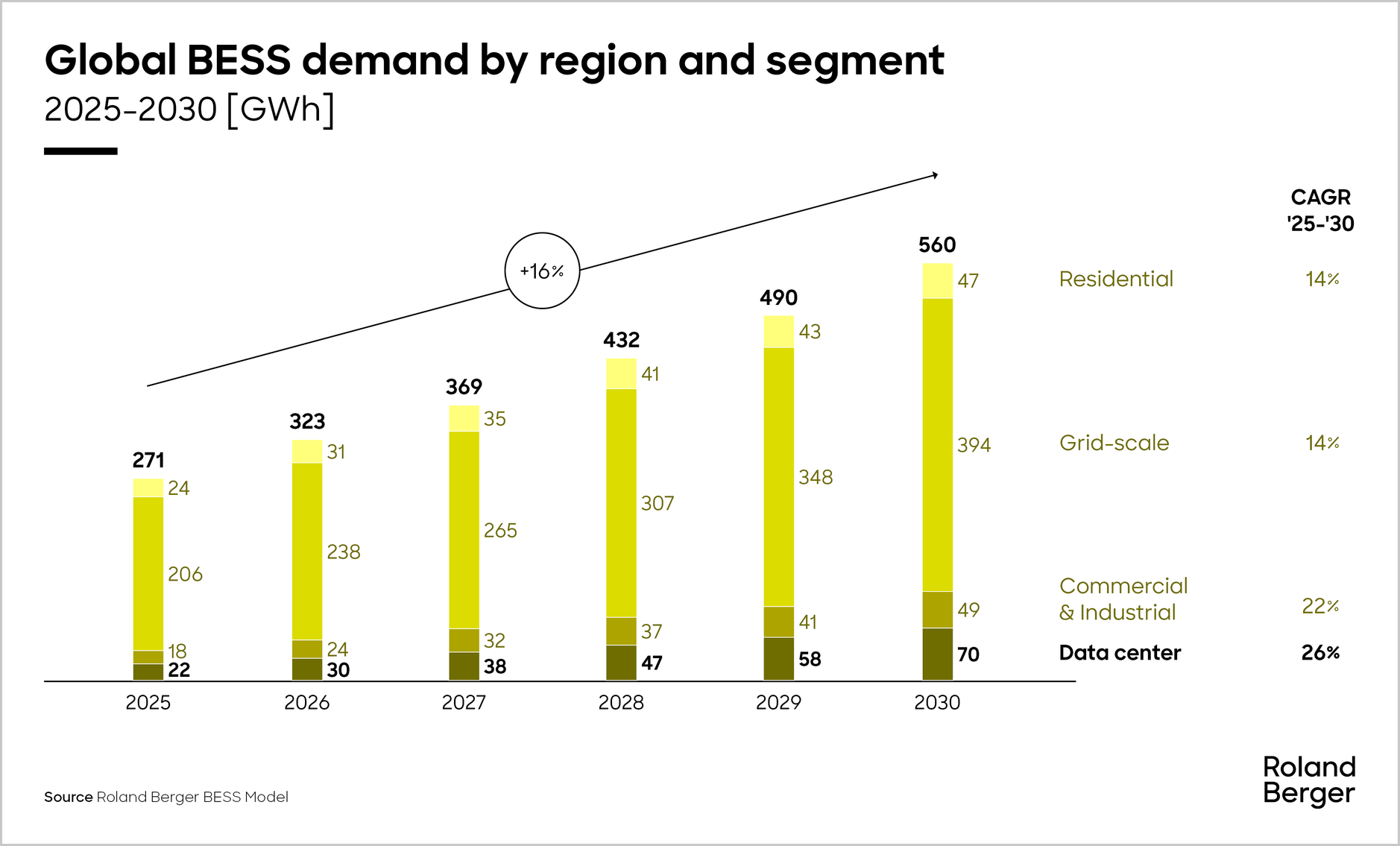
The rise of AI data centers represents a defining moment for the battery industry. As the fastest growing segment within stationary energy storage, these facilities are setting new standards for performance, resilience, and operational complexity. Addressing these demands requires both technological innovation and a deep understanding of the relationship between computing, power systems, and storage solutions.