Rethinking investment timing and risk
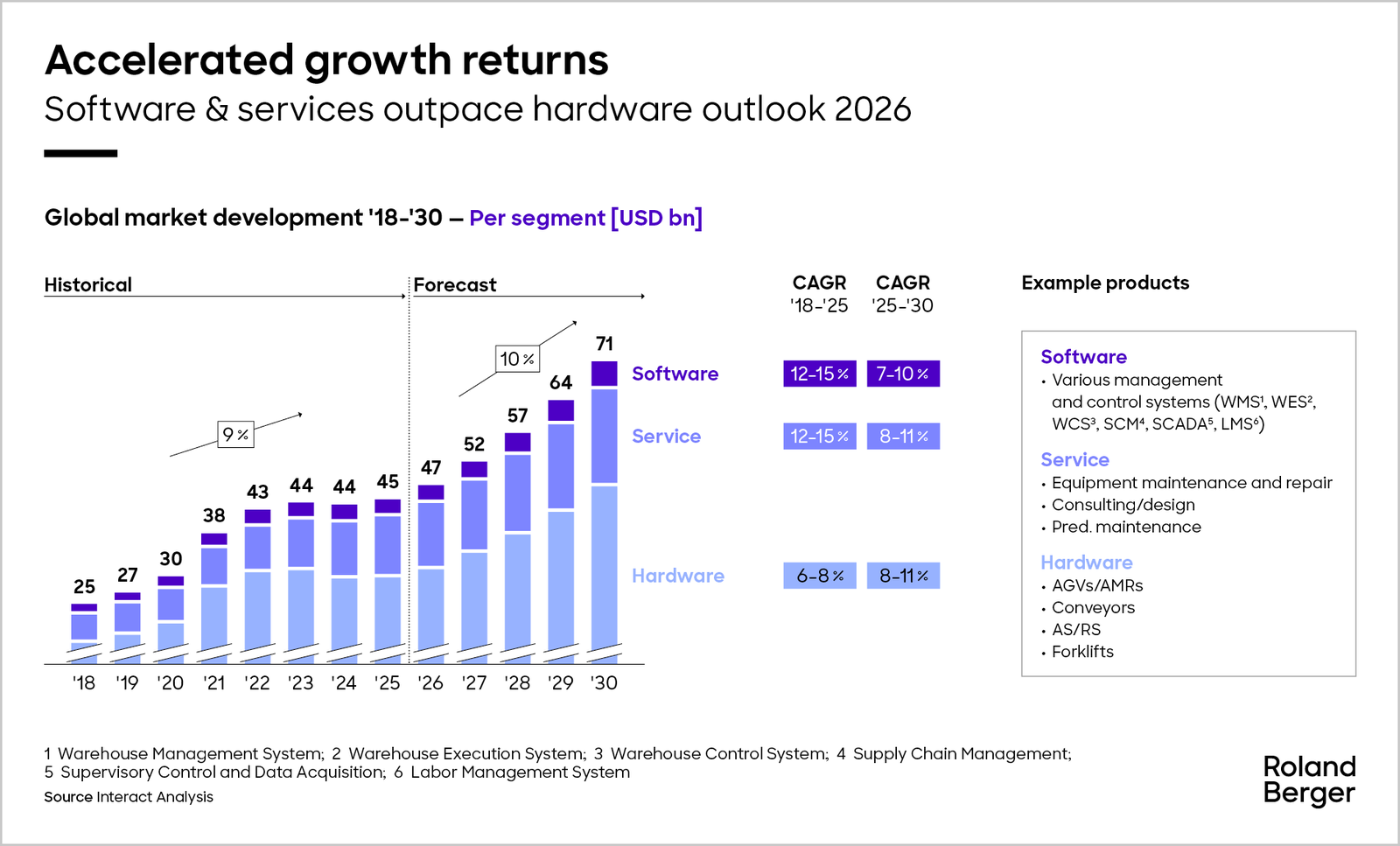
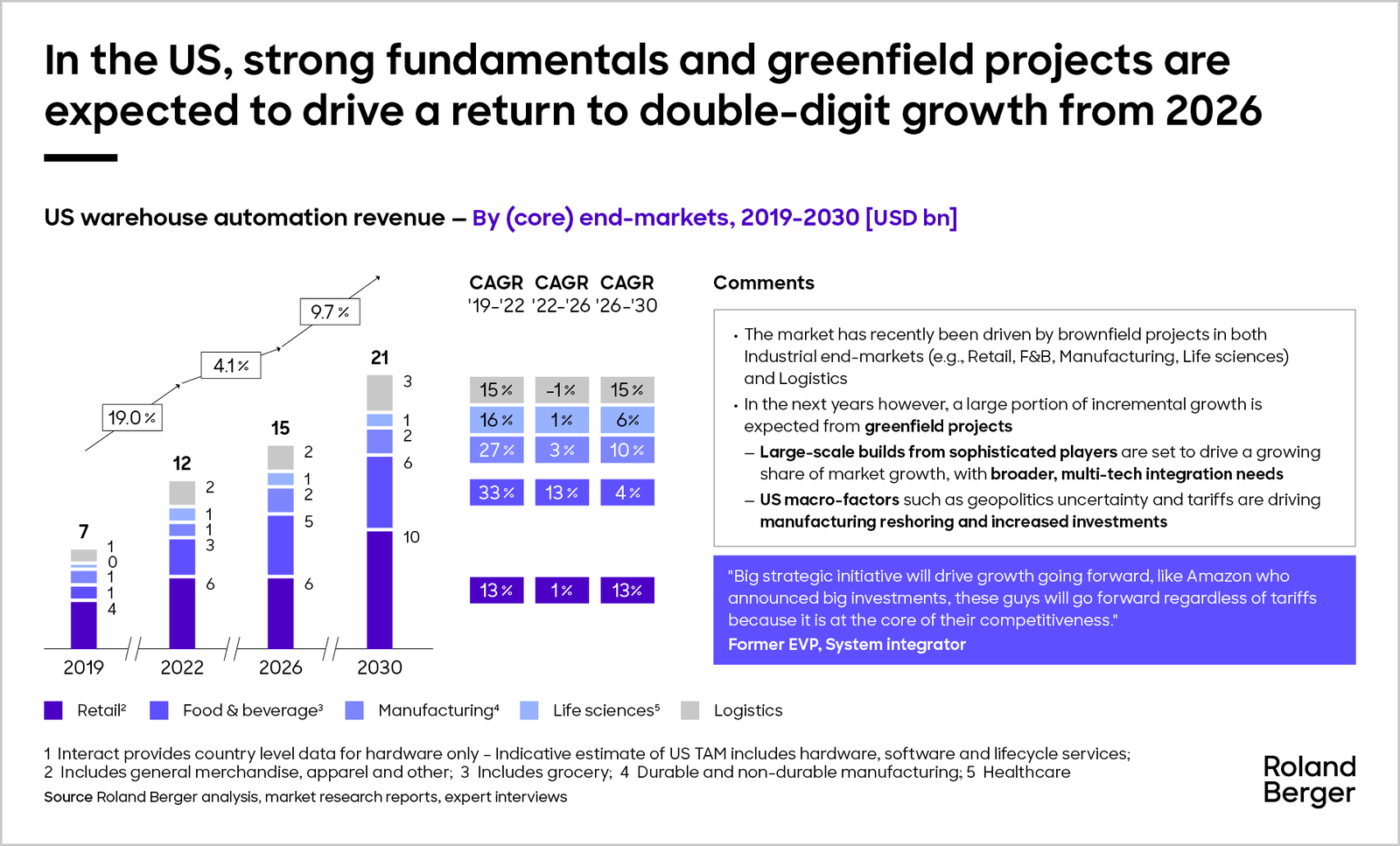
The timing of investment is a central strategic question. While the consensus points to a market recovery beginning in 2026, downside risks remain—particularly if tariffs, inflation, or geopolitical tensions persist.
Some scenarios suggest that a prolonged period of uncertainty could delay the rebound until 2028, with a subsequent catch-up in investment. Leaders must balance the risk of acting too early (and facing continued volatility) against the risk of missing the next wave of growth.
Navigating the value chain and partner ecosystem
The warehouse automation value chain is becoming more complex and interconnected. System integrators—especially those with deep end-market experience—are increasingly critical for customers lacking in-house expertise.
However, the market is also seeing the rise of technology-agnostic integrators, specialized OEMs, and pure-play software providers. M&A activity remains high, as players seek to expand their capabilities and secure their position in the evolving ecosystem.
For decision-makers, the choice of partners and suppliers is more consequential than ever. Reliability, integration expertise, and the ability to deliver end-to-end solutions are key purchasing criteria. Switching barriers are highest for lifecycle services, making initial integration decisions particularly sticky.
Responding to labor and consumer pressures
Labor shortages and rising wage costs are persistent drivers of automation adoption. Warehousing and logistics roles are increasingly difficult to fill, with high turnover and growing regulatory pressures.
Automation is not just a cost-saving measure—it is becoming essential for maintaining operational continuity and meeting service-level expectations.
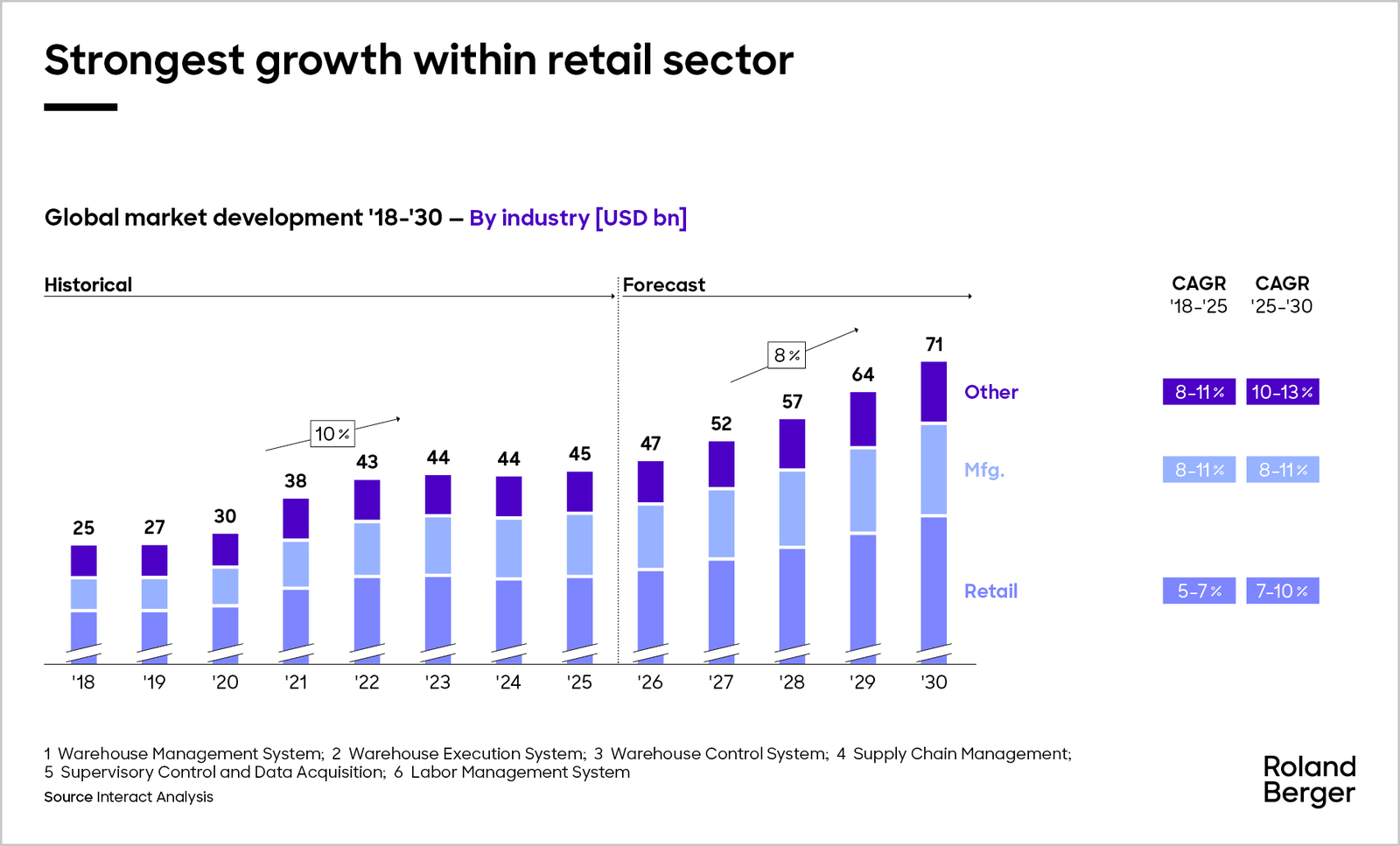
Consumer behavior is also reshaping the industry. The demand for faster delivery, broader product selection, and real-time information is pushing operators to invest in high-throughput, flexible fulfillment systems. E-commerce growth, after a brief post-pandemic plateau, is once again accelerating, particularly in retail and parcel segments.
Technology, integration, and the future of competition
As the material handling and warehouse automation industry enters its next phase, the winners will be those who anticipate and adapt to structural shifts rather than simply riding the recovery. The convergence of e-commerce growth, labor dynamics, and technology innovation is creating both opportunities and risks.
Leaders must make deliberate choices about where to invest, whom to partner with, and how to future-proof their operations. The imperative is clear: build flexibility into capital allocation and stay close to both end-market trends and the evolving partner ecosystem.
The next five years will reward those who can navigate complexity, manage uncertainty, and capture the upside of a sector in transformation.