Structural forces are accelerating demand
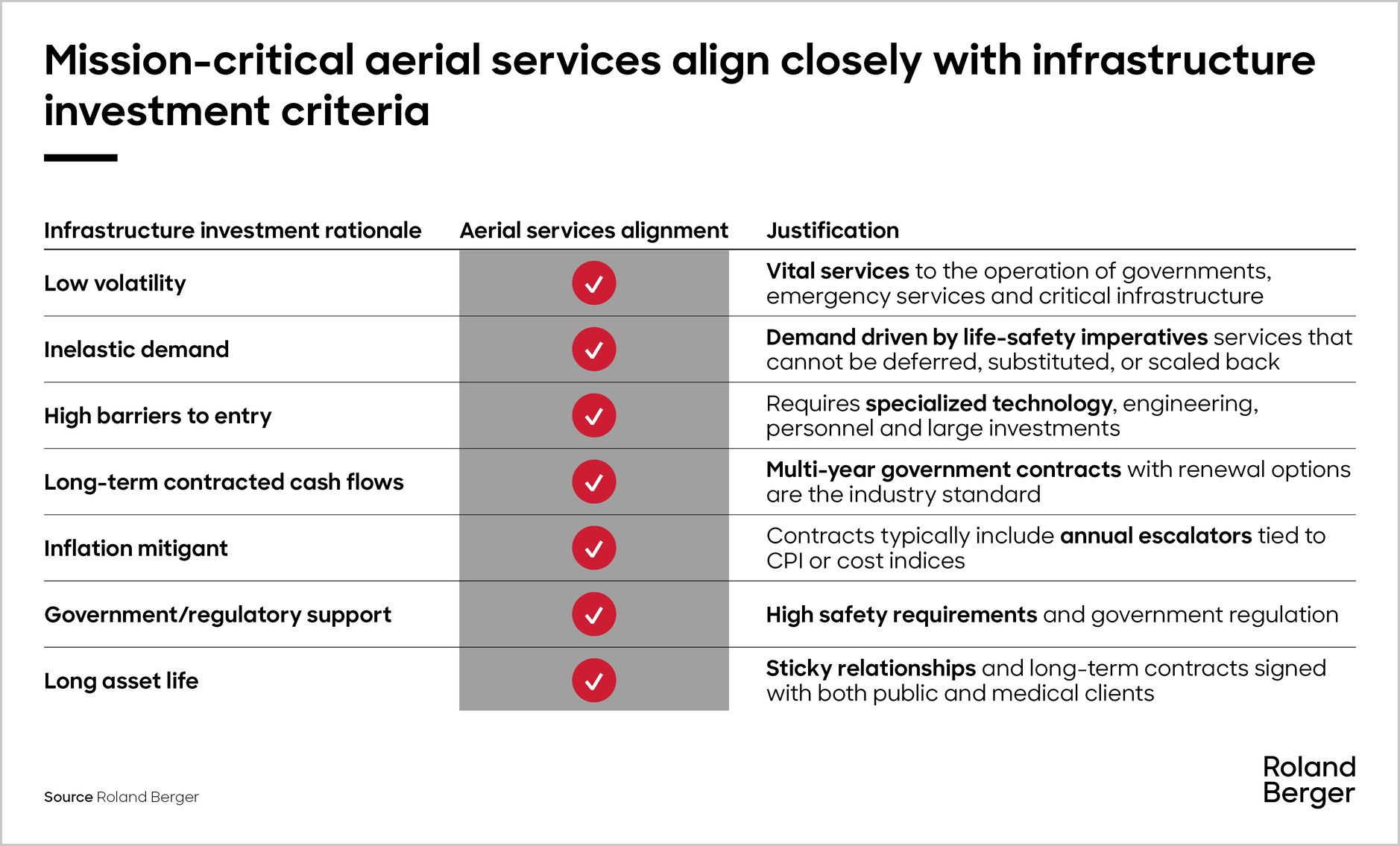
Several structural forces across demand tailwinds, supply constraints, and
procurement
dynamics are accelerating demand for mission-critical aerial services.
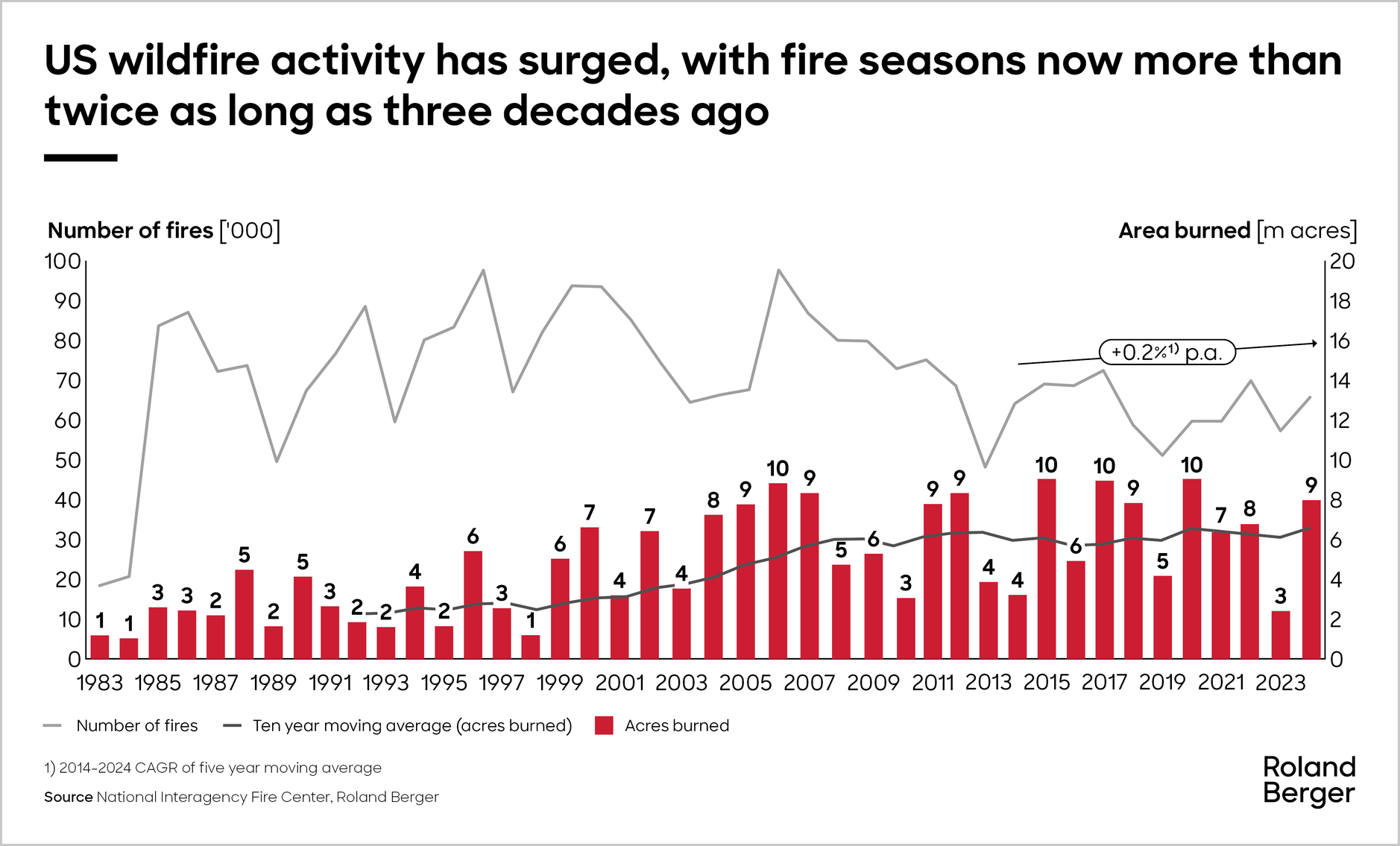
The rising frequency of aerial response missions, driven by climate change, aging populations, and expanding economic activity, is increasing the need for emergency response, inspection, and other time‑critical operations. The growing footprint of critical infrastructure across energy, telecom, transport, and utilities is also fueling higher demand for aerial inspection, maintenance, and emergency support services.
On the supply side, constraints are becoming more pronounced. Many government‑operated aircraft fleets are aging and approaching end‑of‑life, while budget limitations continue to delay replacement programs. In parallel, public agencies are shifting from capital-intensive ownership models toward outsourced service arrangements, favoring operating expenditure (OPEX) over capital expenditure (CAPEX) to reduce complexity and improve flexibility.
Procurement and operating dynamics are further reinforcing these trends. Shortages of specialized personnel, including pilots, technicians, and operational staff, are increasing reliance on scaled private operators with stronger recruitment and retention capabilities. At the same time, customers are demonstrating a clear flight to quality, prioritizing operators with modern fleets, strong safety records, and proven reliability. Expectations around service delivery are also rising, with faster response times, broader geographic coverage, and 24/7 readiness becoming standard requirements. Additionally, procurement models are shifting toward guaranteed-access frameworks, with agencies favoring long-term contracts that ensure dedicated aircraft availability during peak demand periods, reducing reliance on ad hoc mobilization.
Together, these forces create strong, long-term demand visibility for aerial services providers.
A fragmented market with consolidation potential
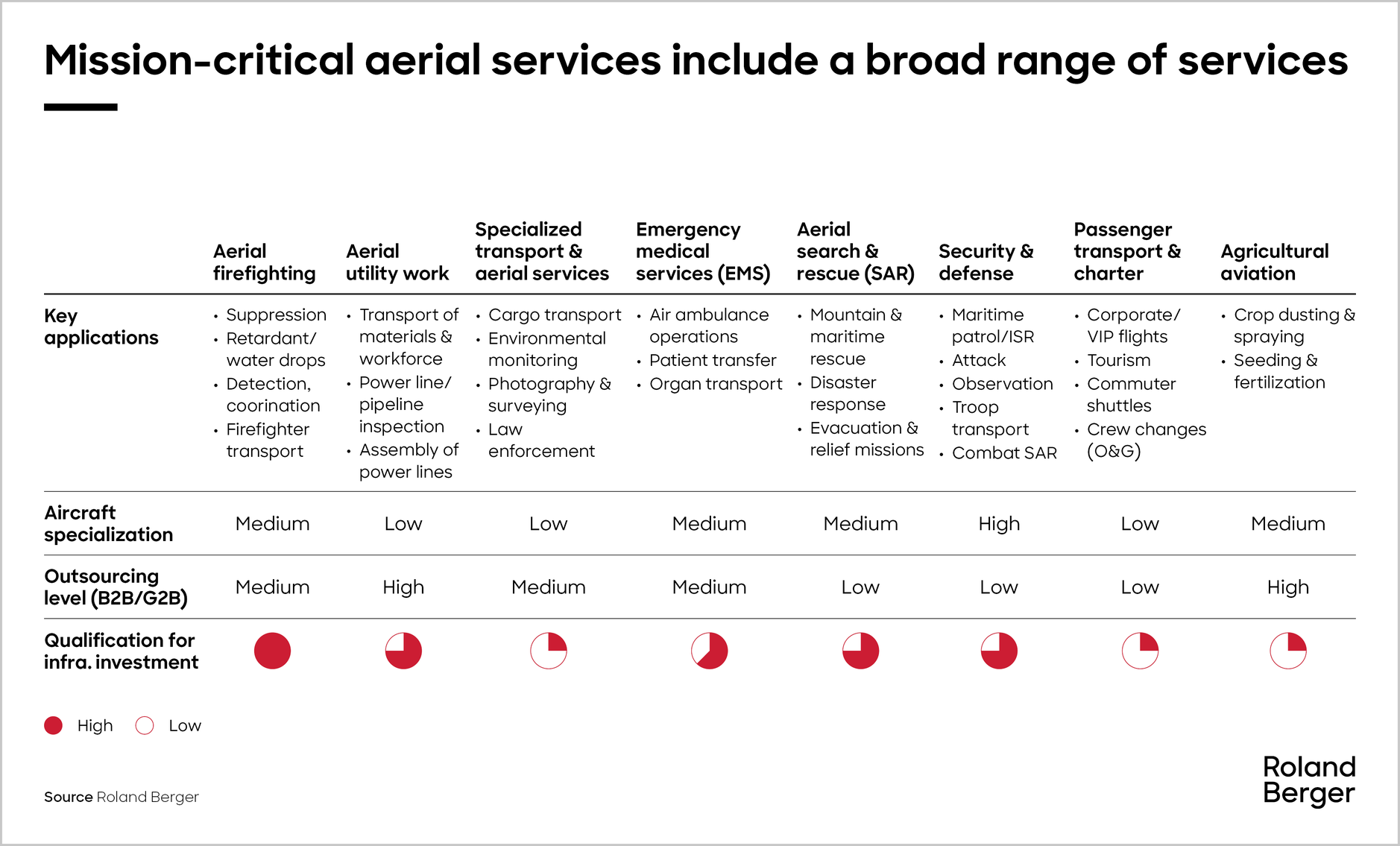
The competitive landscape in mission-critical aerial services remains highly fragmented, with operators typically organized around a combination of mission specialization and fleet configuration. Key operator archetypes include specialized helicopter operators, typically focused on a single mission set such as EMS, SAR, or utility operations; platform-agnostic mission specialists, operating mixed fleets to deliver a specific service offering across aircraft types; fixed-wing specialists, often positioned in niche applications including aerial surveillance, patrol, survey, or transport; multi-mission rotary-wing operators, leveraging fleet flexibility across multiple adjacent services to optimize asset utilization; and, dedicated aerial firefighting operators, focused on wildfire suppression and related emergency response activities across rotary- and fixed-wing fleets.
This fragmentation combined with high capital requirements, operational complexity, and stringent certification standards, creates a favorable environment for consolidation. Scaled platforms can generate value through fleet optimization, broader contract coverage, geographic expansion, and improved operational leverage.
Recent transaction activity across North America and Europe further highlights growing investor interest, particularly from infrastructure funds seeking to build scaled, integrated aviation services platforms.
Aerial firefighting: The gateway sub-sector
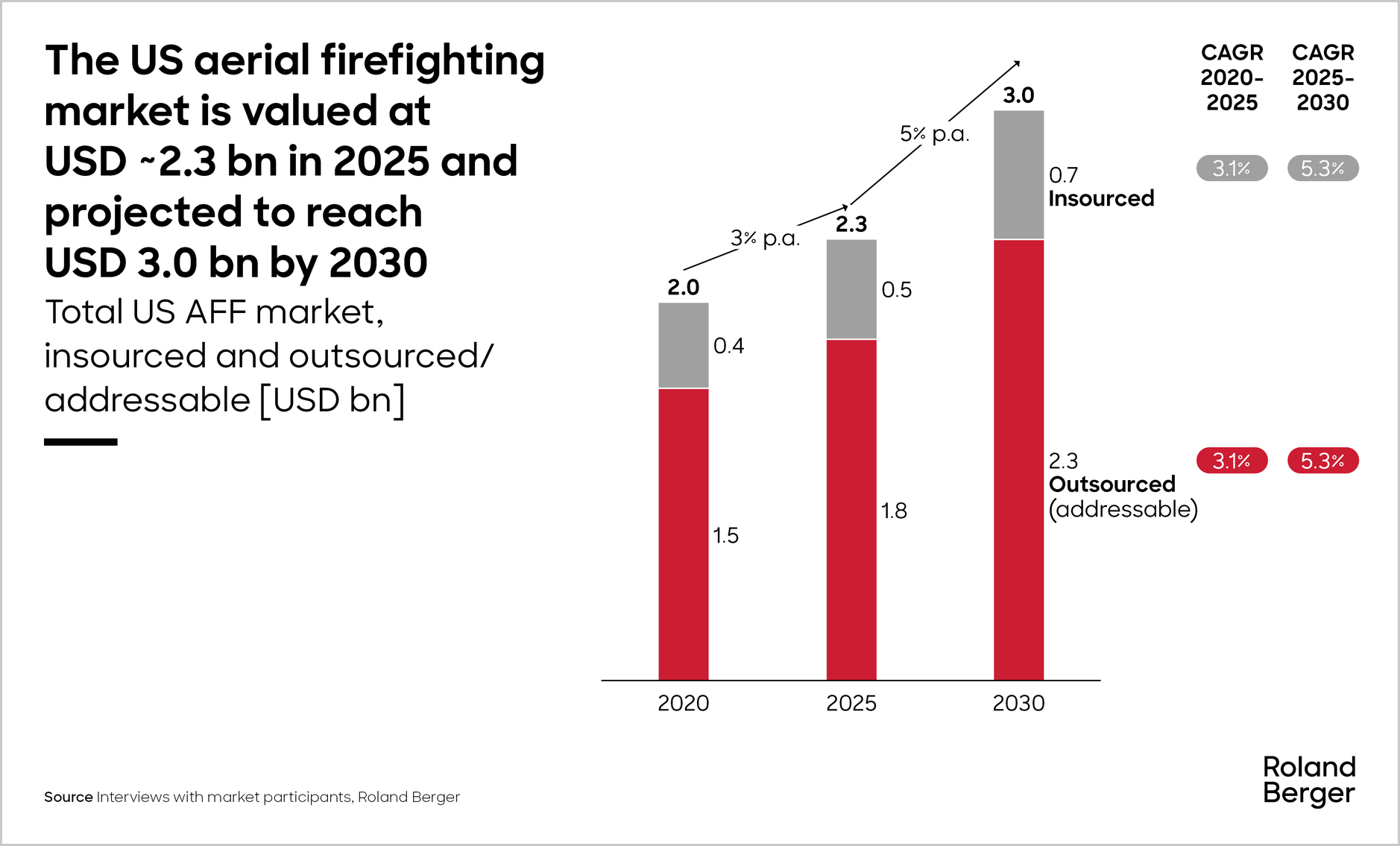
Among all mission-critical aerial services, aerial firefighting stands out as the most attractive entry point for investors. The total market is already sizable and growing steadily. In the United States alone, it is valued at approximately USD 2.3 billion in 2025 and is expected to reach around USD 3.0 billion by 2030, reflecting annual growth of roughly 5%. Importantly, around 75–80% of spending is outsourced to private contractors, providing a large and stable addressable market.