Seizing the moment
Project delivery capabilities already exist across the power industry, though performance varies widely. Simply matching current best-in-class practices is unlikely to be sufficient given the scale and urgency of the challenge. Fortunately, other industries have faced similar expansions in capital delivery and offer valuable lessons.
Successful organizations begin by developing a clear understanding of the portfolio they intend to deliver and the level of risk they are willing to accept. They then design a project delivery system tailored to that portfolio.
Project portfolio characterization
Establishing clarity on the project portfolio requires answering several foundational questions. Companies must define the types of projects they will pursue, including technologies, sizes, locations, timelines, and levels of certainty. They must also articulate their risk posture across safety, financial, reputational, and environmental dimensions. Equally important is an understanding of current capabilities relative to future needs, including the role of outsourcing, as well as the strength of stakeholder relationships and the complexity of regulatory environments across the portfolio.
Project delivery systems
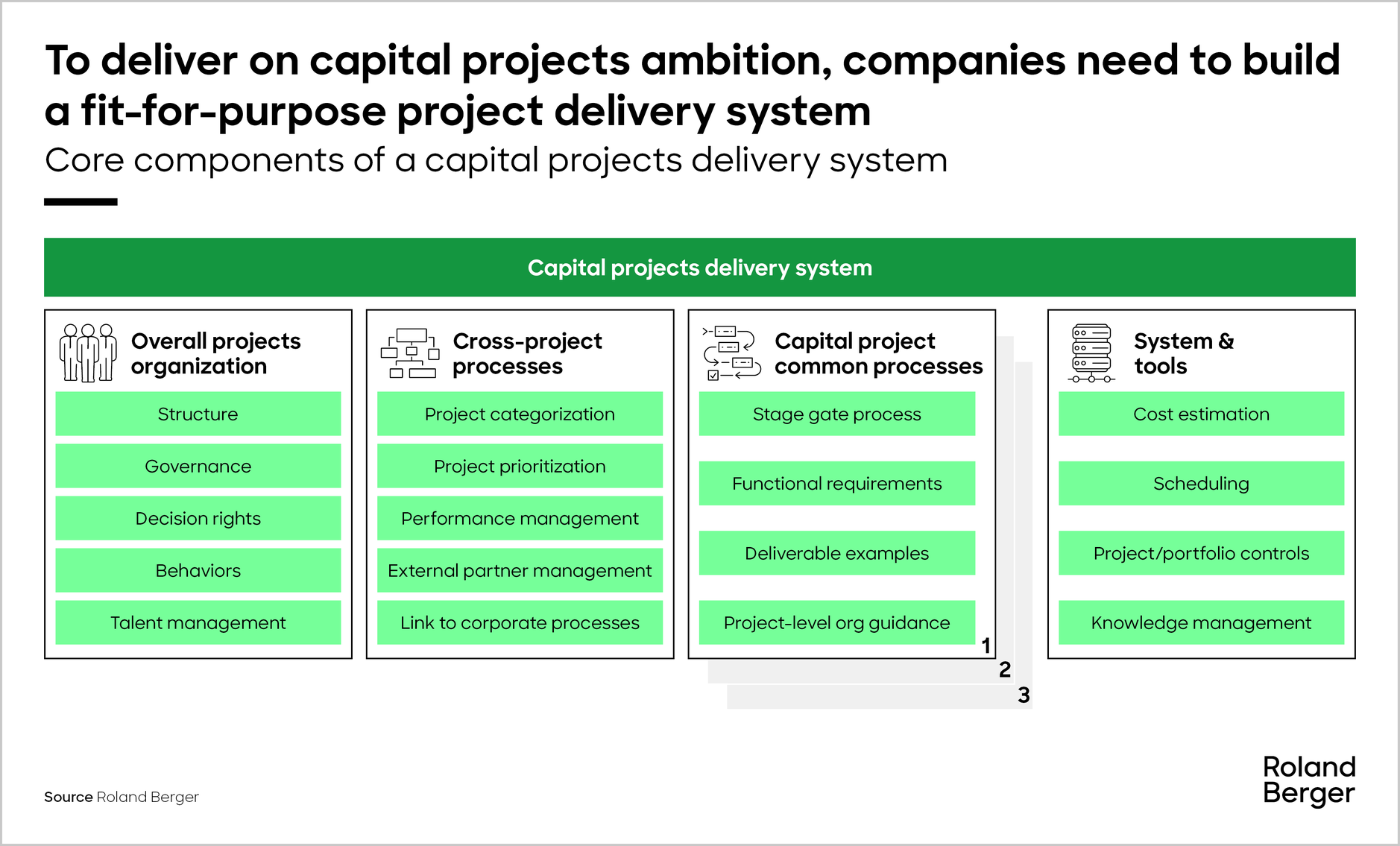
Designing an effective project delivery system is multidimensional. Organizations must determine which teams will deliver which projects (whether plant maintenance teams, dedicated project teams, or centralized groups) and how those teams should be structured. For example, central teams may be organized by technology or geography, and companies must decide whether to create dedicated teams for early project stages.
They must also identify which capabilities should be shared across projects, such as engineering or project controls, and determine the appropriate level of partnership with EPC or EPCM contractors. Geographic footprint decisions and governance structures further influence effectiveness. Critically, organizations should codify a clear project delivery system architecture, establishing a common language, defining project stages, and clarifying roles and responsibilities across stakeholders.
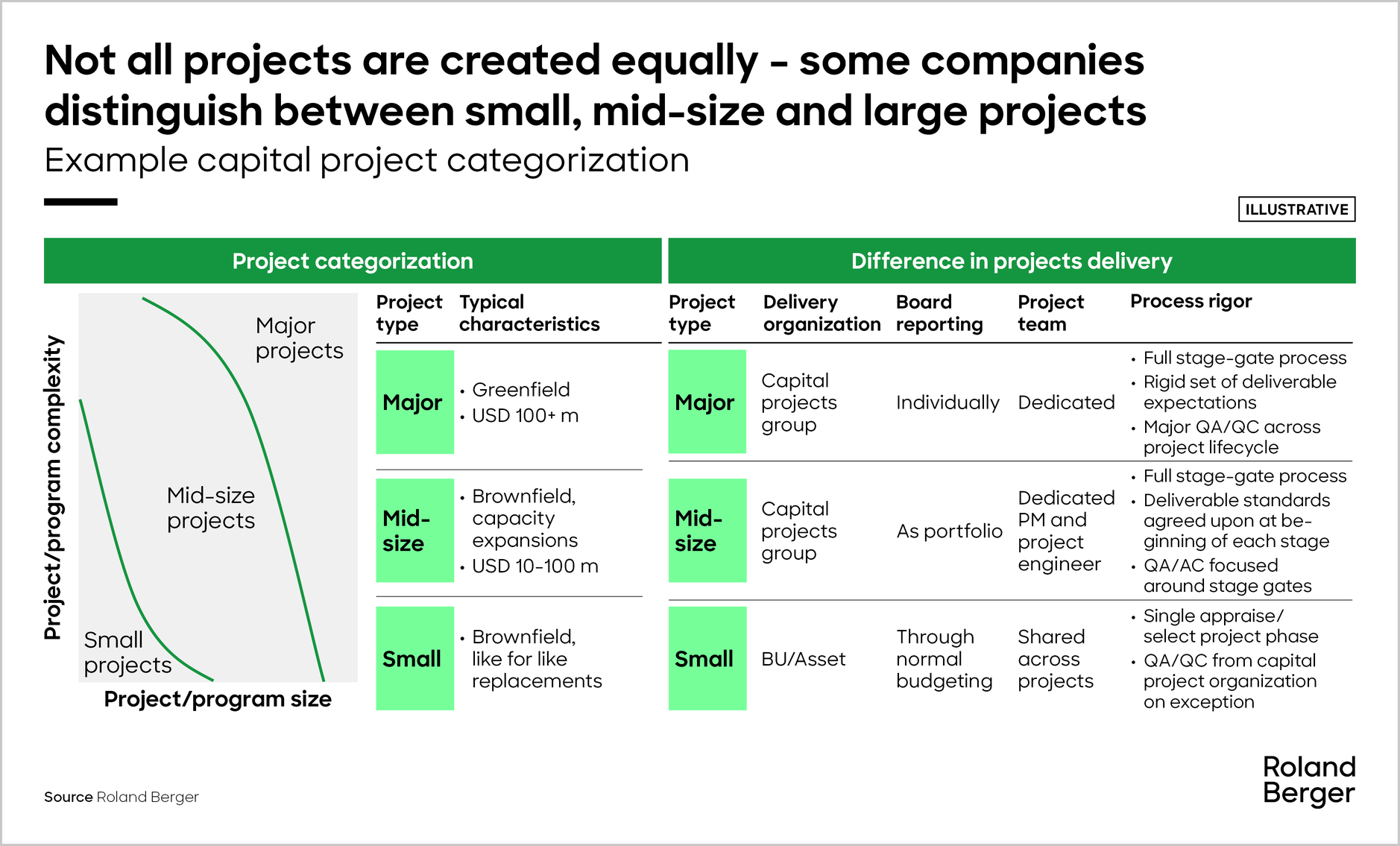
This system must be adaptable, with rigor tailored to project type. Small, repeatable projects should not be burdened with excessive early-stage requirements, while large, complex projects demand structured discipline. Distinguishing between programs and standalone projects, and aligning delivery approaches with internal maturity, are equally important.