Investment is not slowing
Capital demands are intensifying. The Edison Electric Institute projects investor-owned utilities will invest $170–$200 billion annually in infrastructure through the mid-2020s. Princeton's Net-Zero America analysis estimates transmission expansion alone could exceed $70 billion per year by the late 2020s.
The drivers are well understood: electrification,
data center
load growth, wildfire mitigation, grid hardening, and aging infrastructure replacement. These are not discretionary programs – they are system imperatives.
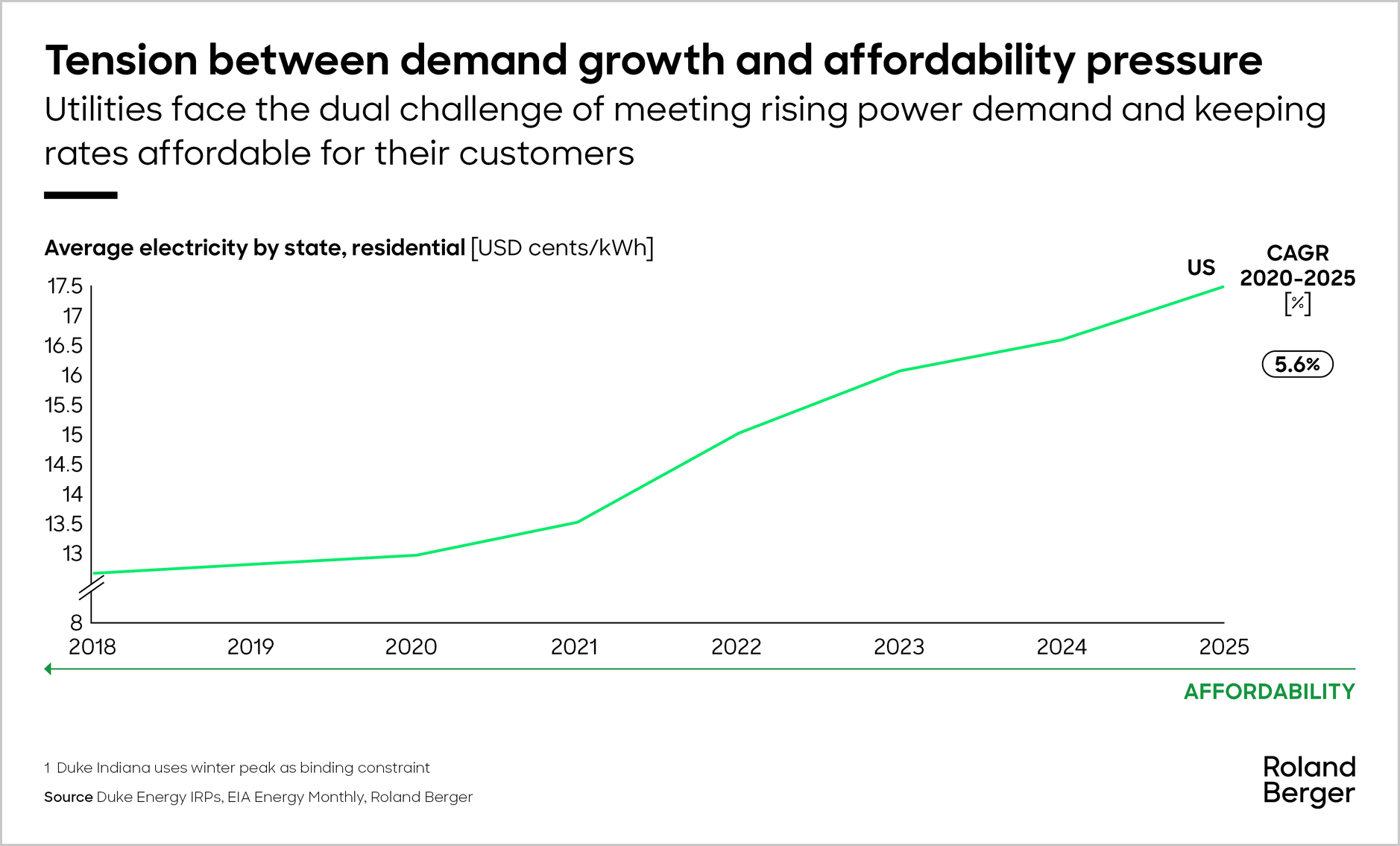
Capital intensity will remain elevated. Ratepayer tolerance will not.
Opex: The controllable lever
In most vertically integrated utilities, operations and maintenance (O&M) expense represents 30–45% of total revenue requirement – depending on capital structure and fuel mix. It is the most accessible lever available to management.
Unlike fuel costs, O&M is controllable. Unlike capital spending, it appears immediately in rates. And unlike storm recovery or fuel pass-throughs, O&M growth faces direct prudency scrutiny.
The sector's cost trajectory underscores the pressure. EIA data indicates electric utility O&M expenses rose from approximately $183 billion in 2020 to over $230 billion in 2023 – a 26% increase in three years. Labor escalation, contractor inflation, expanded vegetation programs, cybersecurity investment, and rising insurance costs are embedding structural expense into the system. This is not temporary inflation. It is a cost reset.
Why episodic cost cutting fails
Historically,
utilities
have responded to cost pressure with reactive measures: hiring freezes, overtime controls, contractor pullbacks, and across-the-board percentage reductions. These actions provide near-term relief but rarely alter structural cost curves.
The problem is not mismanagement – it is architecture. Compliance obligations, resilience mandates, and risk mitigation programs expand the base faster than incremental cuts can offset it. Without structural intervention, the cost curve resets higher after every reduction cycle.
A holistic approach to cost management
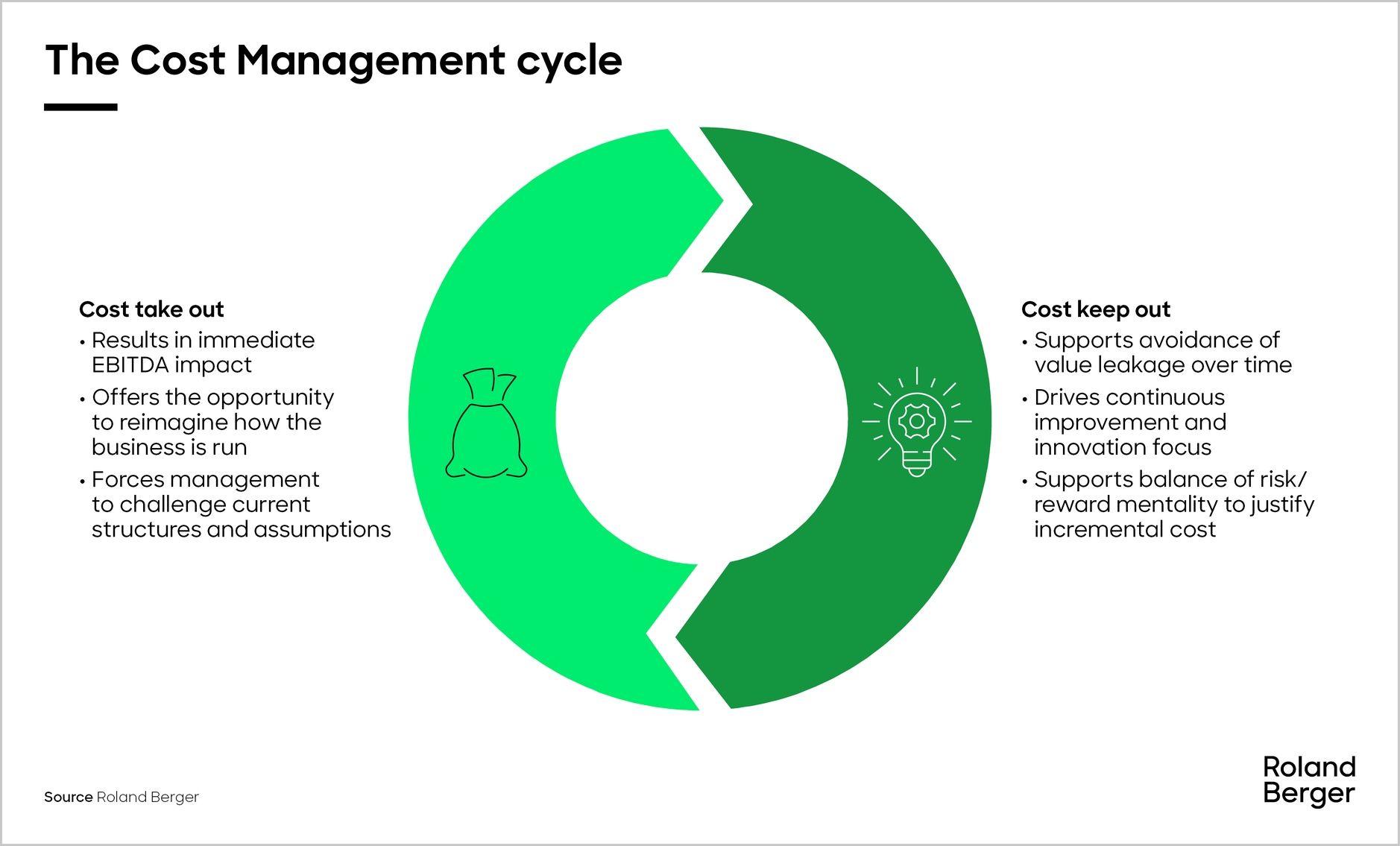
Sustainable cost management requires going beyond conventional cost-reduction programs. Three disciplines separate durable results from temporary relief: taking an unconstrained view of the business, addressing embedded and structural costs, and adopting mechanisms to keep cost out.
1. An unconstrained view of the business
Most cost programs optimize the business as it currently exists – a constrained view that accepts legacy structures and embedded assumptions as fixed. This approach limits ambition and produces incremental results (typically 3–5% reductions) rather than structural transformation (20–30%).
Utilities are more likely to lower costs and improve service when they step back and take an outside-in perspective and consider the “art of the possible”. Leadership teams must be willing to reimagine the business from first principles – questioning crew models, workforce structures, technology platforms, and operating assumptions that have persisted not because they are optimal, but because they are familiar. By expanding what leaders believe is achievable, organizations can drive significant gains in operational performance and associated cost.
Private equity
offers a useful analogy: PE owners often strip costs to the absolute minimum required to maintain operations, then layer expenditures back in as a series of explicit investments evaluated on risk-adjusted return. The question is not "What can we cut?" – it is "What costs should we take on, and why?" This inversion of perspective is what enables teams to bend the entire cost curve rather than simply reposition themselves on it. The question shifts from "What can we cut?" to "What costs should we take on, and why?"
2. Addressing embedded and structural costs
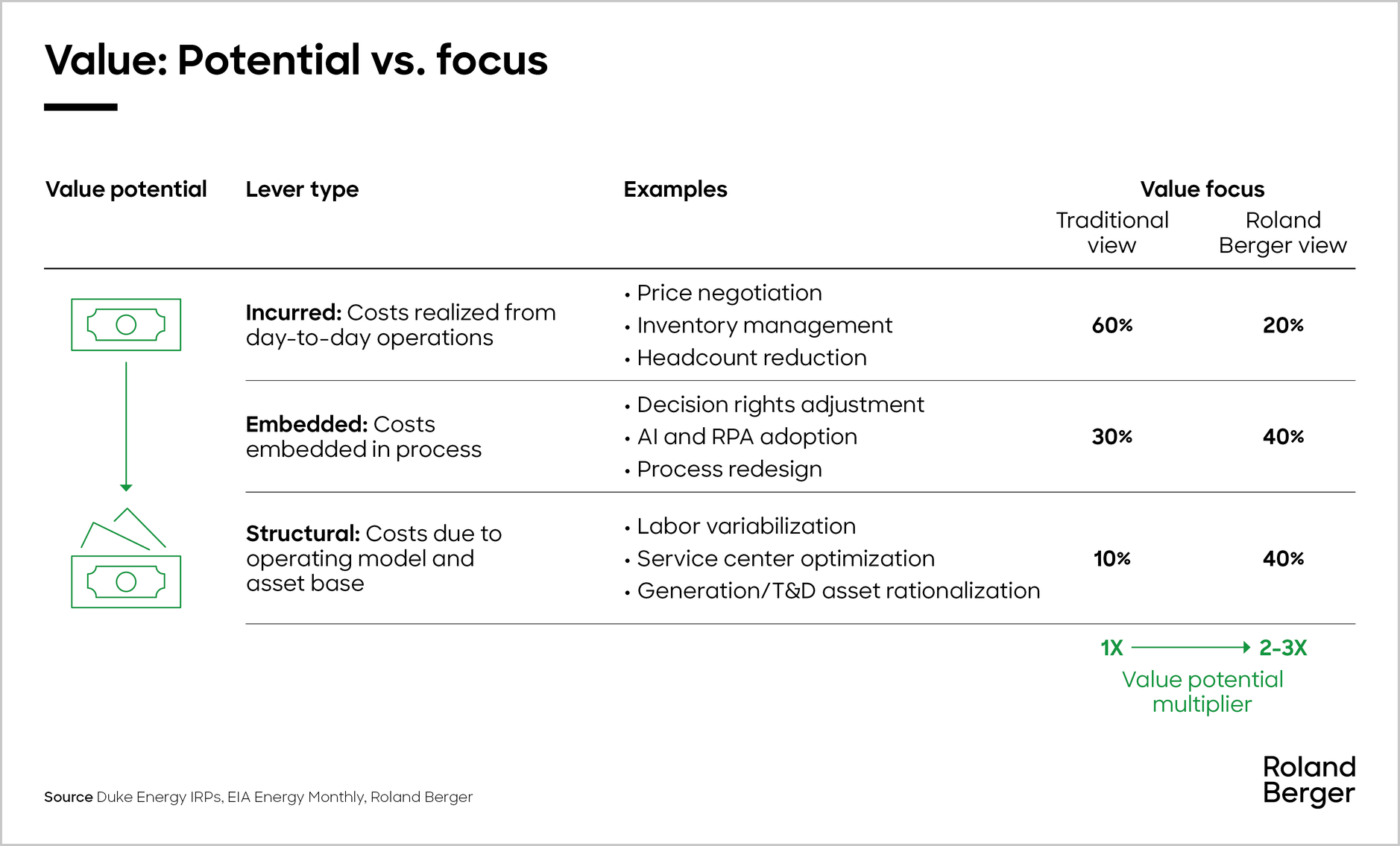
Surface-level cost reduction of incurred costs addresses what is spent. Embedded and structural cost management addresses why it is spent. That requires examining the root causes of cost embedded in operating models and asset portfolios – crew configurations, spans and layers, dispatch centralization, maintenance intervals, contractor strategy, and governance structures.
Traditionally companies have focused the majority of their cost management efforts on incurred costs where potential value, while not insignificant, is limited to the way in which the business is currently being run. Roland Berger’s experience suggests that companies should also focus on embedded and structural root causes of cost to deliver maximum value and fundamentally reset the cost curve.