4) Cost reduction and efficiency:
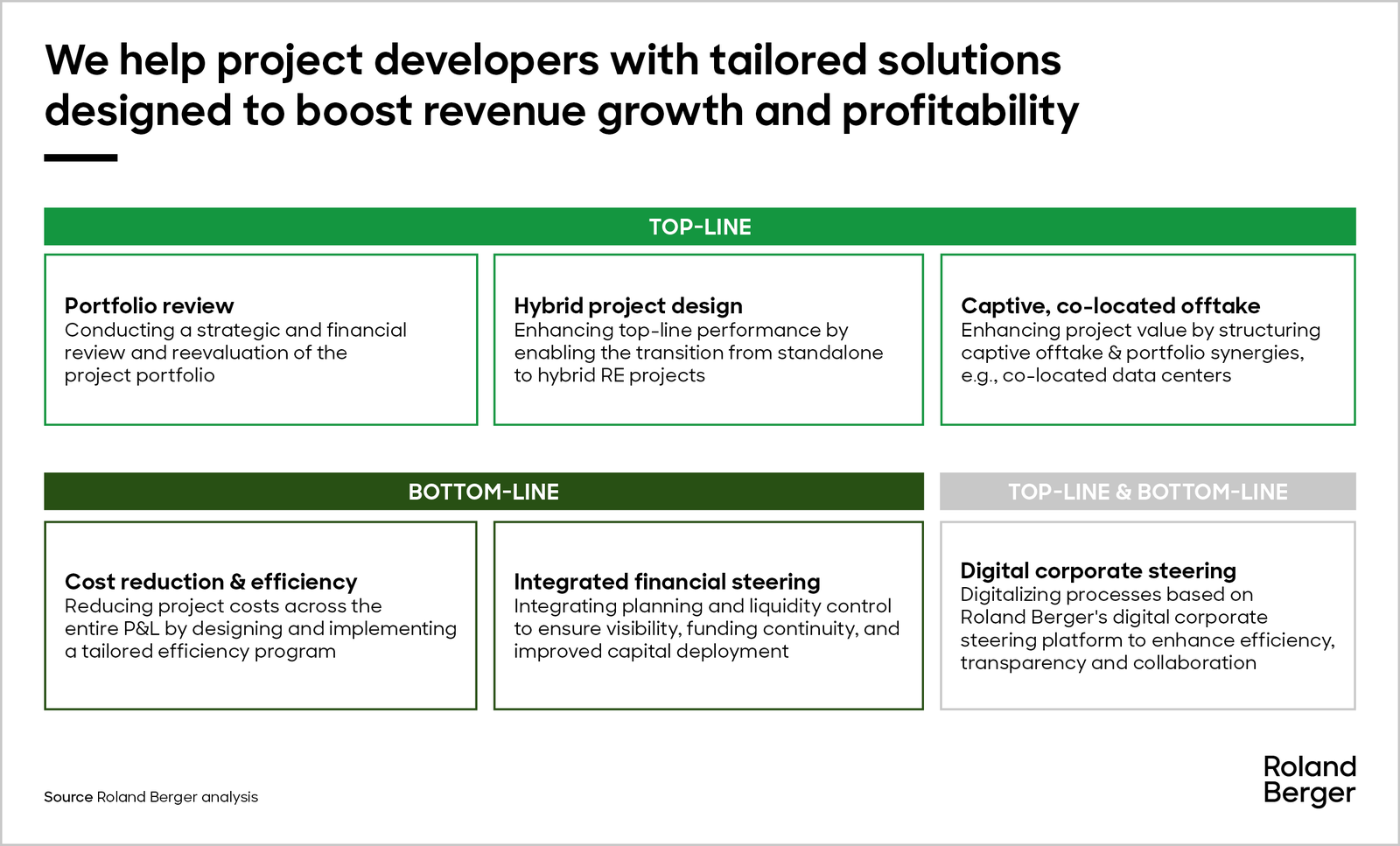
While the first three levers focus on the top line, the cost side deserves equal attention. Growth periods tend to mask inefficiencies, and many developers have accumulated overhead, while neglecting PMI in the case of M&A during their expansion years. When it comes to core processes, standardization in project development and optimized procurement for equipment and key services are often lacking.
Given these shortcomings, the improvement potential is often larger than expected. In wind turbine procurement, for instance, optimized project configurations, volume commitments, and longer-term framework agreements with OEMs can yield price reductions of 8–14% of CAPEX. Similar opportunities exist across construction, O&M, and overhead functions. Capturing them requires structured baselining, clear measure ownership, and disciplined tracking.
5) Integrated financial steering:
Operational and commercial improvements only deliver their full impact if the financial steering model can keep up. In many fast-growing RE businesses, that’s not yet the case. Planning is fragmented, liquidity management is reactive, and an EBITDA-centric lens overlooking cash and financial KPIs can mask whether the business is truly positioned to finance its next stage of growth.
An integrated model connecting P&L, balance sheet, and cash flow in a single framework, combined with structured short- and long-term liquidity planning, provides the visibility needed to manage cash proactively, prioritise investment, and engage credibly with capital providers.
6) Digital corporate steering:
Finally, much of what has been described above becomes easier to execute and sustain with the right digital infrastructure. Yet, many developers operate with IT landscapes that have evolved organically, with systems that don't integrate well and project data scattered across spreadsheets.
The most effective approach is pragmatic: pinpoint the most critical process bottlenecks and address them with targeted solutions first, e.g., stage-gated project platforms, automated reporting, AI-assisted permitting, or centralized portfolio dashboards. A "merit order" logic, solving the highest-impact problems first, ensures that digital investment delivers returns quickly rather than becoming an end in itself.