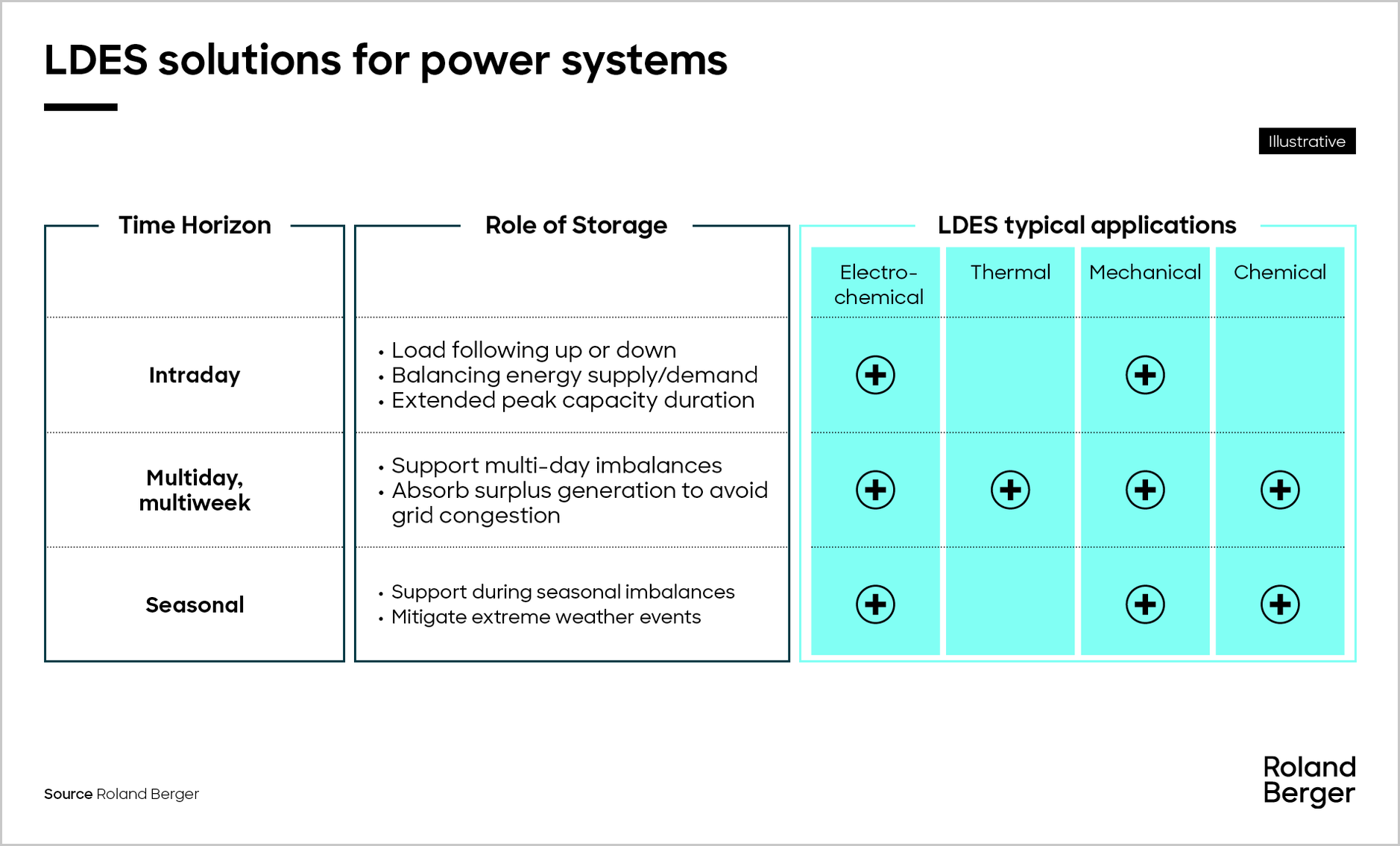
In addition, LDES can provide specific solutions. Thermal LDES, for example, can store energy as heat, enabling the cogeneration of heat and power. This technology has significant potential to supply heat to industrial customers and communities, especially in regions with limited grid access that rely heavily on fossil fuels.
Challenges and current applications
At present, most LDES technologies are at an early stage of development, lacking technological maturity and facing various challenges to their broader adoption. On the commercial side, challenges include high upfront installation and integration costs for LDES systems, competition with established energy storage forms (such as short-duration batteries, which are cheaper and more mature) and uncertainty around wholesale market revenues for technologies. In terms of technical challenges, LDES suffers from limited data on their long-term performance, long-term durability and maintenance needs, and potentially technical limitations for applications requiring high ramp rates.
To overcome these challenges, sustained research and development efforts will be crucial. Investing in innovation will enhance the efficiency, scalability and cost-effectiveness of LDES technologies, making them more competitive with established energy storage solutions.
Initiatives and applications in the GCC
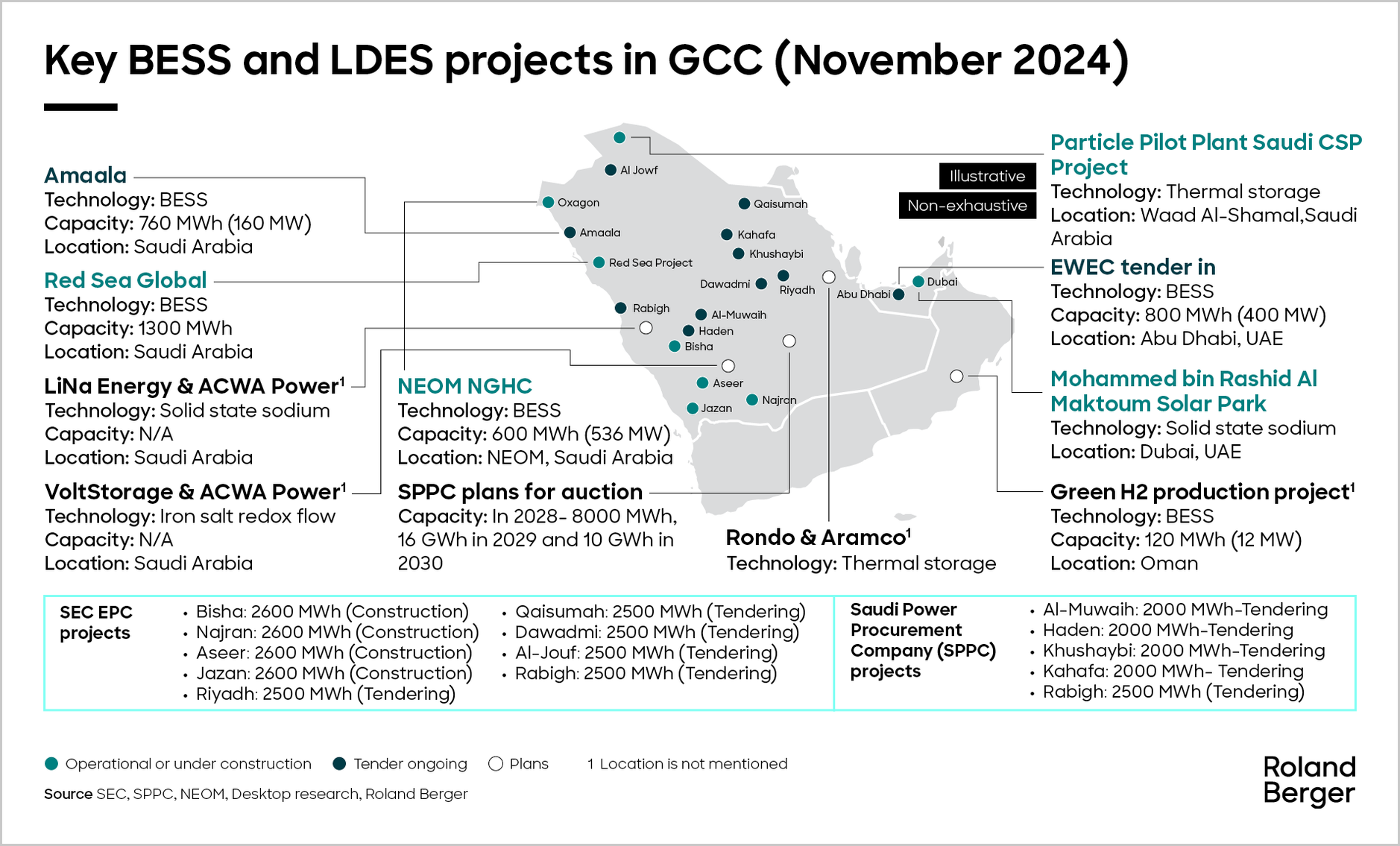
Currently, only a few energy storage projects are operational in the GCC, the majority in the UAE and Saudi Arabia. But things are set to change, with many more projects planned or already under construction (Fig. 3). By 2030, GCC could become a leader in deploying battery energy storage systems (BESS). For example, Saudi Arabia’s grid-scale BESS market is expected to become the third largest in the world.
While lithium-ion BESS technologies still dominate in the market, their limitations – particularly in high-temperature environments – make them less suitable for the GCC region’s specific needs. This gives long-duration energy storage technologies an opportunity to capture a substantial share of the future GCC market. Recognizing this opportunity, leading companies across the GCC have started investing and partnering with LDES system developers. For instance, ACWA Power has partnered with VoltStorage, a German innovator specializing in flow batteries, to advance energy storage solutions. Additionally, Saudi Aramco has invested in thermal battery storage solutions by partnering with Rondo Energy, signing a Memorandum of Understanding (MoU) for installations totaling up to 1 GWh. However, there remains much to be done.