Key findings: Recovery is uneven
Automotive supply chains have made strides since the peak of the COVID-19 pandemic, but the road to full recovery remains long and uneven. Our analysis reveals that more than half of the KPIs assessed have yet to return to their pre-pandemic benchmarks. Among the most concerning metrics are gross profit margins and inventory levels, both of which continue to reflect underlying inefficiencies and cost pressures.
Gross profit margins, while showing signs of gradual improvement, remain below 2019 levels. This is largely due to persistent pricing challenges and elevated input costs, which have squeezed profitability across the industry. The threat of renewed tariffs in 2025 further compounds this issue, potentially reversing recent gains and placing additional strain on supplier margins.
Inventory levels have surged by 44% since 2019—more than double the rate of revenue growth. This disproportionate increase signals inefficiencies in inventory management and slower-than-expected sales velocity. As a result, inventory-to-revenue ratios have climbed by approximately 4%, indicating significant excess stock and tying up valuable working capital.
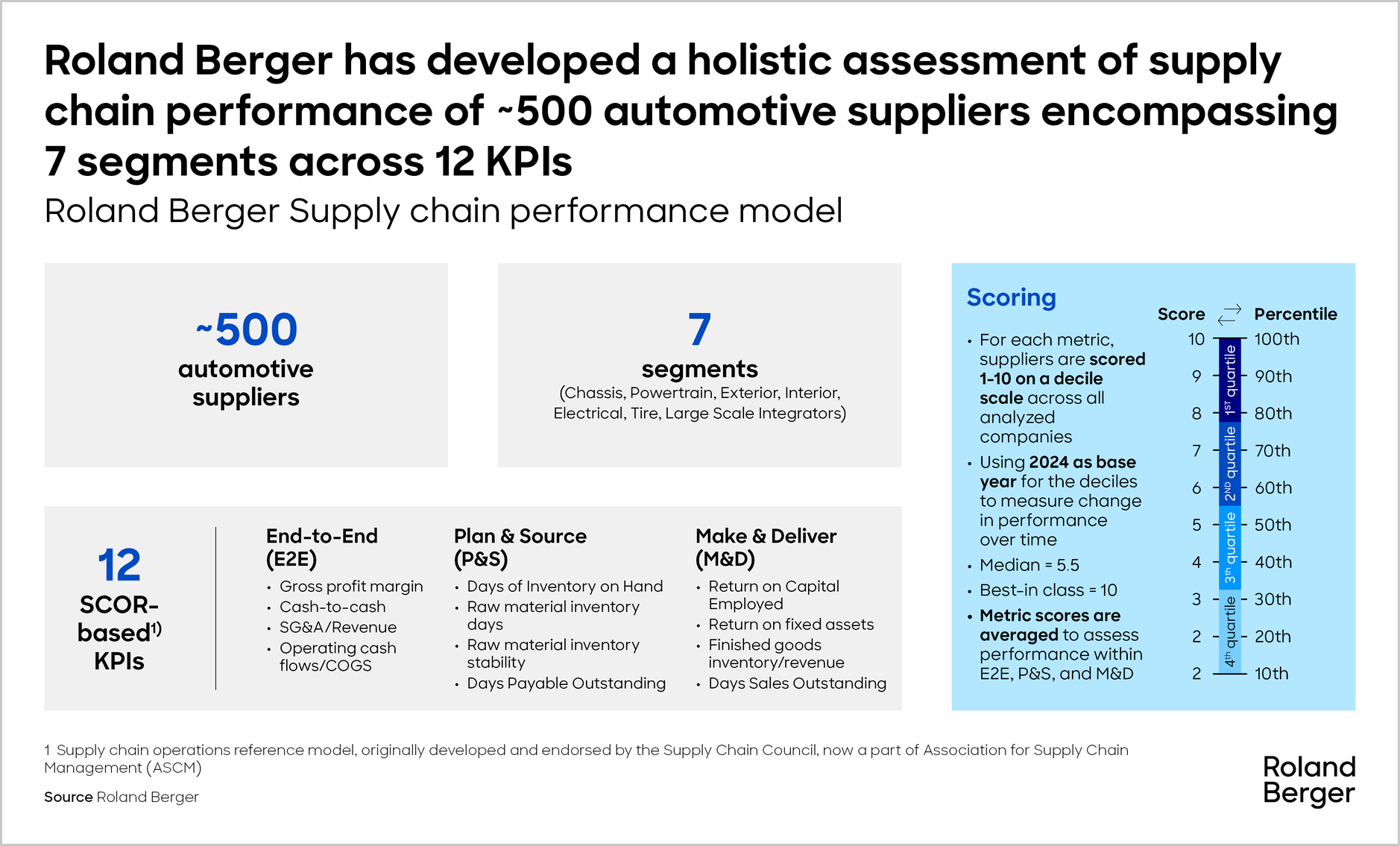
Segment-level performance also varies widely. Large Scale Integrators and Exterior suppliers have emerged as top performers, consistently scoring above the median across most KPIs. In contrast, Electrical and Tire segments continue to lag, with scores reflecting weaker recovery and operational challenges. Chassis, Interior, and Powertrain suppliers sit near the median, showing moderate progress but still facing headwinds.
2023 vs. 2024: Signs of momentum
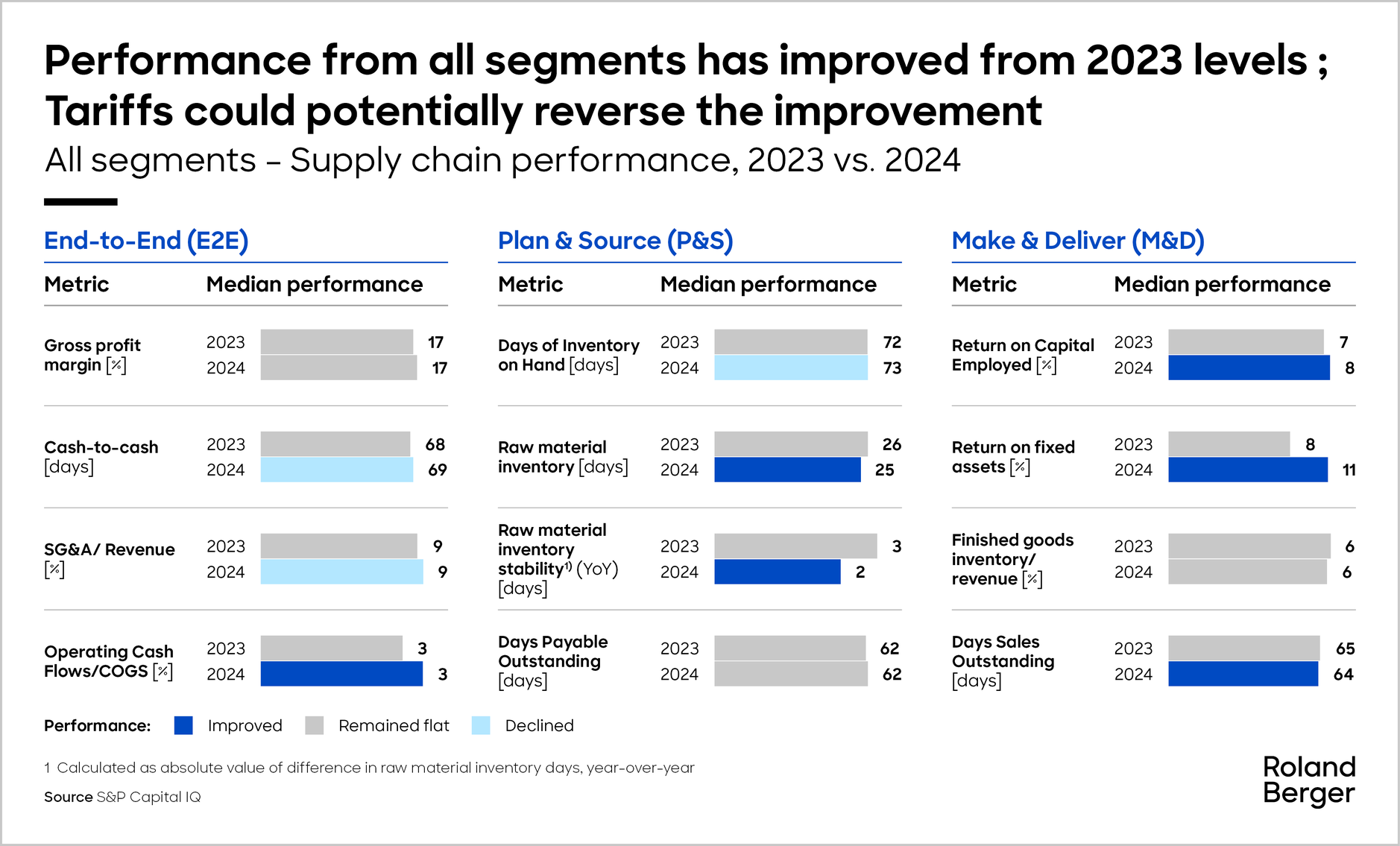
Despite these challenges, there is a silver lining. All segments demonstrated improvement from 2023 to 2024, particularly in the P&S and M&D domains. However, E2E performance remained flat, suggesting that while tactical improvements are underway, strategic transformation is still needed to build long-term resilience. Unfortunately, looming
tariff
increases could reverse these gains by inflating input costs and compressing margins.