Strengthen regional independence
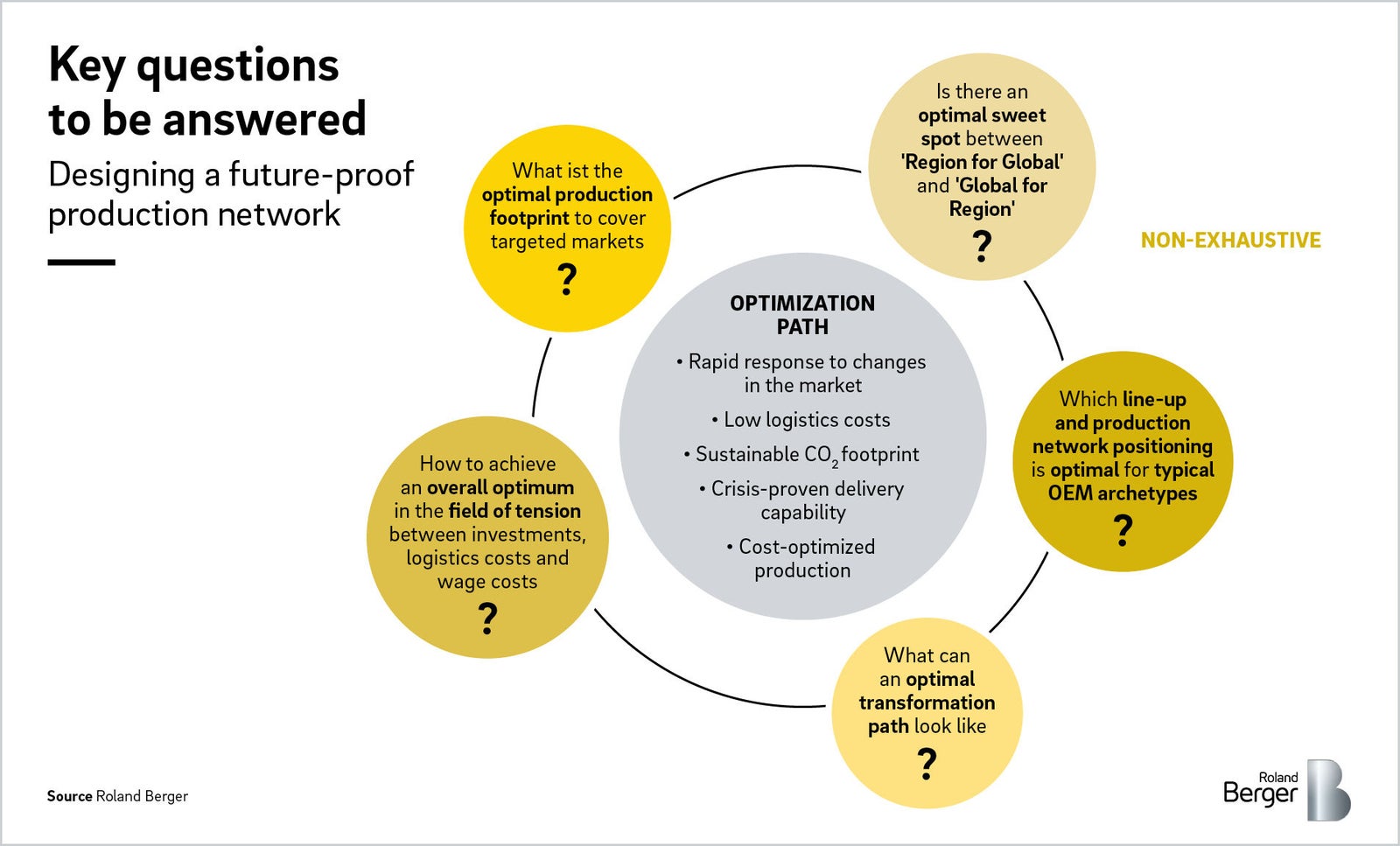
There is no one-size-fits-all solution. Automotive OEMs follow, or have followed, very different patterns in designing their respective production networks. As a result, the changes they make, and their impact, will vary greatly.
We have identified four key footprint archetypes for automotive OEMs:
- Globally focused players. High-volume manufacturers from Europe and the United States
- Globally based exporters. Large-volume manufacturers from Asia
- Concentrated exporters. Premium manufacturers from Europe
- Locally based exporters. Luxury and sports car manufacturers
Wherever they sit within these four categories, satisfying global demand from a small number of plants or model-focused plants is cost-intensive for
car manufacturers
and depresses EBIT. They must decide whether a global presence justifies expanding their production network into their main markets or whether limited market opportunities require a more focused approach.
‘Globally focused players’ are best positioned to overcome the challenges outlined above. They must now match regional needs with regional capabilities. That means regions must become more independent: production structures and procurement networks must be set up in line with regional requirements – even if that means prioritizing security of supply over cost advantage.
Crucially, a more decentralized, flexible setup offers the opportunity to reduce CO2 emissions from long-distance transport, as well as cut freight costs. Reducing the logistical complexity of transglobal production and supply structures also lowers supply chain risk.