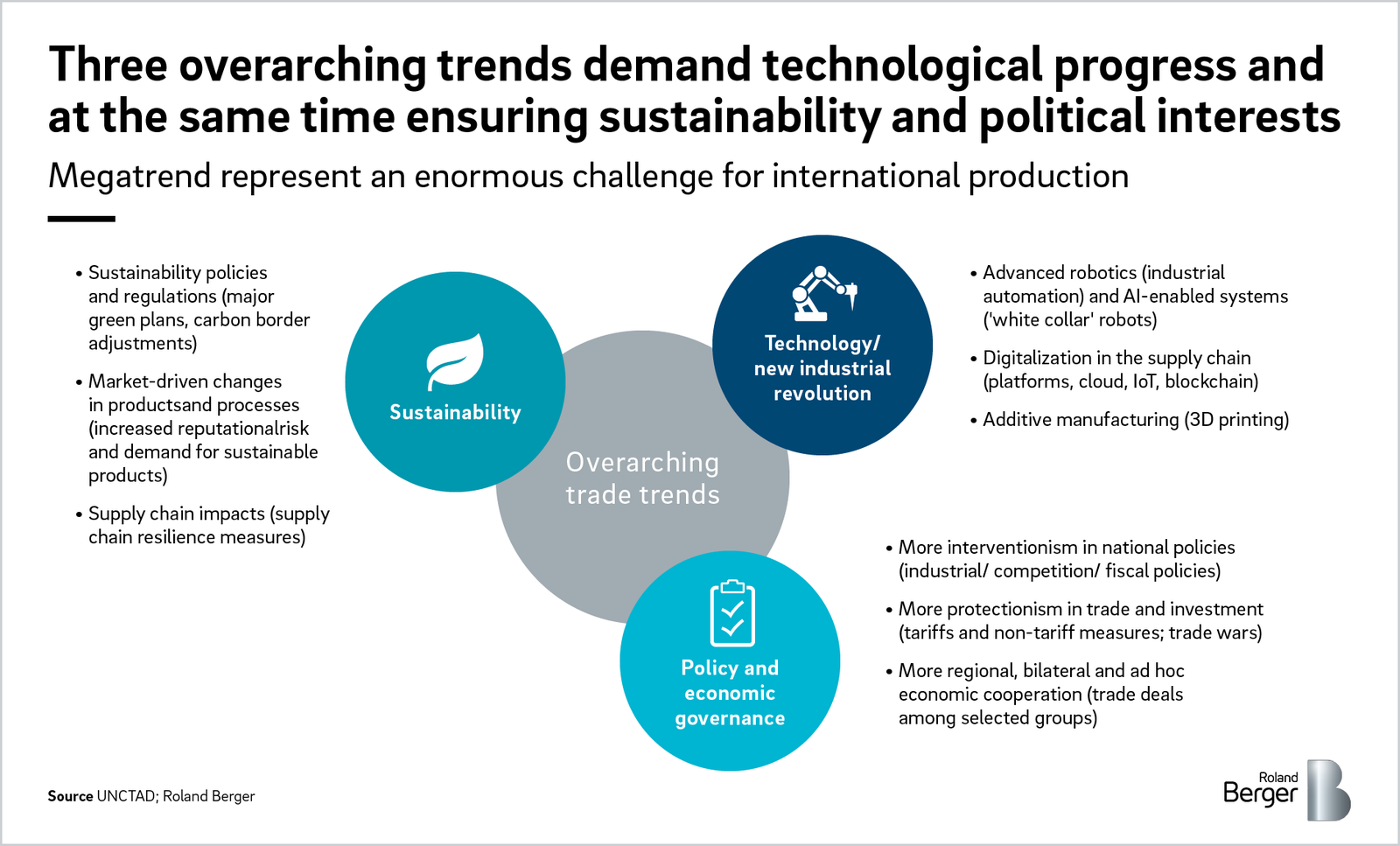
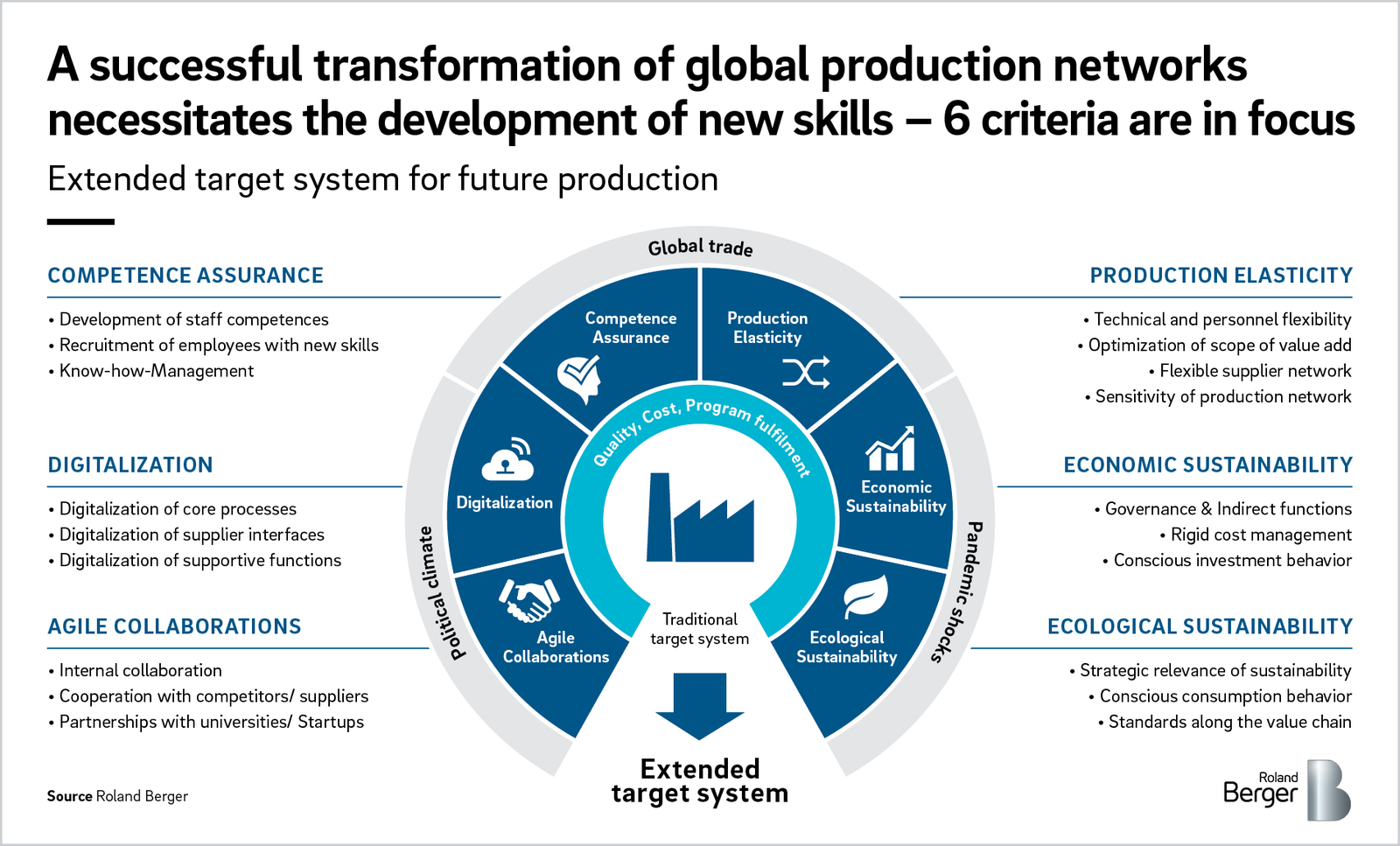
Of course, there are other factors that must be considered. These primarily include the political climate, global trade tensions and pandemic shocks. But they also include product design, which must equally shift from the traditional global centers to more regional ones that are better based upon local consumer tastes. To achieve this, regions must operate more independently of each other.
For example, vehicles today are still produced on a large scale at single locations and then delivered to sales markets. The traditional assembly line approach from 100 years ago is still in use today and sets the framework for efficient plant dimensions. But with a view to more flexible production networks, new concepts need to be implemented. New startups in the EV sector are currently investing in disruptive manufacturing concepts that enable efficient small-scale manufacturing on a more regional footprint. That reality should serve as a wake-up call, if not immediate inspiration, for automotive manufacturers.
Lastly, we believe agile collaborations with other manufacturers might enable the joint use of regional production capacities to help alleviate global production limitations and any regional-related risks and challenges. Even if some of these concepts fail, the message is clear: simplifying, shortening and regionalizing manufacturing supply chains is the most appropriate response to automotive deglobalization conflicts.
Conclusion
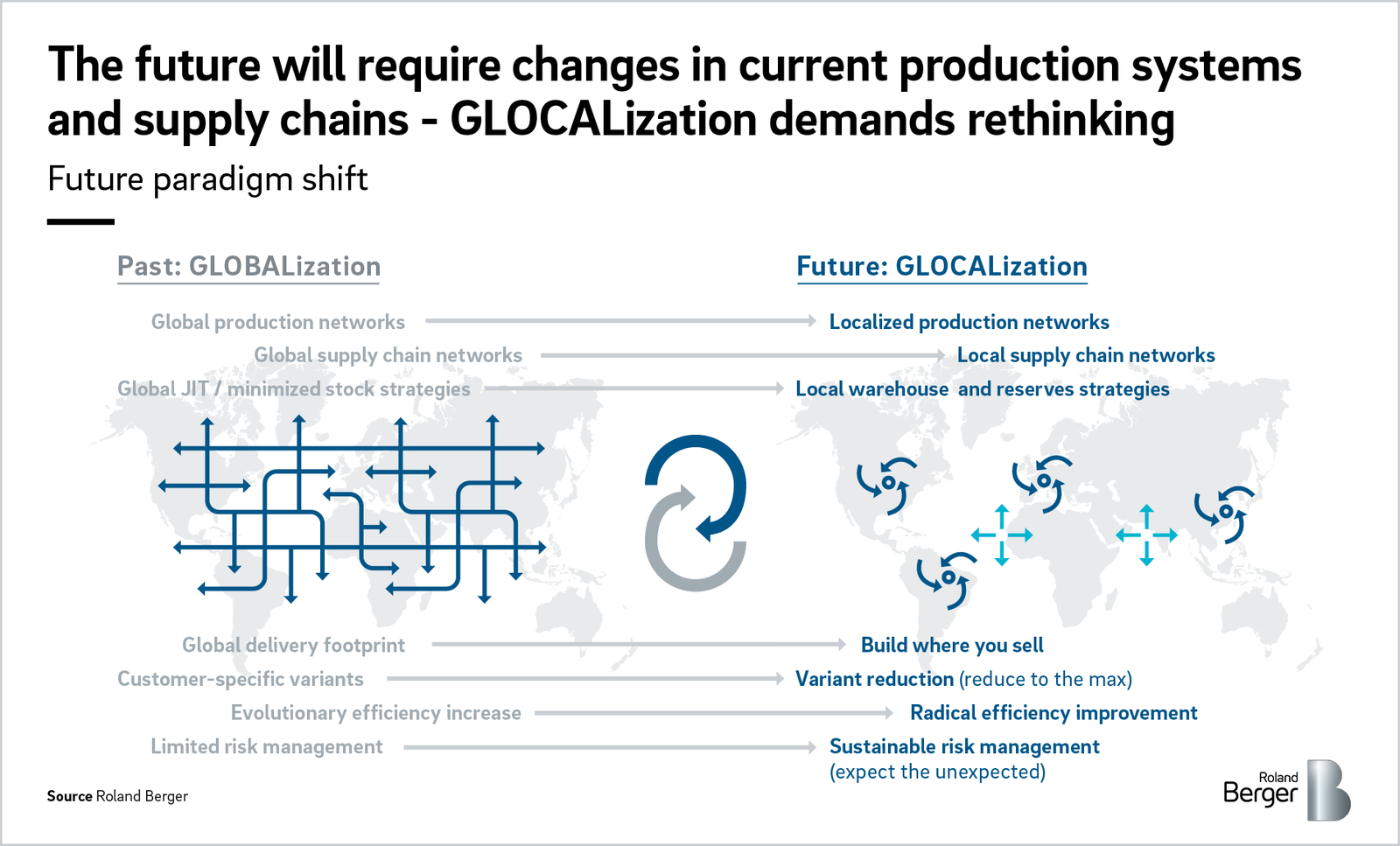
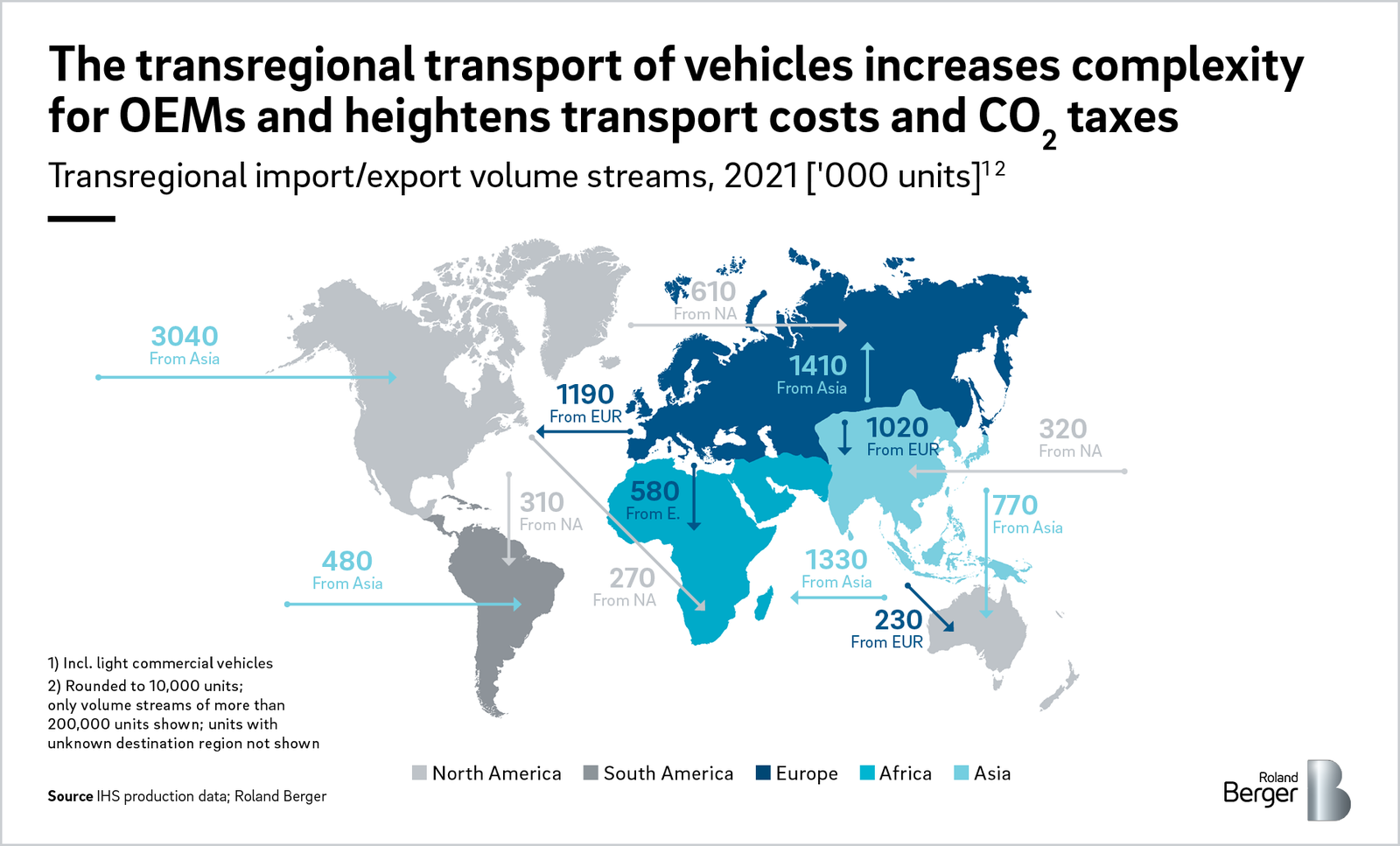
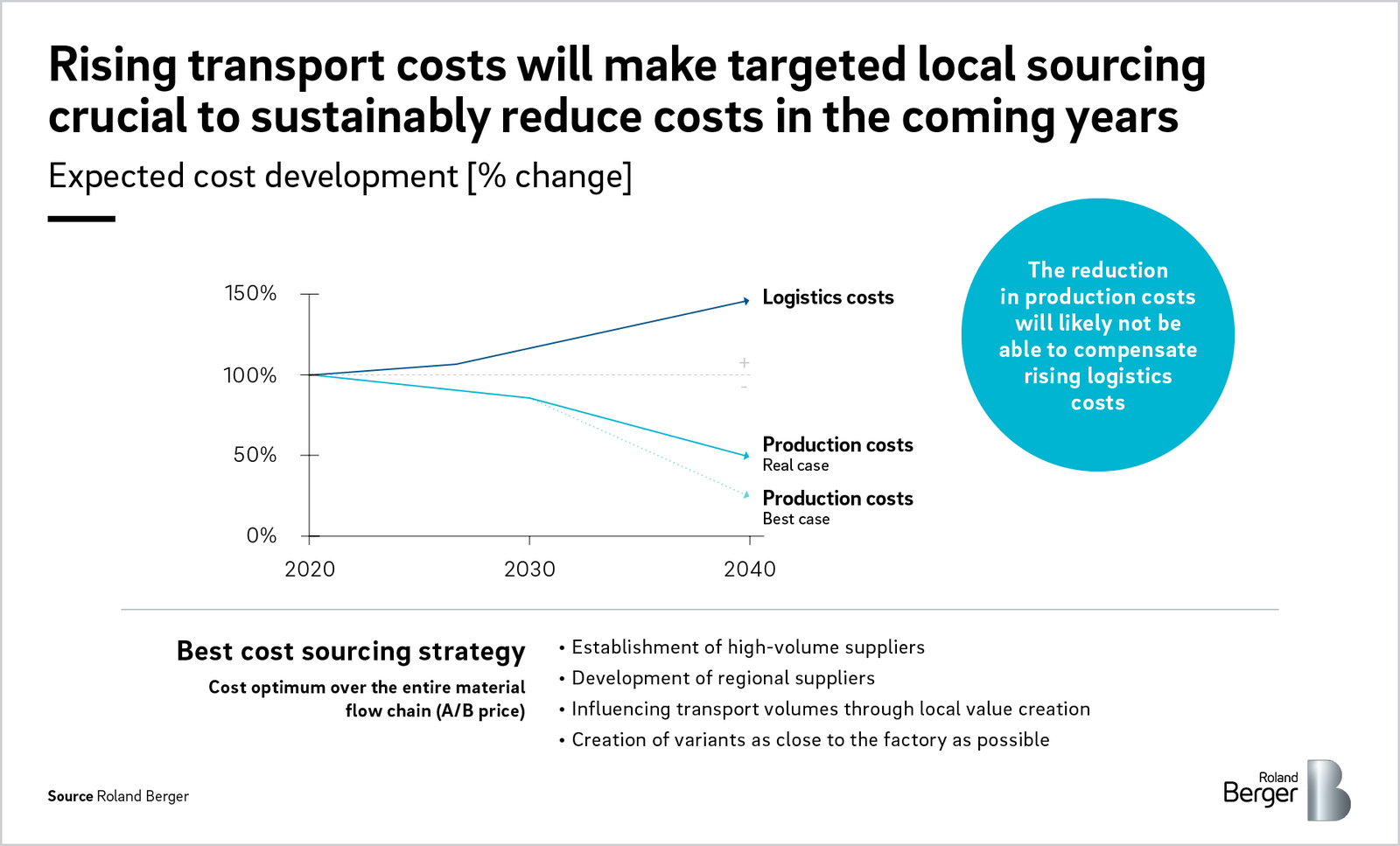
Automotive "glocalization" is both real and justified in light of recent conflicts, namely trade tensions, rising logistics costs and prolonged border closures and market disruptions brought about by a global pandemic (or any other future disruptions to cross-border trade). To successfully navigate this transformation, automotive manufacturers, their suppliers and the industry as a whole must regionalize their production structures.
In very concrete terms, the interdependencies between production and the supply chain must be thought through in order to counteract rising logistical costs and the risk of delivery failures. To achieve this, respective regions must act more independently of each other. The motto must therefore become "region for region" or "build where you sell".
Naturally, our proposed solution concepts have to be adapted to the specific manufacturer and depend, among other things, on the value-added structure and on the specific product configuration. But fundamentally, a rethinking of today's global production and supply structures is absolutely necessary. Automotive production must become more regional in the future.
But this is only one side of the equation. A successful transformation of global production networks, a breaking away from the previous order criteria and a willingness to manufacture in new ways (including cooperation with other manufacturers) are all on the other side of the balance. As you navigate this strategic transformation, we hope you'll consider Roland Berger as a qualified and experienced partner.