Natural vs. synthetic supply chains
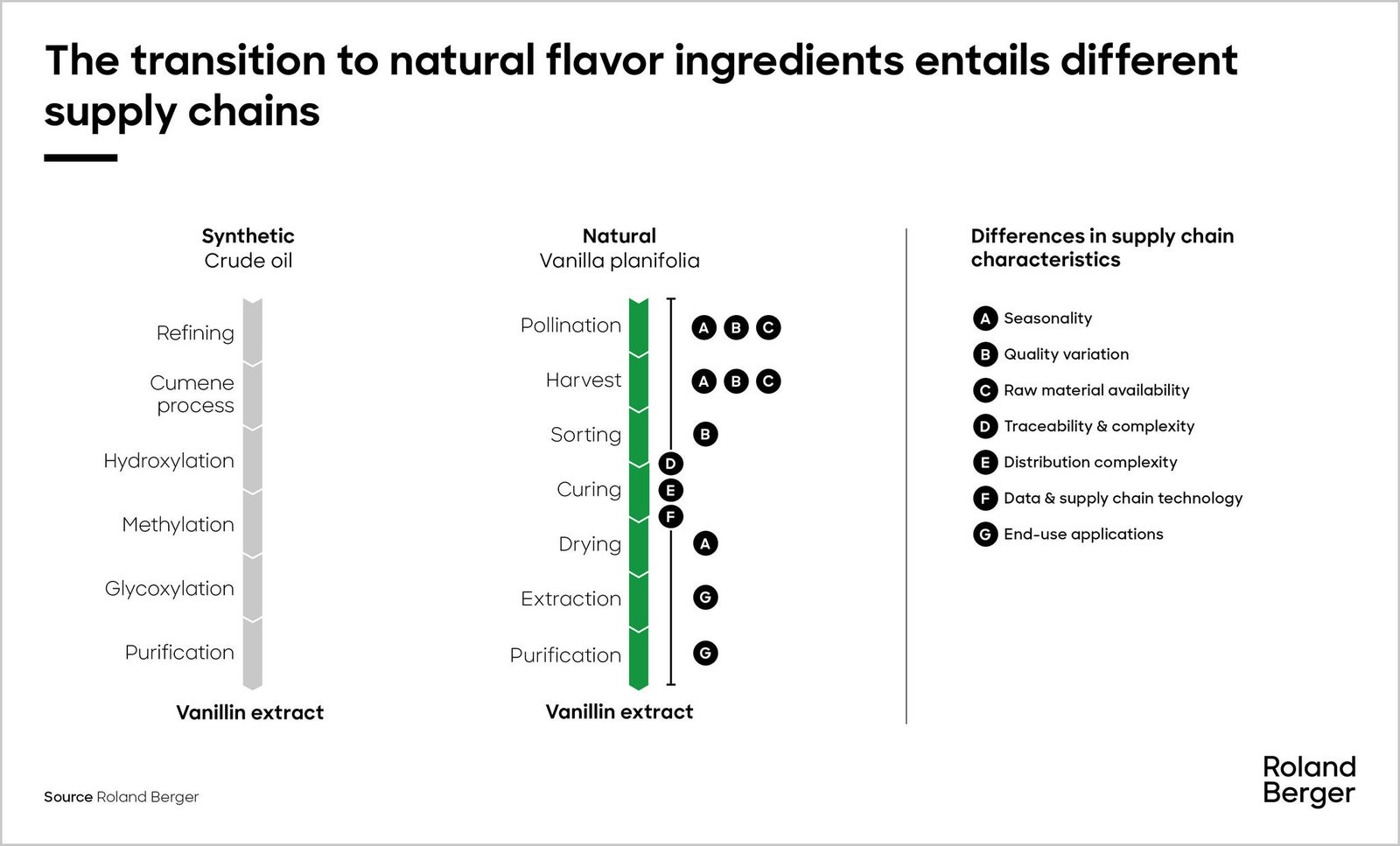
Natural flavor supply chains are fundamentally different from their synthetic counterparts. Take vanillin extract, for instance; it can be synthesized from crude oil or derived naturally from the vanilla planifolia, a flat-leaved vanilla plant. Synthetic production involves industrial processes like refining and hydroxylation, while the pollination, harvesting and sorting in natural production must be done by hand. Consequently, these diverse processes necessitate distinct supply chain requirements. The natural supply chain must accommodate factors such as seasonality, quality variation, raw material availability, and traceability & distribution complexity. Both data & supply chain technology and the end-use of applications are requirements of both production processes, but in comparison natural production requires a vastly different approach.
The supply chains of natural food ingredients see similar differences. For example, synthetic emulsifiers in the form of triglycerides require hydrolysis and glycerolysis, but the natural counterparts involve the production of enzymes from microbial strains or the production of hydrocolloids from the guar plant, which requires harvesting. This means a supply chain characterized by seasonality, quality variation and the availability of raw material.