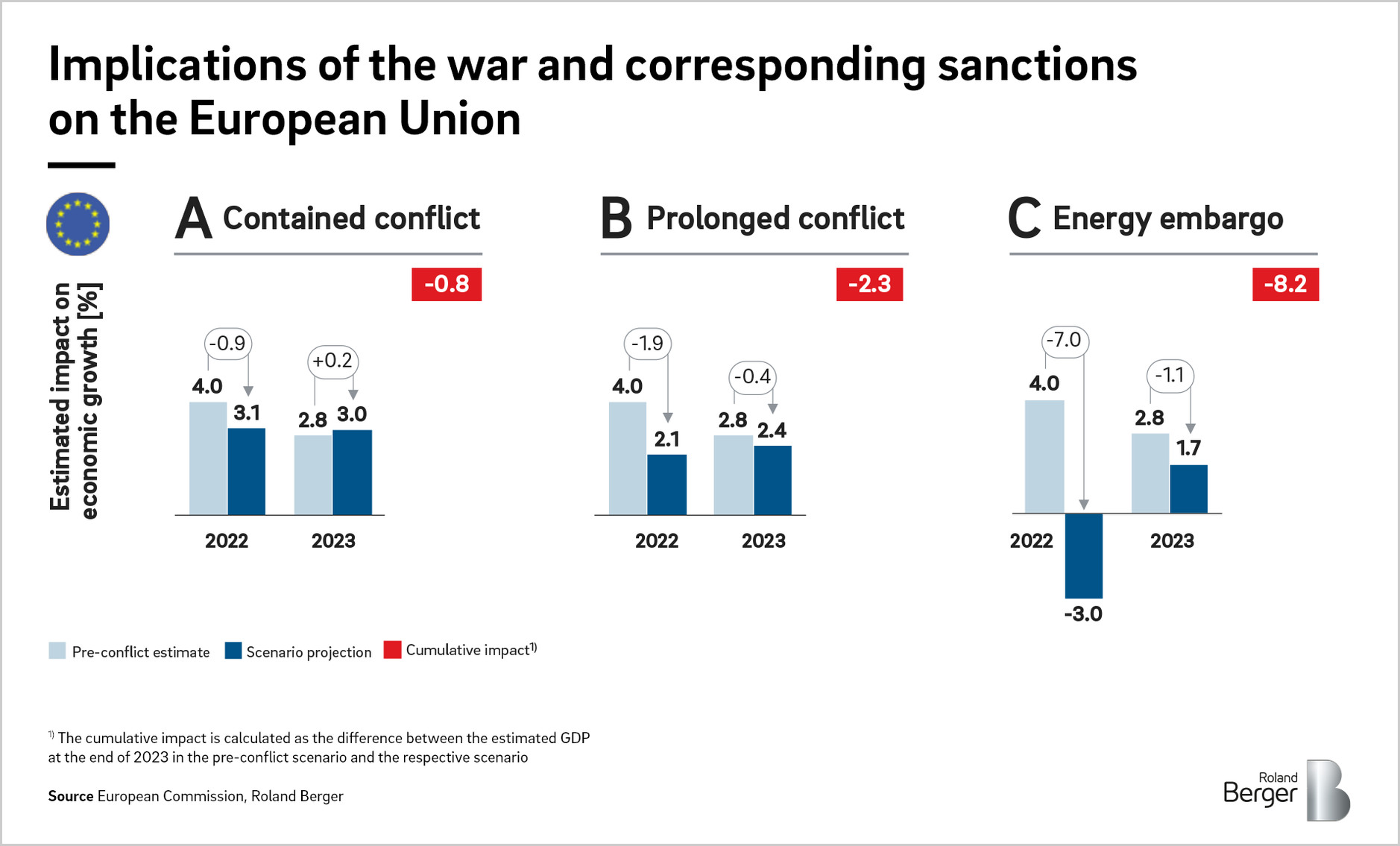
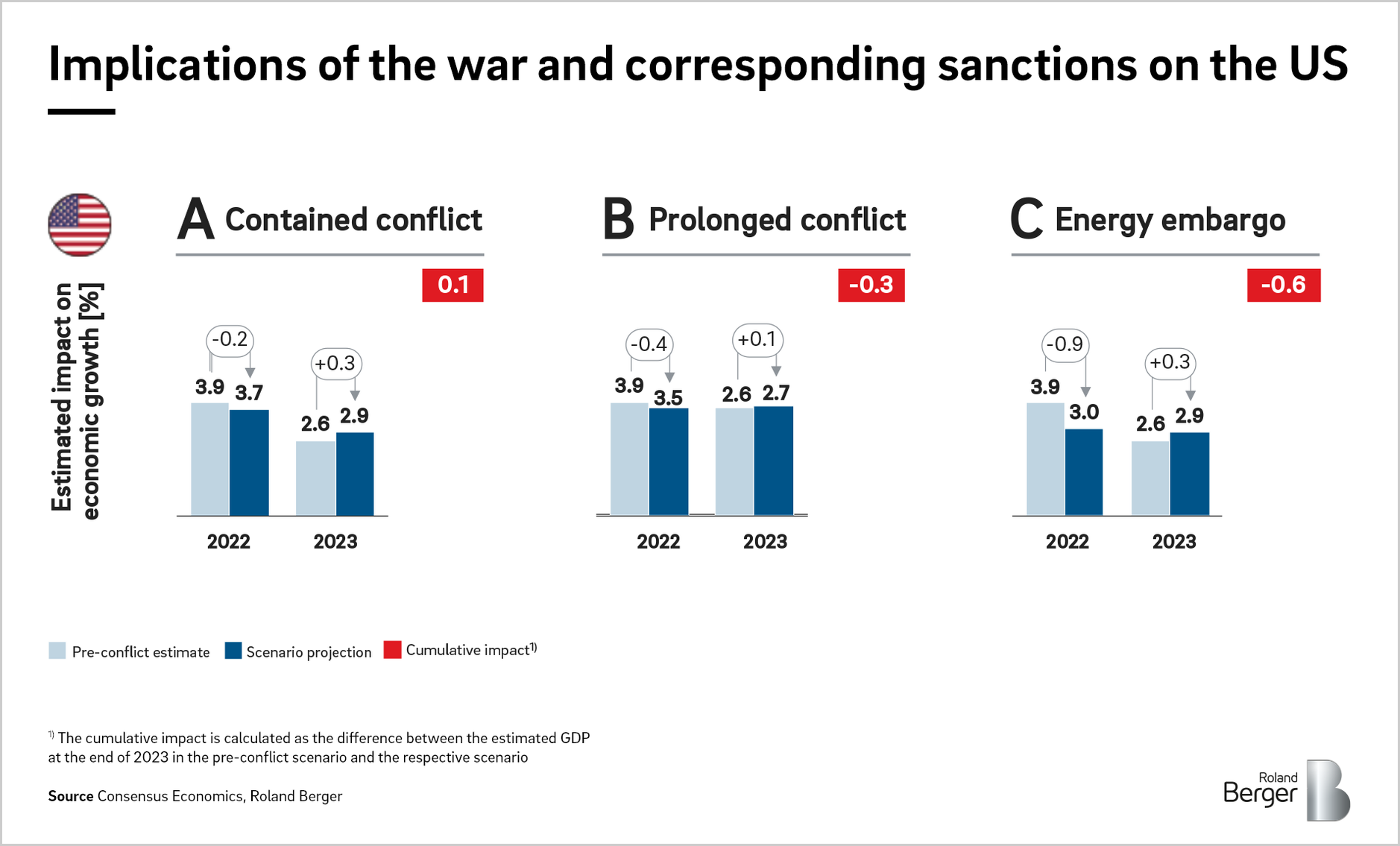
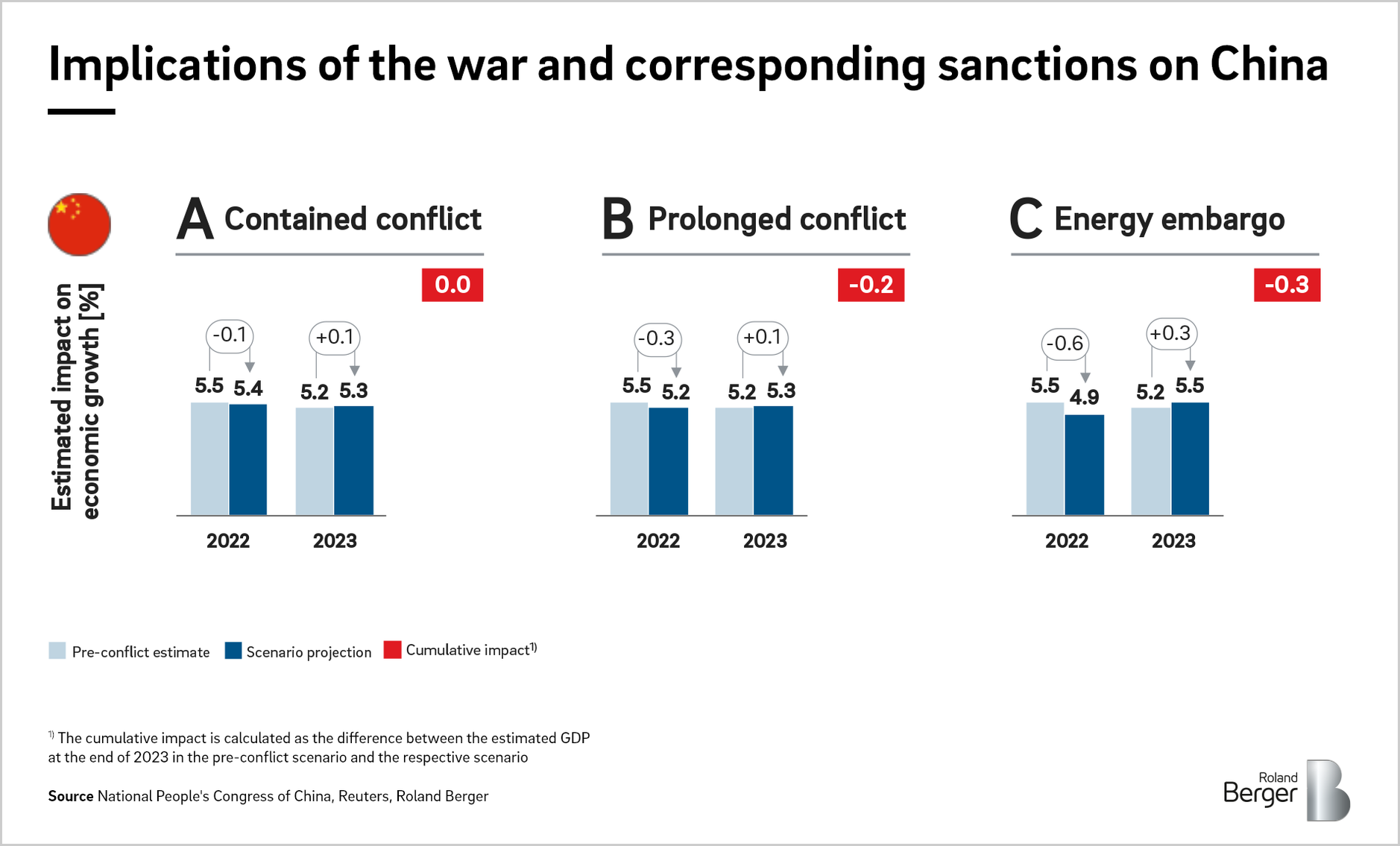
We distinguish three different possible scenarios. First, Contained conflict, that is, a ceasefire in the first half of 2022 with no tightening of existing sanctions. Second, Prolonged conflict, that is, the war continues beyond the first half of 2022, again with no tightening of existing sanctions. And third, Prolonged conflict and the ending of Russian oil and gas supplies to Europe, either as a result of an embargo agreed by the European Union or because Russia stops supplies.
The economic consequences of these three scenarios differ widely for the three economies we consider here: the United States, China and the European Union. The United States and China – the two largest economies in the world –
do not depend on Russian oil and gas imports
, so the nature and duration of the conflict will have little impact on their economic growth. In fact, these countries could actually benefit from an oil and gas embargo, at least in the medium term, the United States as a net exporter of oil and gas, and China as an alternative market for Russian raw material and
energy exports
.
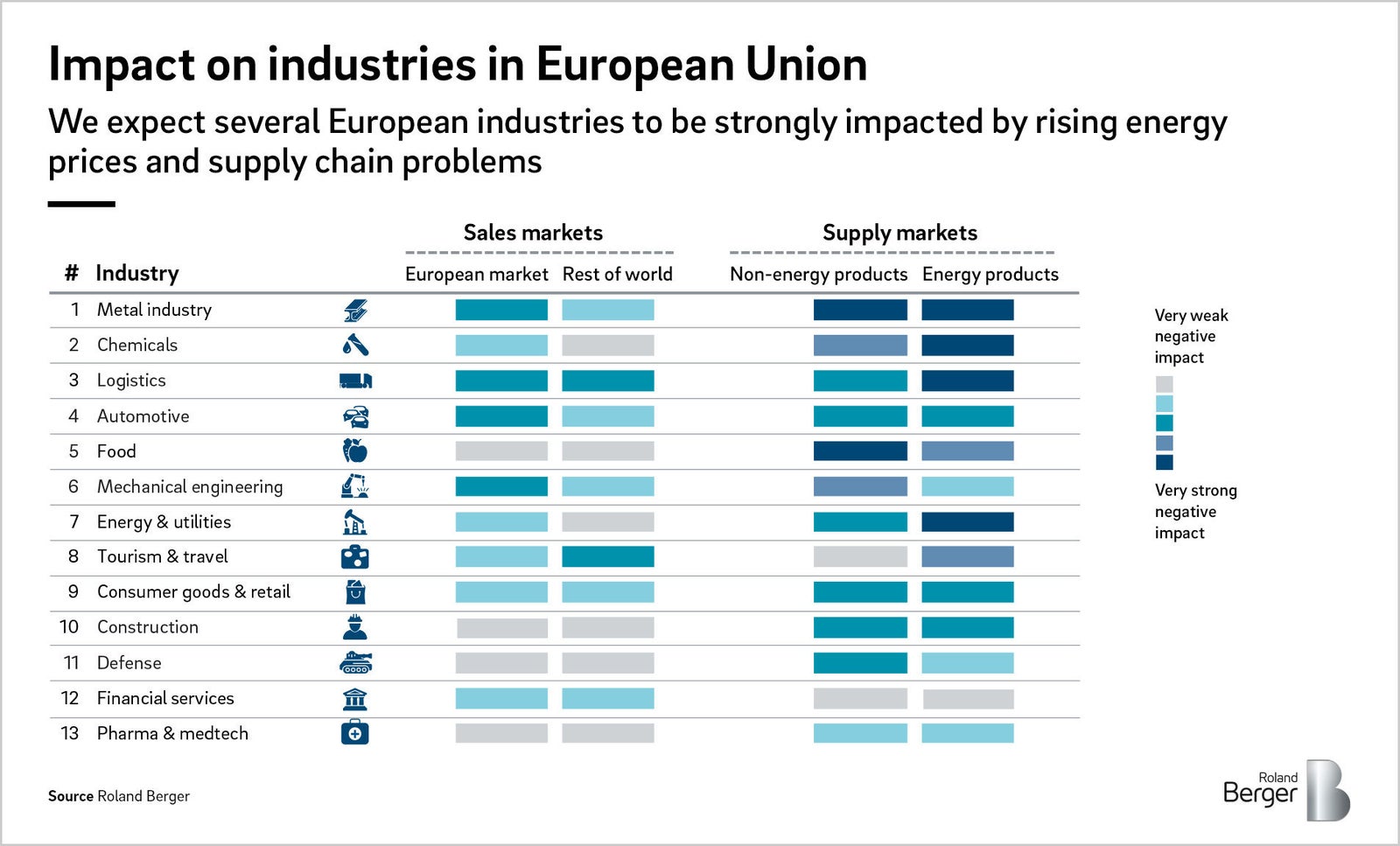
The situation for the European Union is very different. Even the mid-case scenario – prolonged conflict with no ending of Russian oil and gas supplies – would result in the EU's GDP being 2.3 percent lower overall by 2023 than in our assumed baseline.
The consequences for the European economy of an ongoing military conflict combined with an end to Russian oil and gas supplies would be particularly dramatic. In this scenario, growth in the European Union over the next two years would be 8.2 percent lower than in a "no war" scenario.
It is conceivable that alternatives to Russian crude oil and natural gas could cushion the slump as early as 2023 – options such as purchasing oil and gas from other countries, switching to liquefied natural gas (LNG) and building the necessary terminals in Germany, or moving away from fossil fuels and massively expanding
renewable energy
. But this would not help in 2022. In the worst-case scenario of a continuing conflict and a halt to Russian oil and gas supplies, the European Union would see a three-percent drop in GDP in 2022 according to our estimates.