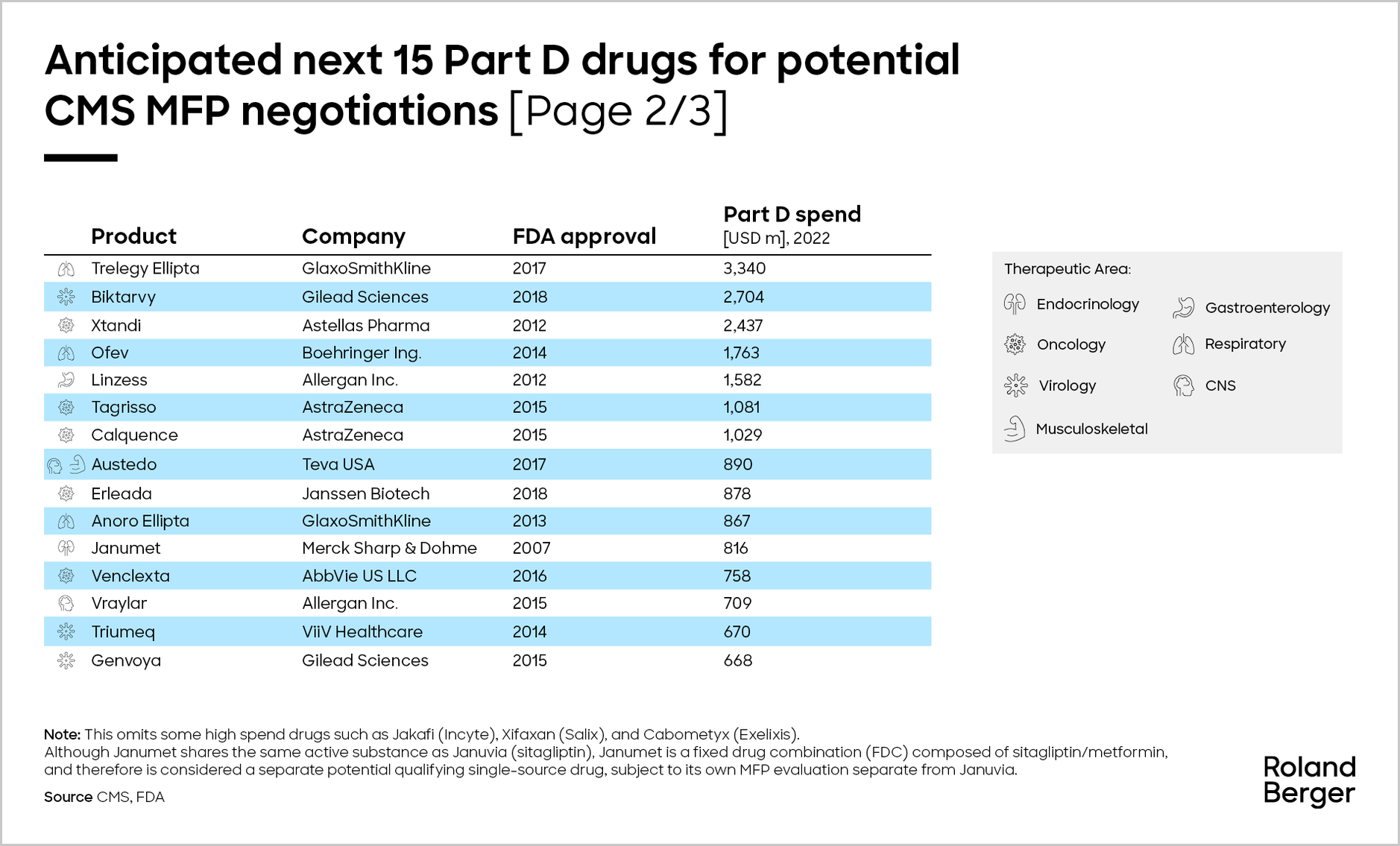
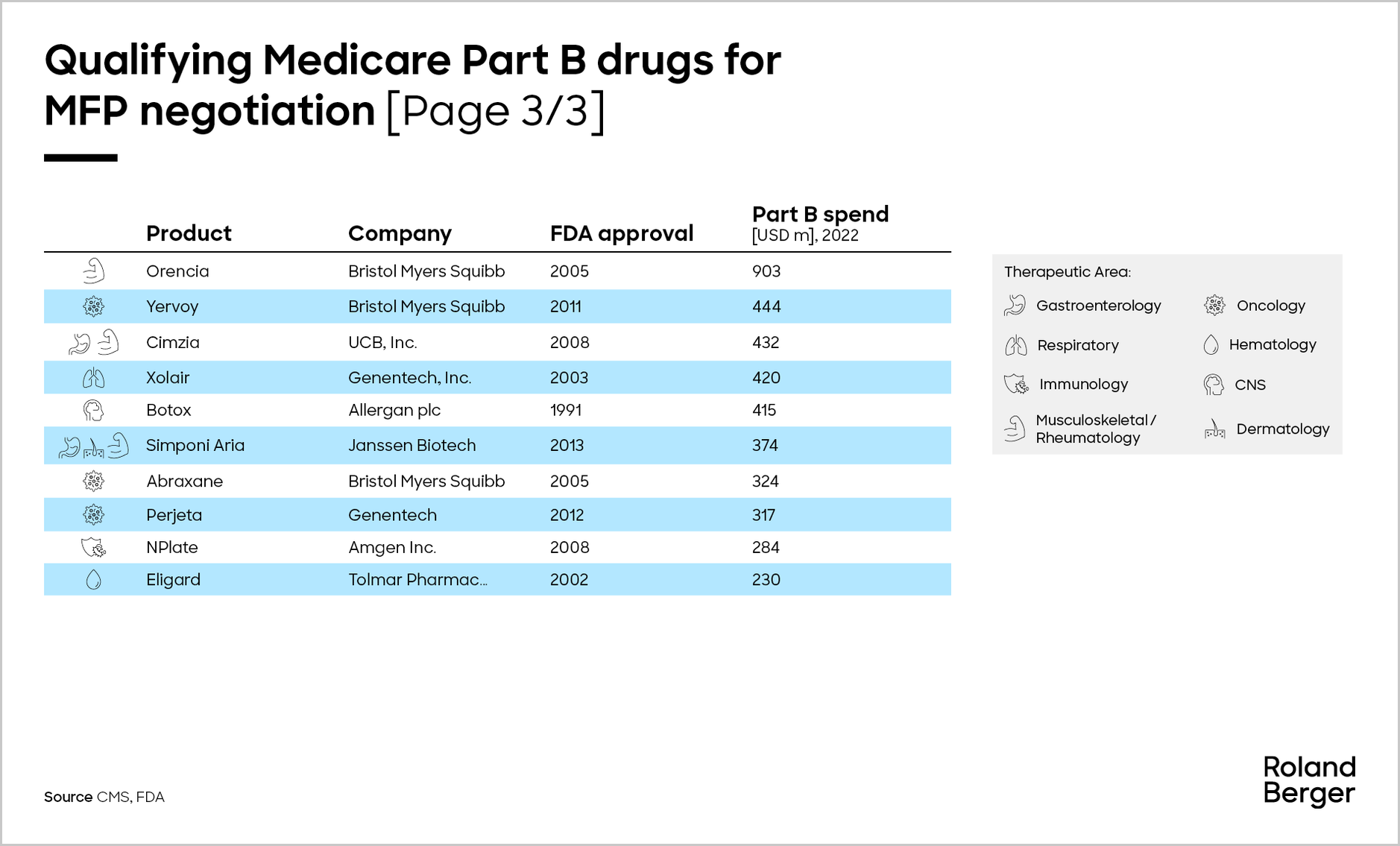
Unlike the Medicare Part D list, most of these molecules are biologics, which are typically more expensive and complex to produce but have lower Medicare spending compared to the Part D list. Therefore, negotiations targeting these drugs may not involve as steep a revenue loss for manufacturers as seen with Part D drugs. However, because these drugs are more specialized, the impact on revenue could be concentrated in specific patient groups and healthcare providers, unlike Part D drugs with more widespread use. The therapeutic areas most affected by these two lists are respiratory, gastroenterology, oncology, and hematology.
Given the anticipated new launches in these therapeutic areas, it remains to be seen whether the general price level will decrease, or which approaches manufacturers will deploy to justify the therapeutic value of these novel medicines. In light of deteriorating pricing potential, the manufacturers still may decide not to enroll, as the Part D program is generally voluntary. Nevertheless, if a manufacturer does not want to participate, they will be charged an excise tax starting at 65% of product sales in the U.S., increasing by 10% every quarter to a maximum 95%. Alternatively, manufacturers could choose to withdraw all of their drugs from the Medicare/Medicaid programs.
Apart from large international manufacturers affected by the new regulation, it's also important to recognize the potential risks associated with the small biotech exemption. Currently, four drugs qualify for this exemption based on strict criteria: the drug's expenditures under Part D must be ≤1% of the total Part D expenditures, and the drug must account for ≥80% of the manufacturer's total Part D expenditures under a coverage gap discount program agreement during the same year. As the landscape of drug pricing changes,
small biotech companies
may find it increasingly challenging to meet these criteria as their drugs gain market share or as policy shifts narrow the scope of eligibility, leading to small biotech drugs being subject to the same steep discounts as larger competitors.