The implications
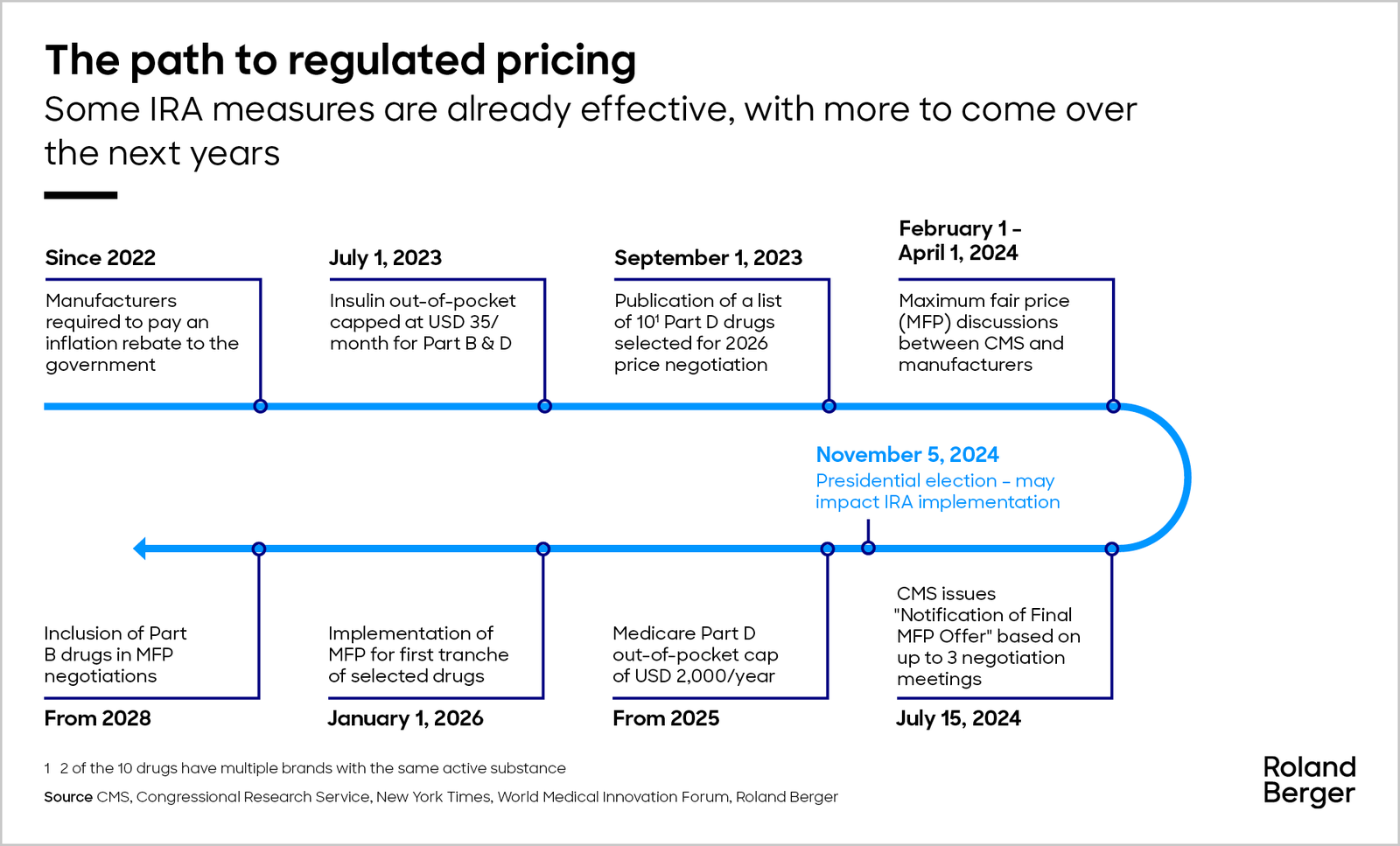
The implications of the IRA and the US healthcare system’s transitions toward regulated drug pricing are vast and complex. First and foremost, pharmaceutical companies must adapt to the new negotiating landscape and reconsider their strategies. Here significant insights can be gained from the approaches currently deployed by European pricing authorities.
In theory, the IRA has no impact on the prices paid for medications taken by those who are privately insured. However, in practice, it may open the door for lower prices in the private market, too. For example, in 2023, Eli Lilly lowered the cost of its most prescribed insulins (Humalog and Humulin) by 70% and capped insulin patient OOP to USD 35, regardless of whether they are Medicare enrollees or not. Novo Nordisk (NovoLog, Novolin, and Levemir) and Sanofi (Lantus) have followed a similar strategy.
Furthermore, when the MFPs are announced, it will give pharmacy benefit managers (PBMs) leverage to ask for the same discount, especially in drug classes where there are many other options.
From a health policy perspective, the IRA creates new incentives, not necessarily to the benefit of patients. Notably, the legislation discourages the development of small molecule drugs and encourages the development of large molecule drugs/biologics, as small molecules drugs are eligible to be listed after only seven years on the market, while large molecule drugs/biologics are eligible after 11 years. This could lead to the reprioritization of drug development pipelines for more expensive drugs, to protect margins.
Additionally, pharmaceutical companies may prioritize orphan and single-indication products, which are excluded from the IRA measures. Lastly, manufacturers may refrain from investing in new formulations or delivery method, which are typically introduced in the later stages of the product lifecycle (for example, syringe vs. pre-filled syringe or injection pen).
To complicate matters, the introduction of the IRA measures comes as the FDA has approved drug imports for the first time – Florida has been allowed to import drugs from Canada in an effort to reduce costs. The move compounds the direction of travel in the US to reduce drug costs.
The IRA signifies a paradigm shift for
pharmaceutical companies.
As the industry adapts to the new negotiating dynamics, strategic considerations become paramount. This presents an opportunity for companies to shape their future strategies in alignment with the evolving healthcare system. Roland Berger stands ready to help them.
We would like to thank Melissa Coyle, Simon Datzer and Elena Muggenthaler for their contributions to this article.