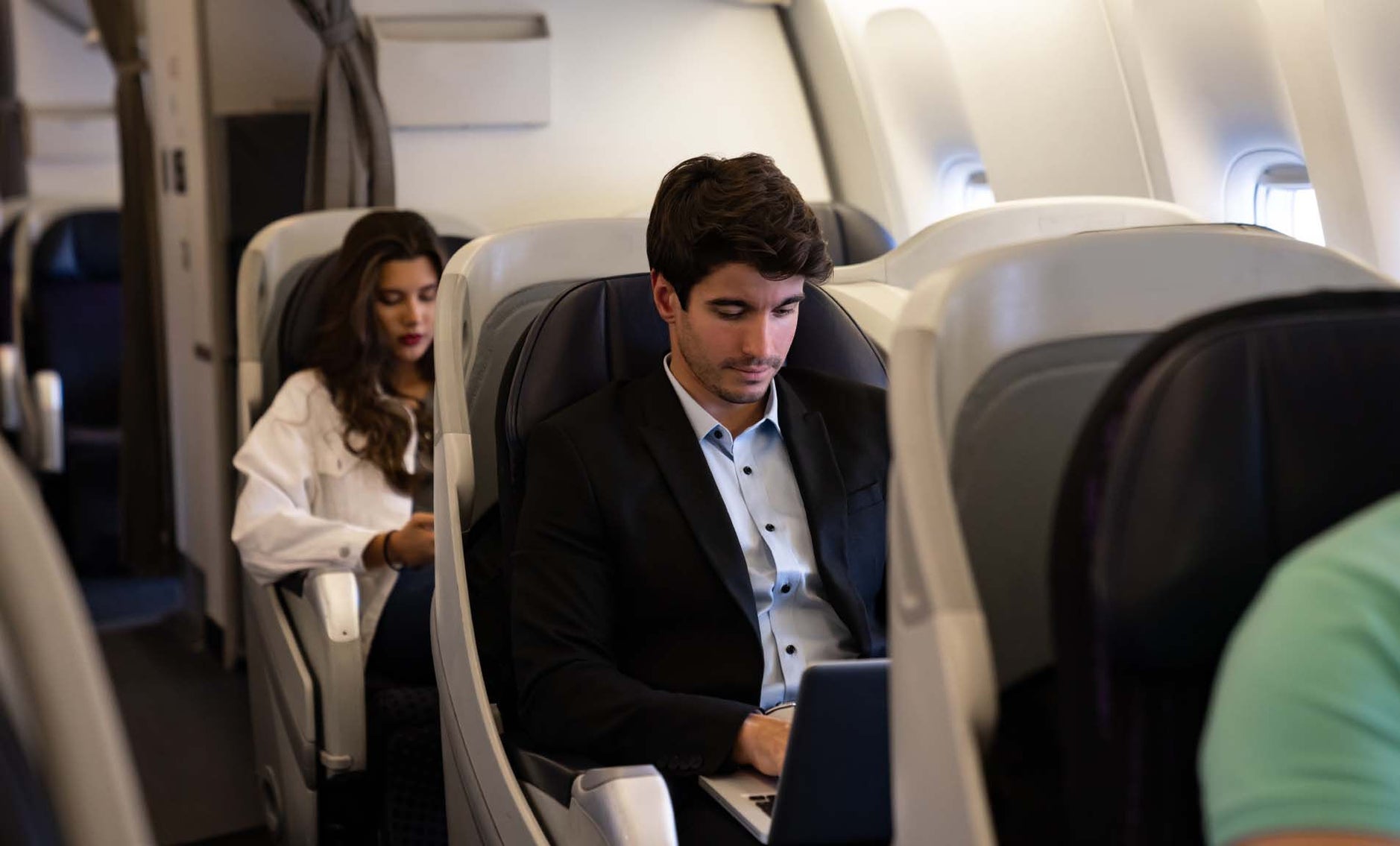
Concerning news for business travel
Since the pandemic first began, the drop in business travel has not only been affected by Covid-19 related restrictions. The reduction is also indirectly tied to corporate travel budgets, which were cut by nearly two-thirds at the peak of pandemic in 2020. This drop in passengers and budgets were most severely felt in Europe, notably for international trips, with a 71% drop in demand last year when compared to pre-Covid levels.
Further compounding the change, no economic crisis post the Second World War has lasted this long. Recovery is uncertain, and according to a recent survey conducted by Roland Berger, 55% of respondents expect their post-crisis business travel to be at least 20% less than before.
Once the restrictions are lifted, European respondents expect an average drop of 24% of pre-pandemic levels. In America alone, between 19-36% of all business trips are expected to disappear, according to airline estimates. Regardless of region, business travelers from Europe, China, and the US remain skeptical about returning their prior travel volume once all COVID-related restrictions have been lifted.
In addition to the drop in passengers, the mix across modes of
transportation
is also expected to change for business travel. By 2024, share of air travel across all travel modes will reduce by 8% when compared to 2019 levels. Road travel share will increase by 13%. For domestic business travel, this change will remain even in 2030 – 13% reduction in air travel share and 4% reduction in train travel share as compared to 6% increase in road travel share. All told, air travel is expected to lose market share to both road and rail by 6% versus pre-Covid-19 levels. This will affect domestic business travel more than international.