The Covid-19 pandemic has left its mark across the globe, but nowhere more so than on the long-distance mobility industry. Travel across air, train, bus and car modes fell by 40% overall after the outbreak in 2020. Now, after years of lockdowns, travel restrictions and health concerns, the industry is beginning the long journey to recovery.
But what form will the recovery take? Will it be fast or slow, which transport modes will bounce back first (and which will carry the biggest scars), which regions will be worst affected, and how has consumer sentiment changed since pre-Covid times? In 2021 Roland Berger set out to take the pulse of the travel industry and its users. We undertook a
report and consumer survey
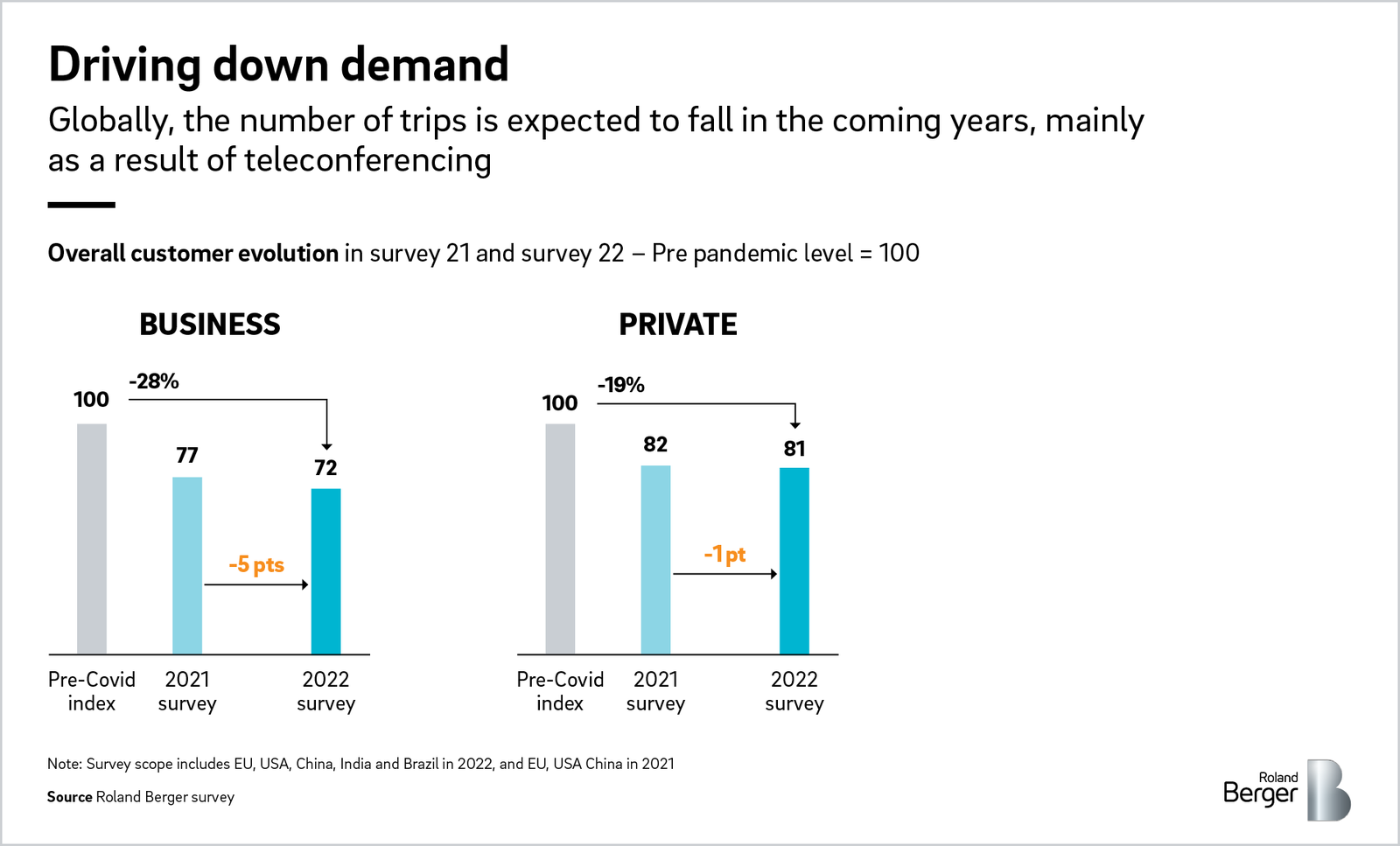
, finding that air and business travel were hit hardest, and that travelers expected a roughly 25% drop in overall long-distance travel demand.
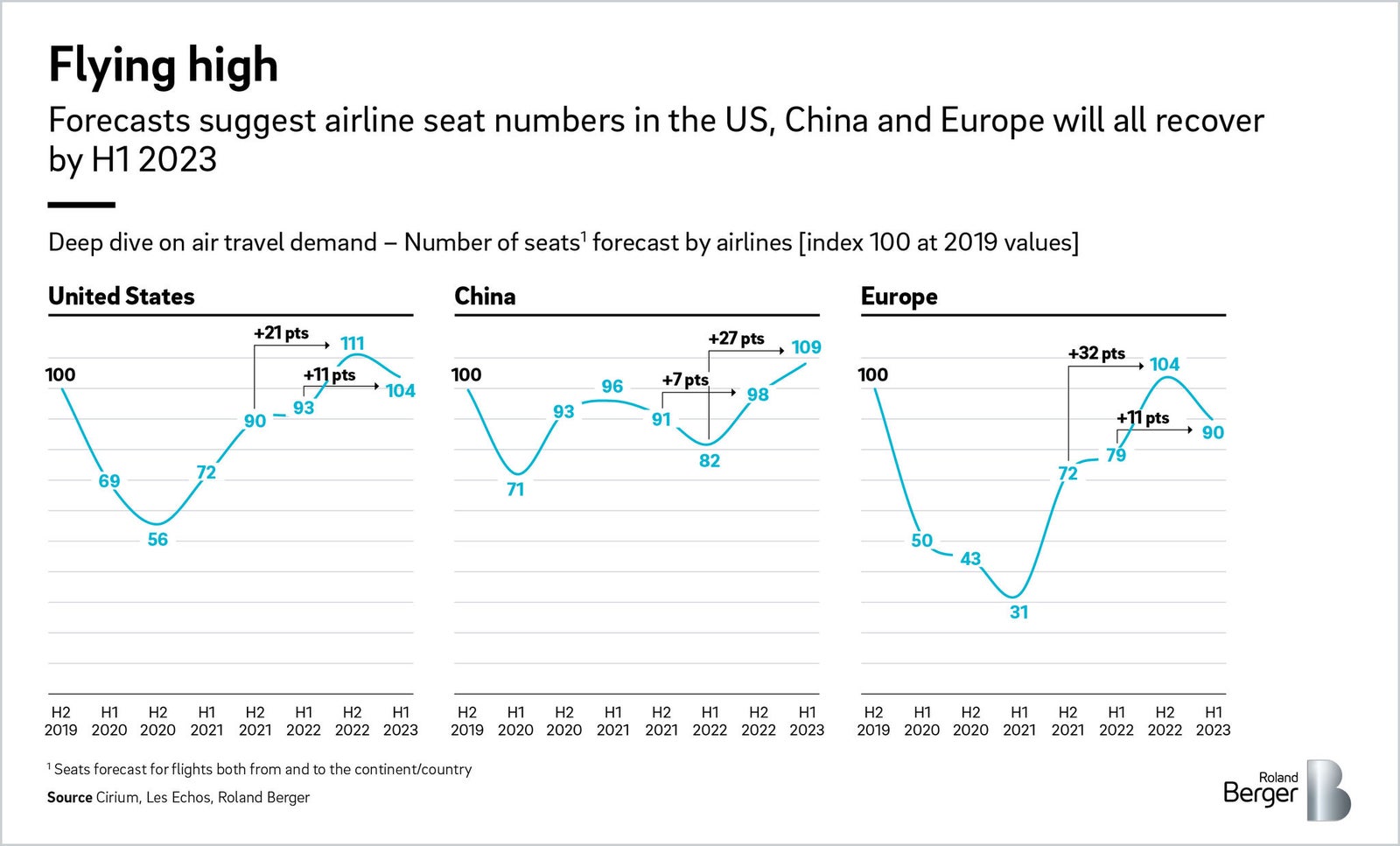
With the recovery gaining speed in 2022, we decided to repeat the exercise to gauge the impact of recent events and see how consumer perceptions have changed, particularly regarding air travel. The results of the Destination unknown: The future of long-distance travel report were not only unexpected, but also much changed compared to 2021. The study can be downloaded on this page, and will be followed up with a special focus report on sustainability in long-distance travel.