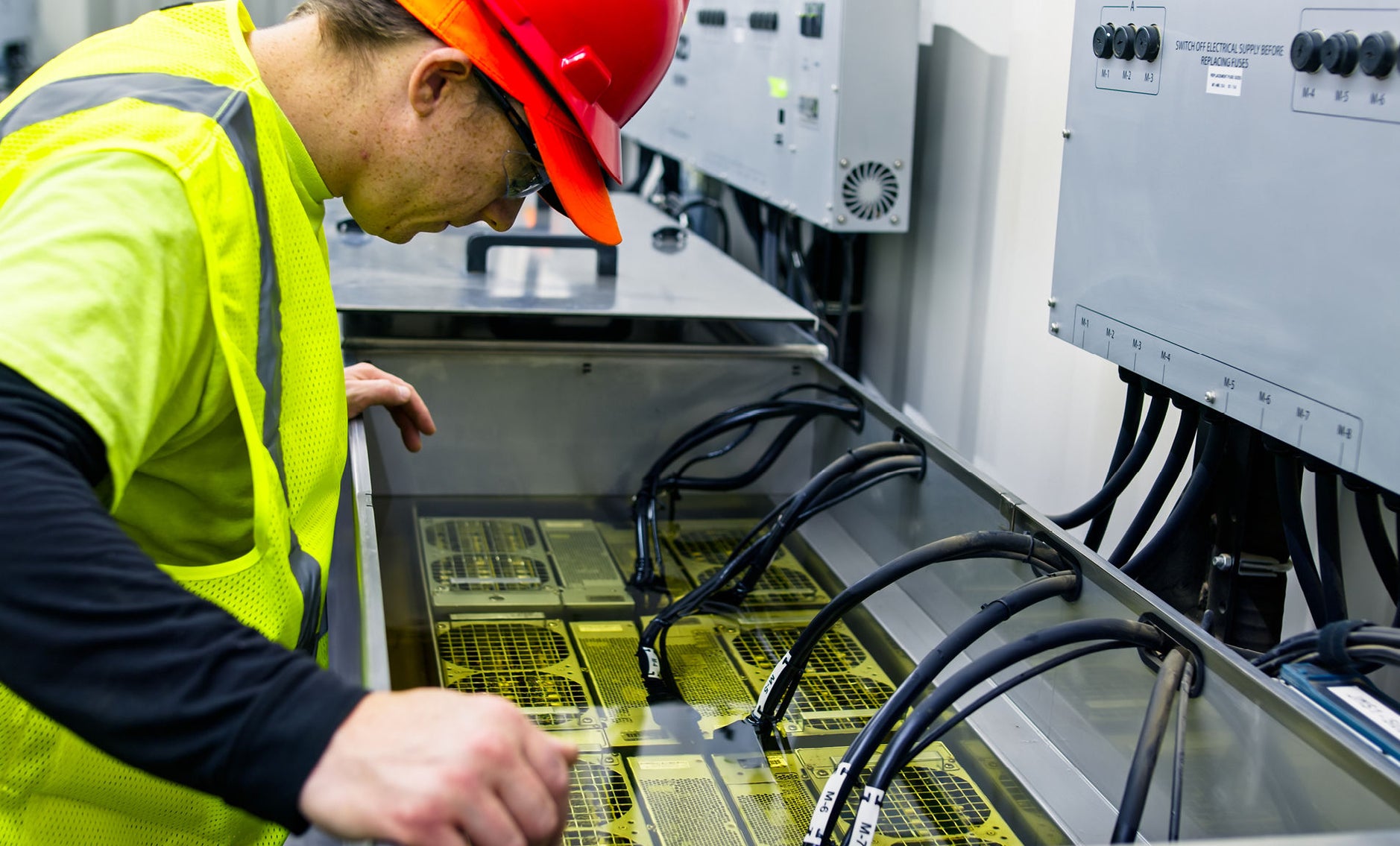
Next-generation cooling architectures, including direct-to-chip liquid cooling and immersion cooling, can reduce water consumption by 90% or more compared to traditional computer room air conditioning (CRAC) systems. While requiring higher capital investment, these technologies deliver lower total cost of ownership (TCO) through reduced utility costs and higher rack densities. For enterprises planning new facilities or refreshing existing infrastructure, evaluating water-efficient cooling should be a key selection criterion.
2. Implement closed-loop water treatment systems
On-site water treatment and recycling infrastructure creates closed-loop systems that can reduce freshwater withdrawal by 60 to 80%. Advanced filtration and treatment technologies enable multiple cycles of reuse, converting water from an ongoing operational expense to a managed, recyclable resource. This is particularly critical for facilities in water-stressed regions where withdrawal limits may constrain future growth.
3. Evaluate water-as-a-service provider models
Emerging service models allow enterprises to transfer water management accountability to specialized providers through performance-based contracts. These arrangements can include guaranteed water efficiency metrics, regulatory compliance management, and risk transfer mechanisms. For organizations where water management isn't a core competency, this approach allows focus on strategic technology priorities while ensuring professional stewardship of water resources.
4. Accelerate adoption of more holistic tracking metrics
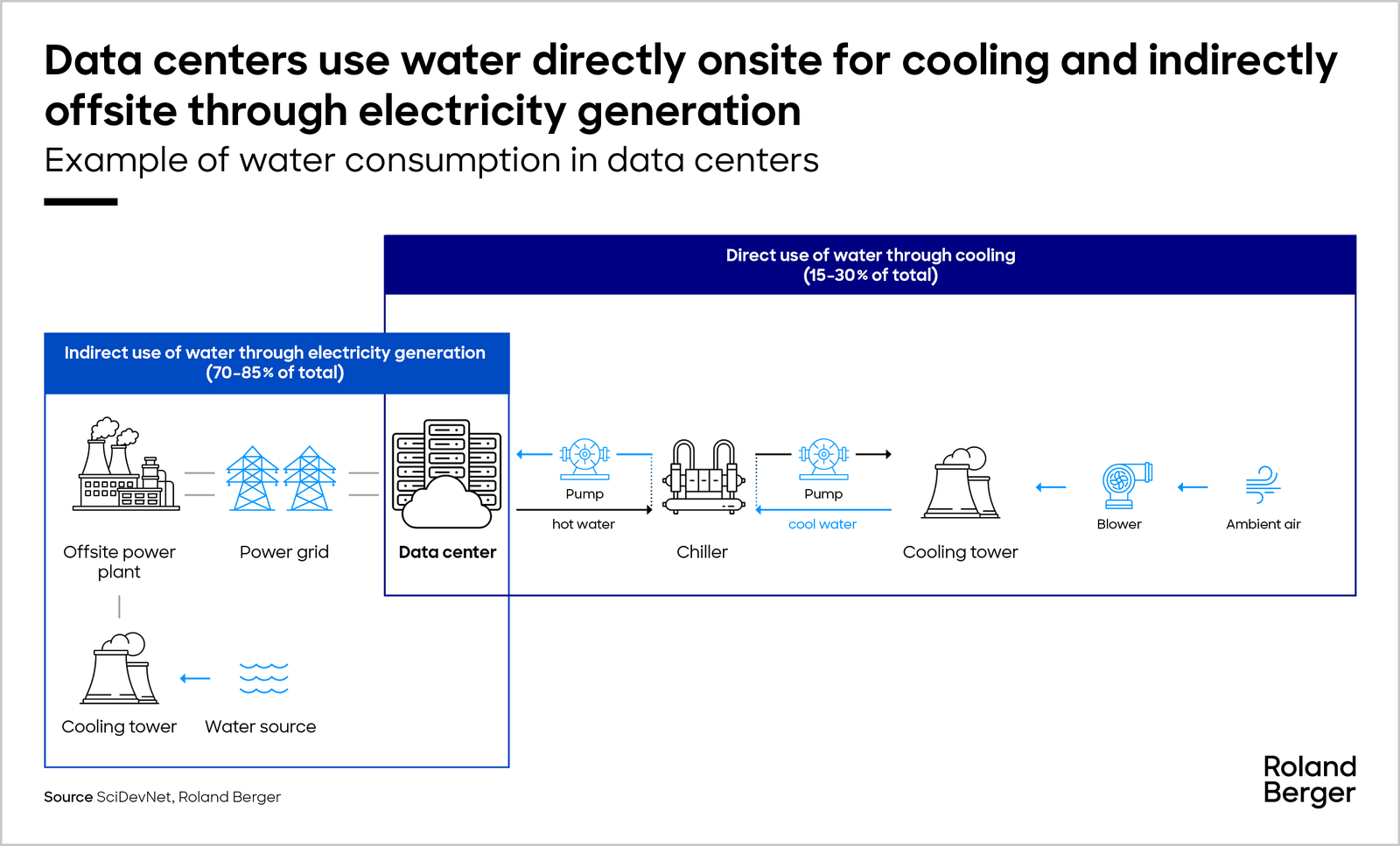
The industry's focus on Power Usage Effectiveness (PUE) has driven meaningful efficiency gains but creates an incomplete picture. Forward-thinking data centers are also reporting on Water Usage Effectiveness (WUE), which typically tracks energy efficiency, water consumption on site and for energy generation, and carbon intensity - recognizing that these variables must be optimized as a system rather than in isolation.
From risk to competitive advantage
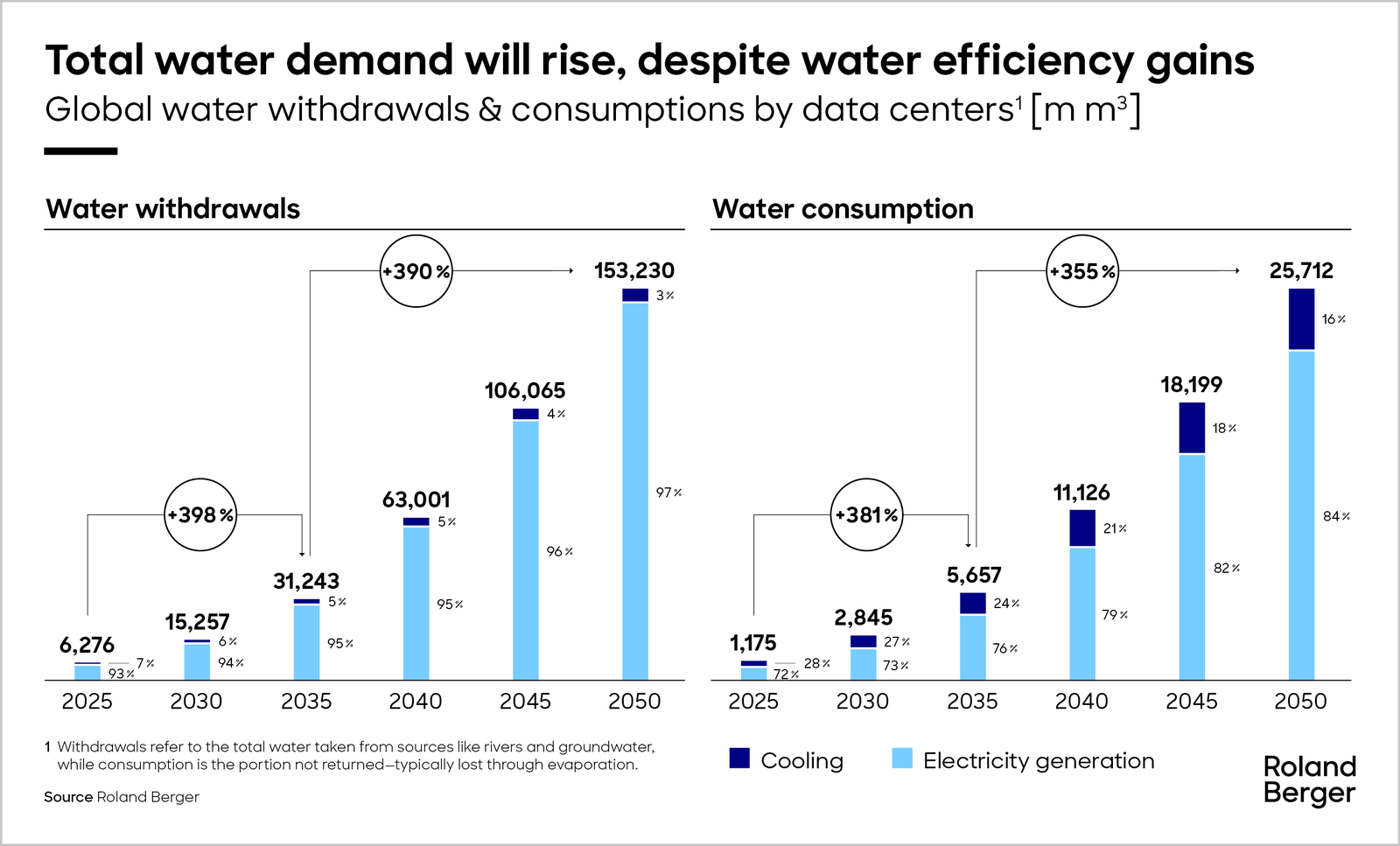
Enterprise digital demand will continue accelerating. AI workloads, real-time analytics, and expanding cloud adoption are non-negotiable requirements for competitive performance. However, this growth trajectory cannot ignore fundamental resource constraints.
Organizations that proactively address water stewardship aren't simply managing ESG reporting requirements — they're building
operational resilience
against regulatory restrictions, community opposition, and resource availability constraints that could limit future capacity.
Ankita Soni contributed to this article.