Changing tack
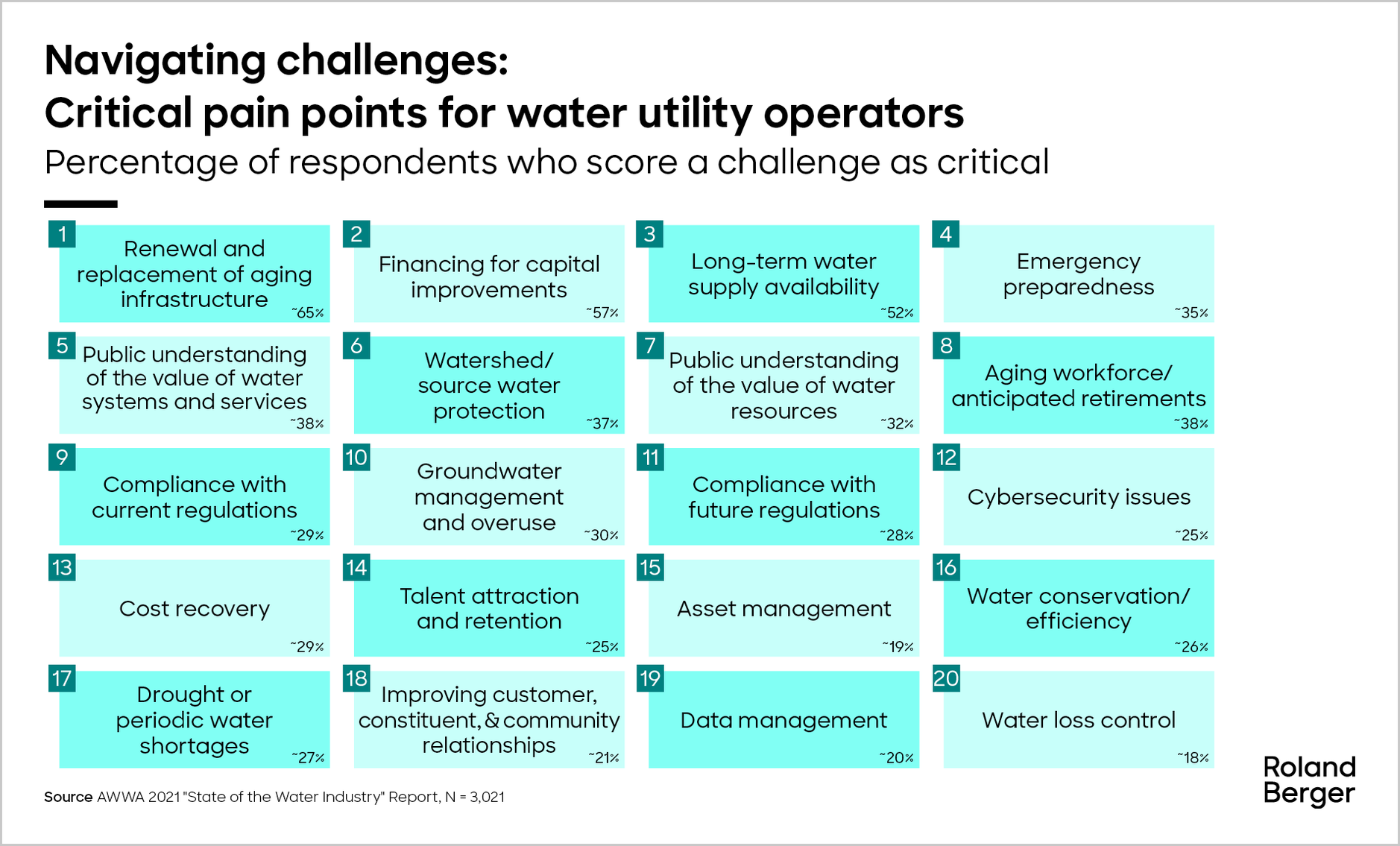
These are just a few of the challenges that can grind the sales cycle to a halt – which, in turn, delivers a blow to technology providers’ unit economics. Lengthy sales cycles drain resources and over time, customer acquisition costs simply become much too high compared to the customers’ lifetime value. Slowly, but surely, the digital divide widens.
The reality is that there are already hundreds of digital solution providers building great products and services with the potential to make a real, significant impact on water utilities’ operations, customer experience, and bottom line. The challenge for solution providers, therefore, is getting the right product, to the right customer segment, at the right price point – essentially, nailing your go-to-market (GtM) strategy.
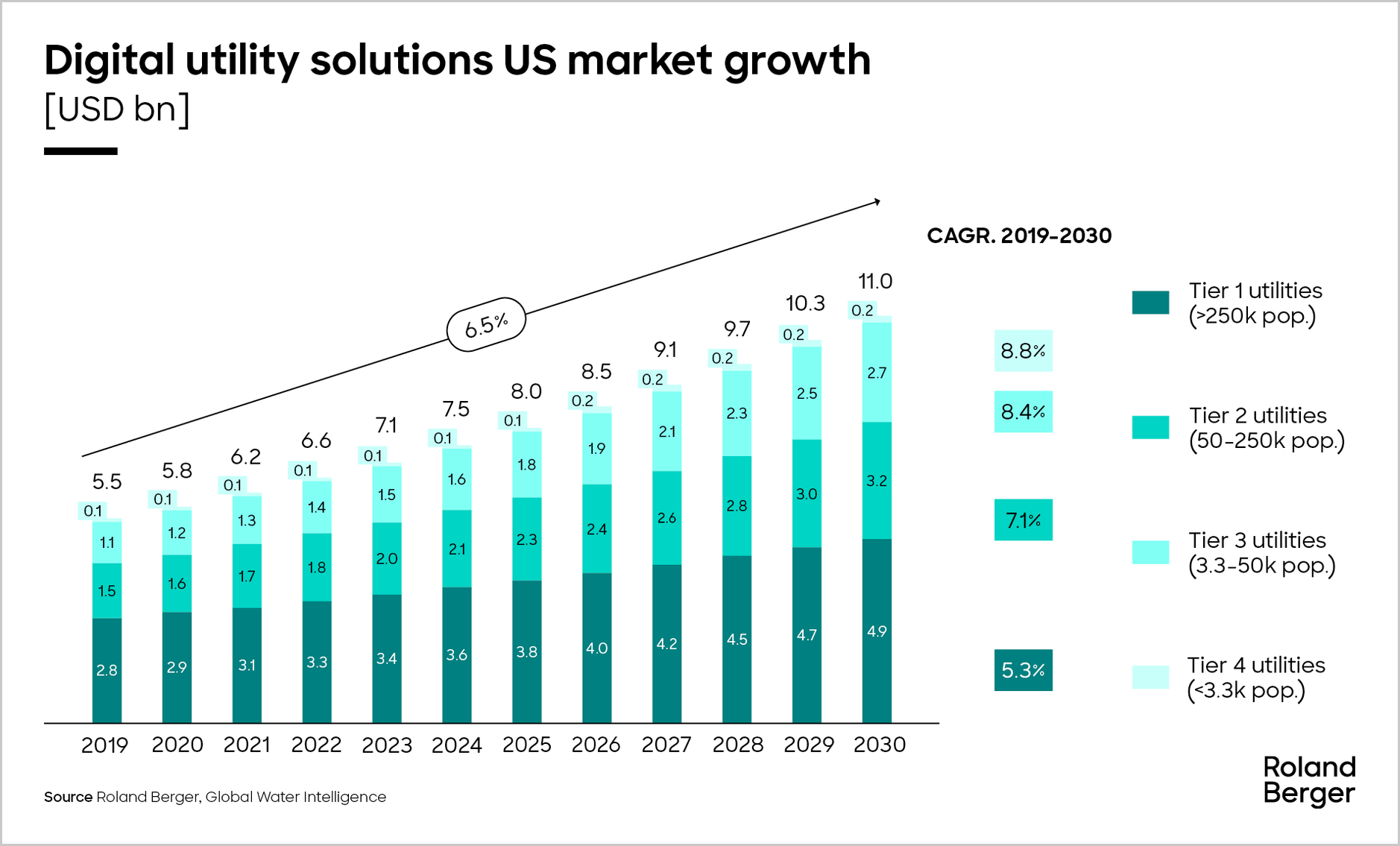
The US water utility market is large and fragmented, with approximately 50,000 water utilities. Around 2% would be considered ‘Tier 1’ and ‘Tier 2’, according to the size of the population they serve, but ~40% of the population is served by 40,000+ Tier 3 and Tier 4 utilities. Strategic priorities, leadership bandwidth and attitudes towards digital solutions vary greatly across these tiers. In general, Tier 1 and Tier 2 utilities have adopted more digital solutions due to their bigger size and availability of funds, whereas Tier 3 and Tier 4 utilities are typically at the beginning of their technology transformation. What we’ve found from our conversations with technology companies, however, is that many lack a clear picture of their ‘ideal’ customer.
Many are designing products, services and features to appeal to Tier 1 and 2 utilities – the coveted ‘whale’ customers that large, established tech players are also targeting with comprehensive smart water platforms at enterprise price points. New entrants find it difficult to gain a foothold in this crowded and sophisticated market – and even harder to maintain a high margin.
On the other hand, there is abundant ‘white space’ to cater to Tier 3 and 4 utilities – albeit with a simpler and more cost-effective product. We’ve yet to see many companies hitting this market effectively but it could offer tech providers the potential to scale faster – perhaps by pitching more agile and streamlined ‘as a service’ pricing models and products or by leveraging channel partnerships that enable access to a greater number of Tier 3 and 4 utilities.
However, the onus isn’t solely on technology providers. Water utility leaders cannot afford to ignore the value that digital solutions can provide. Rising to the challenges ahead demands agile and data-informed decision-making. Digital is no longer a ‘nice to have’ and leaders must be proactive in exploring and considering the solutions that are right for them. Greater cooperation among utilities, such as in sharing the results of pilot programs or agreeing to parameters through which results can be validated and acted upon with more speed, would go a long way in not only accelerating digital adoption, but also improving efficiency and driving costs savings across the board.