Let's talk about the certification process and requirements. What are your experiences so far?
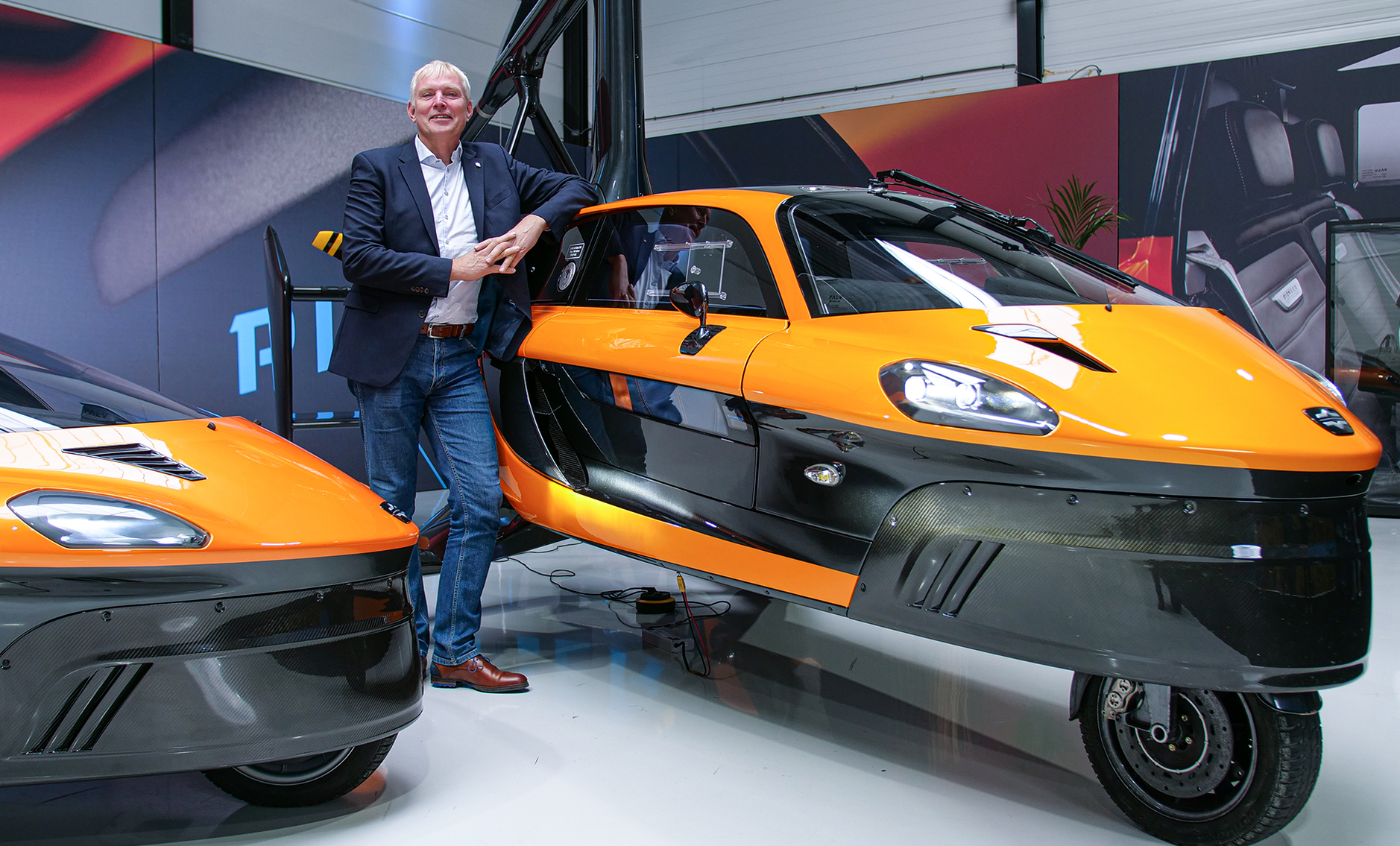
Robert Dingemanse: Well our certification process lasts for roughly 11 years until today. We have finalized the certification basis with EASA in May last year. Since the start of product development in 2008, we have been in constant exchange with EASA. Maybe this is what differentiates us from other startups in aviation: We have been working on the certification process since day one. It took around 8-9 years to develop the certification basis for the PAL-V Liberty together with EASA, which is a normal period in
the aerospace industry
. Thus, we believe that if an (e)VTOL startup claims to go from concept to certification in 4-5 years it is simply not realistic from our perspective. We have been certifying in existing regulations with certification as a starting point and still it took us 11 years. But (e)VTOL‘s require new regulations, regulations which are currently in development and no AMC’s (acceptable means of compliance) are available yet to help.
Why do you think it takes so long?
Robert Dingemanse: There are two main reasons why the certification process takes many years: basic aviation design challenges and the magnitude of requirements. The main challenge in aviation engineering is the tradeoff between design reserves and weight savings. If – for example - a load case is 10, you cannot simply design for a load case of 20 to be safe. Instead, you must find a solution to have a solution for 11, due to weight restrictions. Now you need to prove first that the 10 is really 10 and that the 10% reserve is safe enough with a fault chance of 10^-9. Design reserves in aviation are not comparable to the car industry. Thus, researching and calculating and proving these reserve limits and convincing the authorities there-off is difficult and takes lots of time. This is one of the main contributing factors to time required for certification. However, this example does not occur only a few times throughout the certification process. Instead, we have to comply with a list of 1,500 requirements. Thus, the sheer volume of requirements adds another layer of complexity and thus increases time dramatically.
What about the estimated cost for certification?
Robert Dingemanse: We at PAL-V estimated the certification cost approximately 50% of our total investment. However, it has to be noted that the PAL-V Liberty complies with existing regulations and thus we certify the vehicle within existing regulations, and we could use all the AMC’s already available. Now consider other companies, for example eVTOL companies focusing on Urban Air Mobility passenger services. The most challenging environment there is in aviation with the most stringent safety standard. Most of these designs are novel and thus not proven yet in both technologies as well as certification. For example, a multicopter is not capable of autorotation and gliding safely to the ground in case of total power failure. Thus, there is no fallback solution in the emergency glide mode and ballistic parachutes are not suitable in urban environments because at best they lead to an uncontrolled soft crash. Thus, in order to avoid total lift failure, full redundancy of all critical systems is key to avoid any single point of failure. However, even if you have two of each system, there must be another system to decide which one of these two is failing– but who controls now the system of the two systems? You would need to have system redundancy again and then again on the next level and so forth. Achieving full redundancy increases weight as well as the certification processes in both cost and time.