How do you ensure safety of your concept?
Markus Kampitsch: The essence of our company philosophy is simplicity and straightforwardness, which is reflected in all aspects. A component that is not there causes neither weight nor costs nor can it fail.
In order to be able to offer commercial flights over inhabited areas, an aircraft must be approved according to the enhanced category. The safety requirements that apply here correspond to those of an airliner, so there are of course limits to simplification. The future regulations to be applied for safe eVTOL operation are currently under discussion and will probably be adopted to the specific conditions of low altitude and speed operation. We take the existing ultra-high safety requirements into account by analyzing possible failure scenarios according to the usual procedures in aviation and deriving and implementing the necessary technical solutions. For example, both the drive train and the power supply are designed with multiple redundancies, however, the simple solution is also preferred here.
Is your concept ready to support automated or even autonomous flying?
Markus Kampitsch: As a single-seater means of passenger transport, the omission of the pilot is not an option, but necessary in order to make our service available to the general public. The flight control is therefore - like everything else - fully automatic. In aviation, automated flight and navigation functions have been carried out for several decades. In the event of a fault, however, the pilot is fully responsible and liable. The next evolutionarily logical step is therefore to take the pilot out of the equation, and which is meanwhile state of the public discussion.
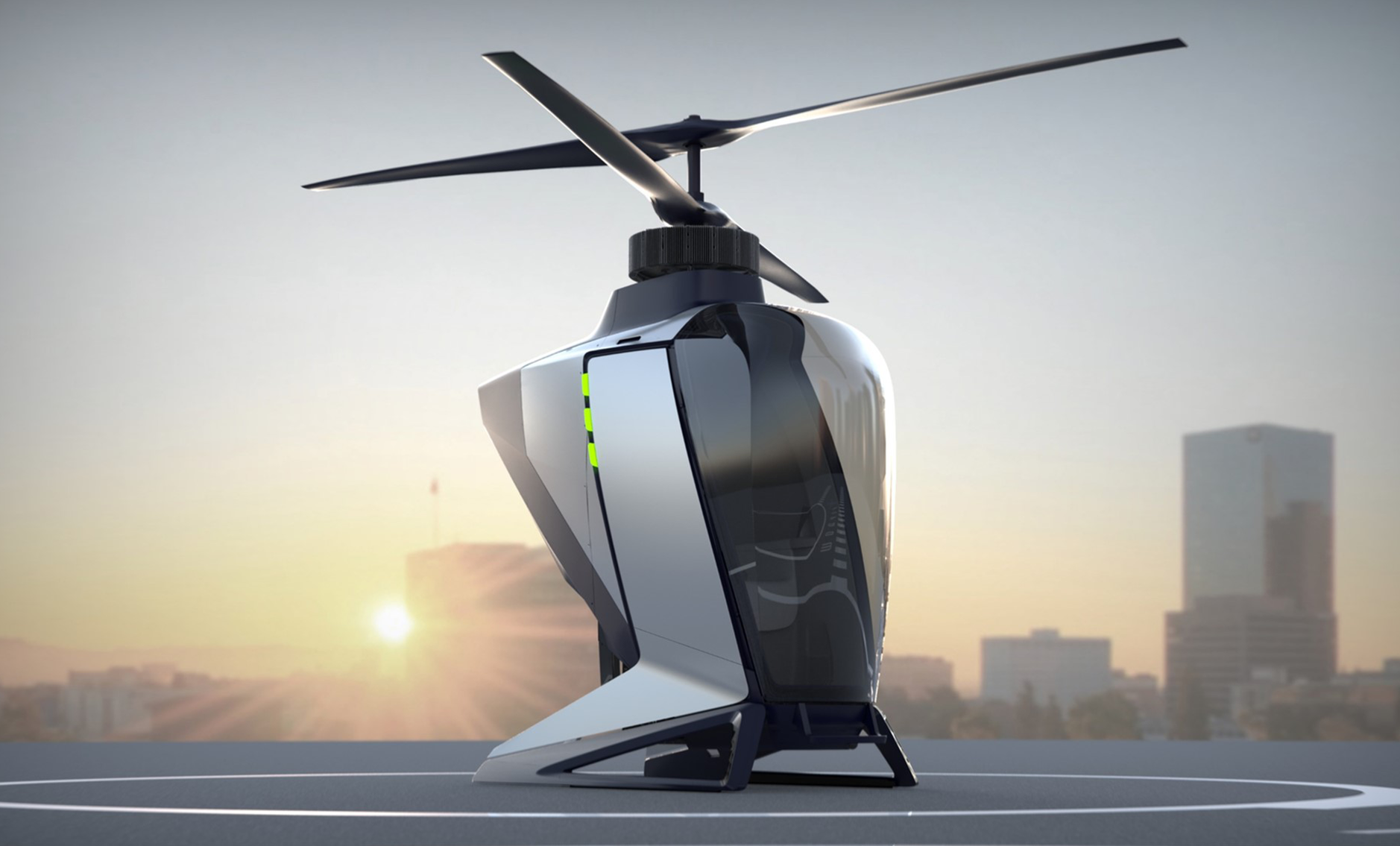
Operated automatically the FlyNow PAV is dependent on a superordinate ecosystem, which provides both the flight planning and the coordination with official ATM (Air Traffic Management).
The individual flight plan, managed by an automated process and thoroughly created by an official public central server, guarantees that the flight can be managed reliably and without conflict in interaction with cooperating air traffic, i.e. vehicles operating under the same set of rules.
This represents the current status of the discussion and is essentially seen in this way by FAA, EASA and also NASA and is therefore - with a high degree of probability - the scenario to which one will have to be prepared.
A major advantage of a VTOL is that in the event of an unforeseen incident, it is possible to stop in the air at any time, i.e. to hover, so that a complex situational decision-making process regarding evasive maneuvers taking into account follow-up events and thus autonomy in the sense of an AI-controlled flight is not really necessary at any time.
The aircraft can therefore be equipped as simply as possible in this regard and with as little “intelligence” as is absolutely necessary and still reliably fly the respective mission.