The energy density of batteries (typically
Li-ion
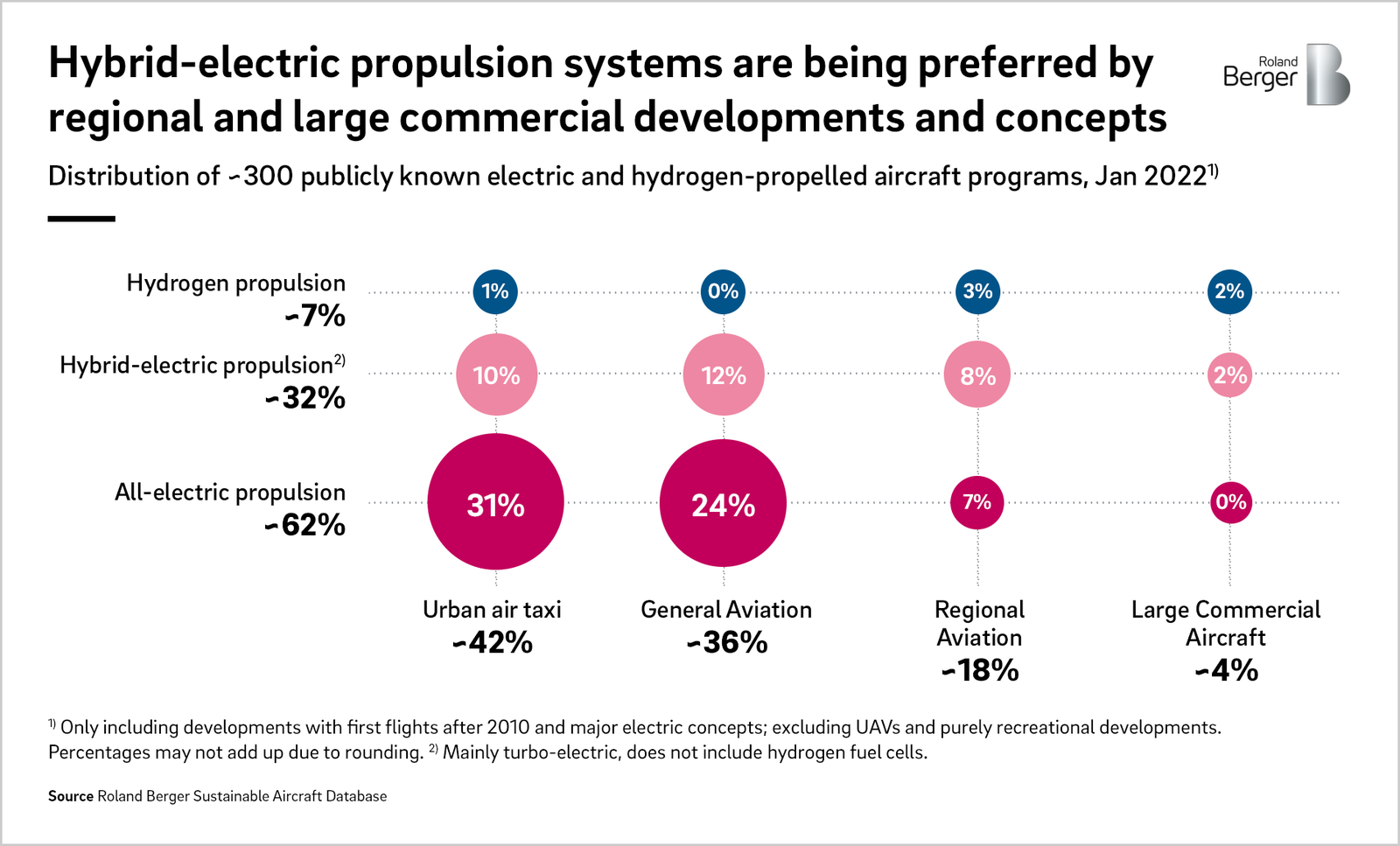
) is significantly lower than that of jet fuel, and the longer the flight becomes, the more significant this disparity is. As a result, competing against carbon-intensive aviation at longer ranges is even more challenging than doing so at short range, and is one reason why many electrically propelled aircraft programs started with the development of short-range craft. However, as the UAM industry has started to become crowded by a large number of players and engineers begin to solve many of the principal design challenges for these smaller-scale intra-city craft, it is only natural for the scale to increase and inter-city flight to become a more appealing R&D space. Despite the greater challenge, startups as well as incumbent aircraft OEMs are turning their hand to regional air mobility, the segment of the aviation market for inter-city travel. About 20% of European programs are focused on regional aircraft compared to only about 15% of North American programs.
One potential justification for this is the stronger startup culture in North America. Fully 76% of sustainable aviation projects in North America are by startups, compared to 59% of projects in Europe. Furthermore, as startup teams – starting with little money and stakeholder support – often face even greater scrutiny than R&D teams of aerospace primes and government-funded projects, this incentivizes the development of aircraft less likely to compete with existing offerings by OEMs at longer ranges. As a result, in Europe there is stronger investment by incumbents and government-funded/university programs (which comprise 55% of all regional air mobility project OEMs, compared to 27% in North America), meaning regional-scale aircraft are more viable as a development goal. This bias towards larger sustainably propelled aircraft in Europe also corresponds with the continent's currently greater focus on decarbonisation in aviation.
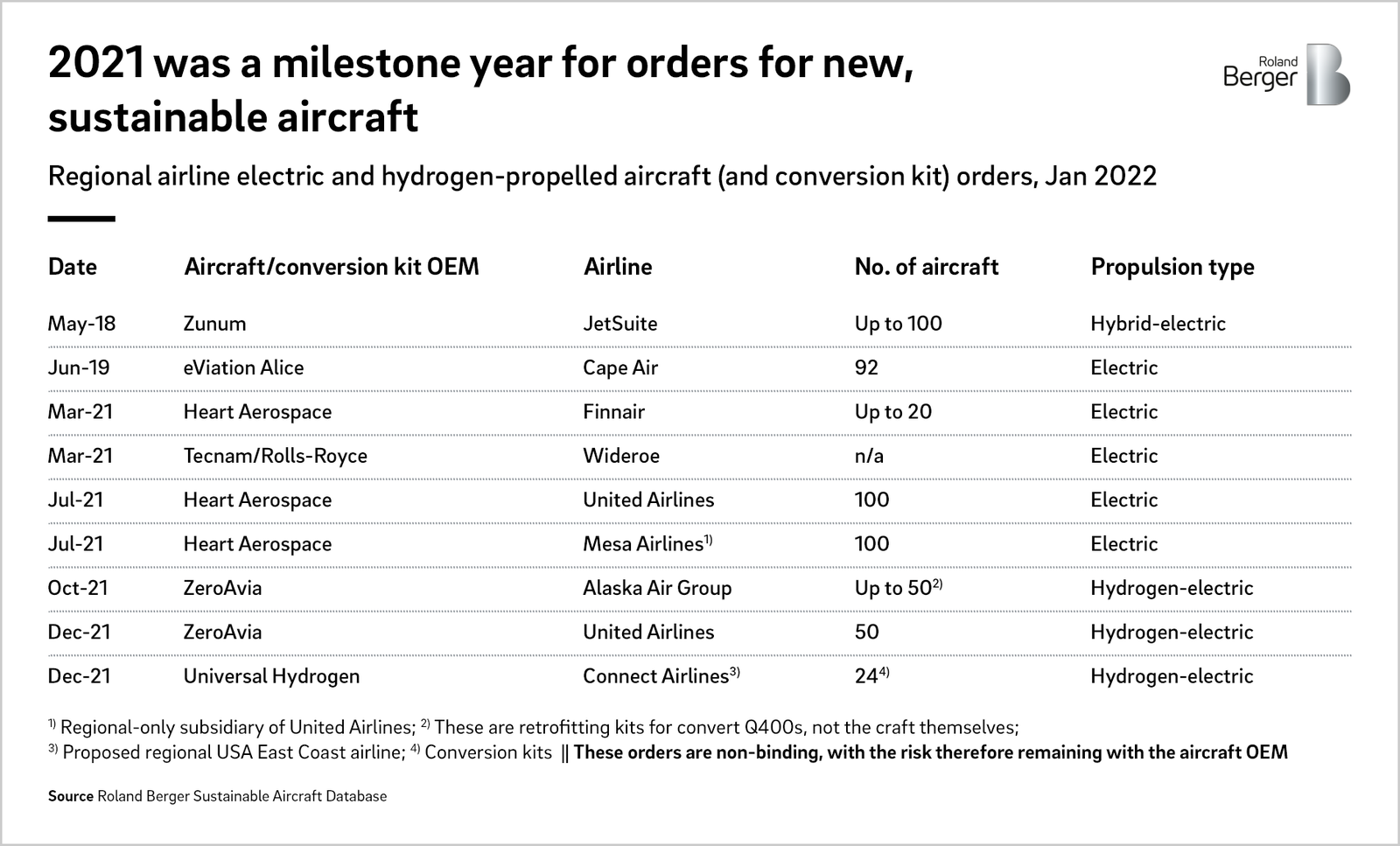
The slow ascendence of regional air mobility is exemplified by companies such as Dufour Aerospace, whose inter-city aEro 3, unveiled in 2021, marks a turning point compared to their previous short-range aEro craft, alongside Pyka who succeeded their initial short-range Pelican model with the inter-city P3. However, for the most part, existing OEMs are sticking to the ranges in which they are already comfortable; the biggest successes in regional air mobility are by the inter-city specialist startups Heart Aerospace and ZeroAvia, who during 2021 secured "orders" for 300 total aircraft by regional airlines. As these orders are non-binding, the risk still lies with the OEMs, but they clearly indicate an ongoing transition and growing operator support for low/zero-emission aircraft technologies.